China on Tuesday said India should avoid “unilateral actions” in Jammu and Kashmir that could spark tensions in the region even as it described New Delhi’s decision to reorganise Ladakh as a union territory as “unacceptable”.
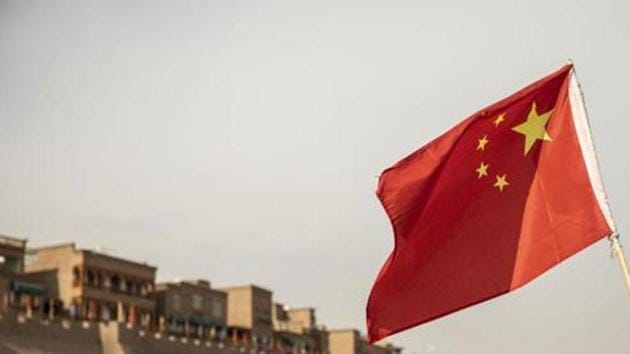
In a swift response, India’s external affairs ministry rejected the Chinese criticism and said the proposal to form a new union territory of Ladkah was an “internal matter”. It also pointed out the two sides had agreed to maintain peace along their disputed border until a mutually acceptable solution is found to the issue.
Beijing’s strong response came a day after the government revoked the special status of Jammu and Kashmir and proposed splitting the state into two separate union territories of Jammu and Kashmir and Ladakh.
Watch: Ladakh MP gives passionate speech in LS on J&K bifurcation, PM Modi tweets
China hadn’t immediately responded to the move on Monday, though it was expected to do so for two reasons – its close ally Pakistan is deeply invested in Kashmir, and part of the disputed Sino-India boundary in Aksai Chin lies in Ladakh. The Chinese foreign ministry issued two separate statements in Mandarin on the issue on Tuesday.
“We urge India to be cautious in its words and deeds on the border issue, strictly abide by the relevant agreements reached between the two sides, and avoid taking actions that further complicate the border issue,” said a statement published on the foreign ministry’s website, referring to protracted negotiations between the two sides on the disputed border.
“China has always opposed India’s inclusion of Chinese territory in India’s administrative jurisdiction in the western part of the Sino-Indian border. This position is firm, consistent and has never changed,” the statement added in a reference to the area in Ladakh that New Delhi claims but is controlled by Beijing.
“In recent days, the Indian side has continued to undermine China’s territorial sovereignty by unilaterally amending its domestic laws. This practice is unacceptable and will not produce any effect,” the statement said.
{{/usCountry}}“In recent days, the Indian side has continued to undermine China’s territorial sovereignty by unilaterally amending its domestic laws. This practice is unacceptable and will not produce any effect,” the statement said.
{{/usCountry}}In a separate statement on India revoking Kashmir’s special status and exchanges of fire between Indian and Pakistani troops on the Line of Control, the foreign ministry described the situation in the region as very tense.
The statement also referred to India despatching a large number of troops to the region and said: “China is seriously concerned about the current situation in Kashmir. China’s position on the Kashmir issue is clear and consistent. This issue is a legacy of history between India and Pakistan, which is also the consensus of the international community.”
It added, “The parties concerned should exercise restraint and act with caution, especially to avoid actions that unilaterally change the status quo and exacerbate the tension. We call on the two sides to peacefully resolve relevant disputes through dialogue and consultation and safeguard regional peace and stability.”
Responding to China’s criticism, external affairs ministry spokesperson Raveesh Kumar said the bill introduced in India’s Parliament for creating a new union territory of Ladakh was “an internal matter concerning the territory of India”.
“India does not comment on the internal affairs of other countries and similarly expects other countries to do likewise,” he said.
Kumar noted New Delhi and Beijing had agreed to find a “fair, reasonable and mutually acceptable settlement” of the border dispute on the basis of “Political Parameters and Guiding Principles for the Settlement of India-China Boundary Question”. He added both sides had agreed to maintain peace and tranquillity in border areas till such a settlement is reached.
Hu Shisheng, a leading Chinese expert on India, said one reason behind New Delhi’s decision to divide Kashmir into two union territories was to separate two major disputes – one with Pakistan and another with China.
The director of the Institute of South and Southeast Asian and Oceania Studies at the China Institutes of Contemporary International Relations said the move was aimed at separating “the two most ticklish disputes in the world from each other” and “to try to settle the Kashmir dispute unilaterally”.