The first of two back-to-back western disturbances brought some respite from winter chills to the Capital with cold wave conditions finally abating on Thursday.
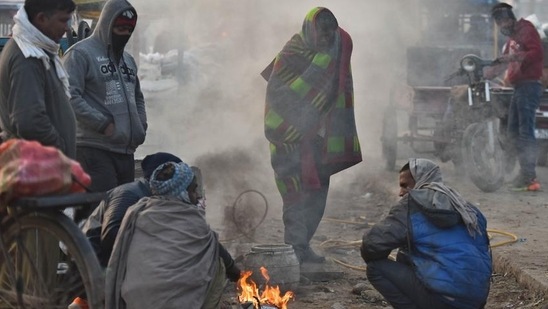
The mercury rose 3 to 4 degrees in most parts of the city, with the Safdarjung station, representational of Delhi’s weather, recording a minimum of 5.6°Celsius — one degree below normal, but three degrees higher than Wednesday’s low of 2.6°C.
Also Read: Delhi sees 8th cold wave day this Jan, respite likely today
The India Meteorological Department (IMD) has forecast isolated spells of drizzle or light rain late on Thursday and in the early hours of Friday. More rain is expected between January 23 and 25, IMD said, indicating that it was likely to get colder again after January 26.
The rise in minimum temperature is expected to continue over the next six days under the influence of the western disturbances, IMD predicted.
“The first western disturbance will remain in place till Friday and the second western disturbance will be more intense and will impact the western Himalayan region from the night of January 20 to January 26, while it will impact the plains of northwest India impacted from January 23 to 25,” an official at IMD said.
Under the influence of a western disturbance, the region normally sees moisture-laden easterly to southeasterly winds, which are warmer than northwesterly winds. This, coupled with cloudy skies, tends to drive up the minimum temperature to a higher than normal value.
{{/usCountry}}Under the influence of a western disturbance, the region normally sees moisture-laden easterly to southeasterly winds, which are warmer than northwesterly winds. This, coupled with cloudy skies, tends to drive up the minimum temperature to a higher than normal value.
{{/usCountry}}Also Read: Cold wave abates, parts of Delhi likely to get rain
While the Palam weather station recorded a minimum of 9°C, Lodhi road was 5.6°C. Delhi’s lowest was 5°C at Ayanagar.
This year, Delhi residents have experienced an unusually prolonged cold spell through the majority of January, IMD data shows.
At a low of 2.6°C at the Safdarjung, Wednesday was the third successive cold wave day for Delhi, and the eighth cold wave day in the month so far – the second-highest number of such days in the month of January in the last 31 years, IMD data between 1992 and 2023 showed.
The highest – 12 cold wave days – were recorded in January 2008. However, the longest spell of consecutive cold wave days four that year. In 1997, 1998 and 2021, Delhi recorded seven such days in the entire month.
IMD classifies a cold wave in the region when the minimum temperature is 4.5 degrees or more below the normal mark, or when it drops to 4°C or lower.
This year, the city also witnessed a longer cold wave spell of five consecutive cold wave days between January 5 and 9 — the highest streak in the last 31 years. The last time Delhi suffered a similar spell of winter was in 2013, when five consecutive cold wave days were recorded.
On Thursday, the city’s maximum also rose, touching 22.6°C — three notches above normal and three degrees higher than Wednesday’s maximum of 19.6°C.
Under the influence of the western disturbances, IMD has forecast a drizzle late on January 23 and light rain on January 24. On January 25 again, there will be chances of a drizzle.
While the maximum temperature is forecast to hover between 21°C and 23°C till January 25, Delhi’s minimum is forecast to rise further and will hover between 9°C and 10°C between January 20 and 25.
Delhi’s air quality, meanwhile, worsened further on Thursday, as the Air Quality Index (AQI) touched a reading of 338 (very poor) according to Central Pollution Control Board’s 4pm bulletin. The reading stood at 306 (very poor) on Wednesday.
Forecasts by the Early Warning System (EWS), used by CAQM to take pre-emptive action, show Delhi’s AQI is likely to return to “poor” by January 20, owing to rain and an increase in wind speed.
An AQI between 0-50 is considered good, 51 and 100 satisfactory, 101 and 200 moderate, 201 and 300 poor, 301 and 400 very poor, and over 400 is severe.
Stay updated with all top Cities including, Bengaluru, Delhi, Mumbai and more across India. Stay informed on the latest happenings in World News along with Delhi Election 2025 and Delhi Election Result 2025 Live, New Delhi Election Result Live, Kalkaji Election Result Live at Hindustan Times.
Stay updated with all top Cities including, Bengaluru, Delhi, Mumbai and more across India. Stay informed on the latest happenings in World News along with Delhi Election 2025 and Delhi Election Result 2025 Live, New Delhi Election Result Live, Kalkaji Election Result Live at Hindustan Times.