
 E-Paper



‘Airspace untenable’: What losses did Pakistan military suffer before ceasefire?
India carried out precision strikes targeting specific terror bases in Pakistan and PoK, which were used to plan and launch attacks against India.

 Prefer HTon Google


As India and Pakistan agreed to a ceasefire on Saturday, the Indian armed forces said that they caused heavy losses to Pakistan, damaging its military infrastructure, including land and air assets.
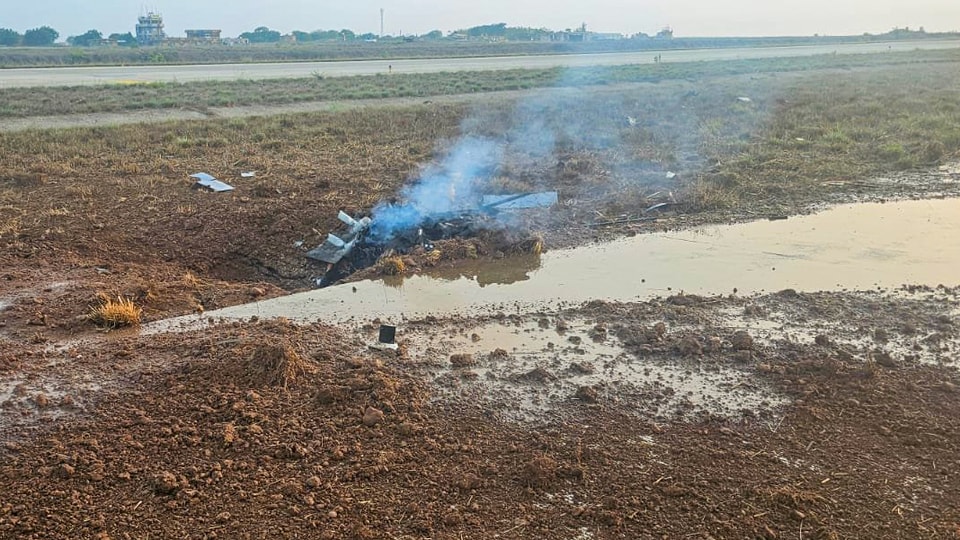
Briefing the media, Colonel Sofiya Qureshi said that Pakistan's airfields in Skardu, Jacobabad, Sargodha, and Bholi suffered extensive damage.
“Pakistan’s air defence systems and radar systems were neutralised, and its airspace was made untenable. Along the Line of Control, Pakistan’s command and control, logistics installations, and military infrastructure suffered such heavy losses that their offensive and defensive capabilities were completely crippled,” said Colonel Sofiya.
She said that the Indian armed forces are fully ready, strong, and completely committed to protecting India’s sovereignty and integrity.
Wing Commander Vyomkya Singh said that Pakistan has been spreading fabricated allegations that the Indian armed forces have targeted mosques.
“Let us make it very clear here that India is a secular nation, and the Indian armed forces are a reflection of our constitutional values. We hold every place of worship of all faiths in the highest regard.”
She added that India's operations have been aimed exclusively at terrorist camps and facilities being used for anti-India activities.
“No religious site, I repeat, no religious site has been targeted by the Indian armed forces. Over the past days, Pakistan has suffered very heavy and unsustainable losses after it launched an unprovoked attack on our installations,” said Vyomkya Singh.
India, Pakistan agree to ceasefire across land, air and sea
India and Pakistan's directors general of military operations have agreed to halt all firing and military actions on land, air, and sea starting from 5 pm on Saturday, announced foreign secretary Vikram Misri.
This came shortly after US President Donald Trump confirmed that India and Pakistan had agreed to a “full and immediate” ceasefire following US-mediated talks.
Under Operation Sindoor, India carried out precision strikes targeting specific terror bases in Pakistan and PoK, which were used to plan and launch attacks against India.
Terror headquarters of the banned Jaish-e-Mohammed, Lashkar-e-Taiba, and Hizbul Mujahideen were targeted, with the Indian Air Force conducting night raids on nine hideouts in Pakistan and Pakistan-occupied-Kashmir, officials confirmed on Wednesday.
Among the precise targets hit were the Markaz Subhan Allah at Bahawalpur, Sarjal at Tehra Kalan, Markaz Abbas in Kotli, and Syedna Bilal camp in Muzaffarabad, all linked to the banned Jaish-e-Mohammed.
Other targets included the Markaz Taiba at Murdike, Markaz Ahle Hadith at Barnala, and Shwawai Nalla camp at Muzaffarabad, all associated with the banned Lashkar-e-Taiba.
On May 8, during an all-party meeting in Parliament, Union defence minister Rajnath Singh briefed leaders of major political parties on the recent operation conducted at nine locations across Pakistan and Pakistan-occupied Kashmir (PoK).
Singh informed them that at least 100 terrorists were killed in the Indian strikes under Operation Sindoor.


