
 E-Paper



Congress stalwart and former Union minister Shivraj Patil dies at 91
Shivraj Patil, former Speaker and Home Minister, passed away at 91, leaving a legacy marked by significant parliamentary reforms and controversy during his tenure.

 Prefer HTon Google


In March 1979, rumours that Jayaprakash Narayan was dead quickly spread across India. In Parliament, then Prime Minister Morarji Desai even expressed his condolences, triggering a wave of mourning in many state assemblies.
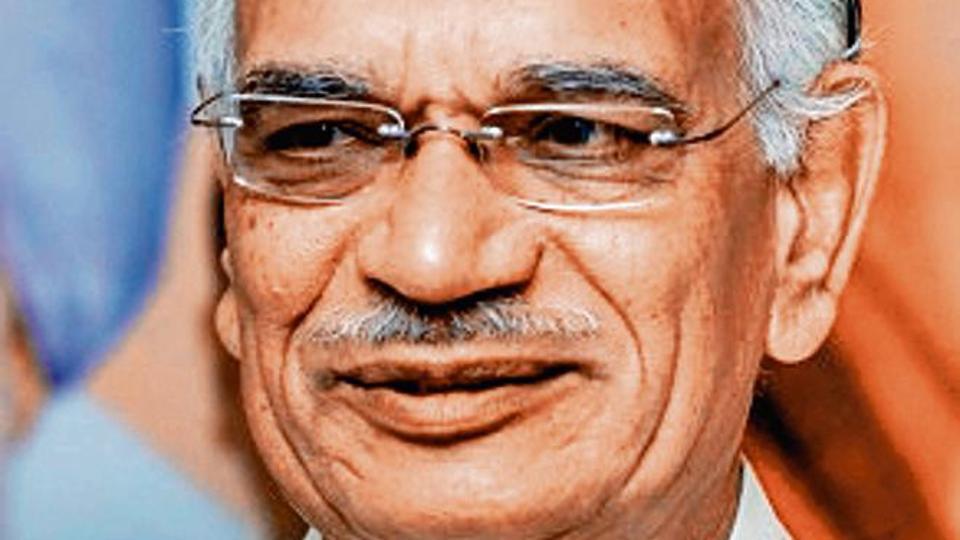
But the then Speaker of the Maharashtra Vidhan Bhavan, Shivraj Vishwanath Patil, refused to follow the information that was based on an official’s report.
He temporarily adjourned the House and called the Jaslok Hospital doctors who were treating Narayan. They confirmed that the patient remained critically ill but had not died. Under Patil’s leadership, Vidhan Bhavan was the only assembly to read out a resolution wishing a long life for Narayan, who died in Patna after seven months.
Shivraj Patil, 91, died on Friday at his residence in Latur, Maharashtra.
Twelve years after his Vidhan Bhavan stint, Patil became the Speaker of the Lok Sabha. Some of his decisions fundamentally changed the way Parliament worked and remained relevant amid changing times. Due to the paucity of time, only five ministry-wise budgets or demand for grants were discussed during the budget session at the time. The remaining demand for grants were guillotined or approved without debates.
Patil decided that those ministry budgets, which could not be discussed in the House, should be reviewed threadbare in the related standing committees. Anant Bagaitkar, a political analyst, said, “He treated standing committees as mini-Parliaments where leaders from various parties can discuss the budgets.” The famous statue of Mahatma Gandhi in Parliament complex was also inaugurated during his term.
An ardent follower of Sathya Sai Baba, Patil lost the 2004 Lok Sabha election from Latur even as the Congress returned to power after eight years. The whispers in the corridors of 24 Akbar Road, the then Congress headquarters, suggested it would be difficult for Patil to get a berth in Manmohan Singh’s Union cabinet. Party veteran Pranab Mukherjee started brushing up parliamentary reports on home affairs in anticipation and Patil sat quietly in the preparatory meetings on government formation.
But on May 22, 2024, Patil was sworn in as the home minister of India—considered as the top ministerial berth after the PM. His loyalty to the Gandhi family, his past records as a minister in the Indira Gandhi and Rajiv Gandhi cabinets and then Congress president Sonia Gandhi’s confidence in him had earned him the coveted post.
But his four years’ stint in the home ministry was marred by major terror attacks and controversies. On November 26, 2008, 10 Pakistani terrorists launched deadly attacks in various parts of Mumbai. 166 people died and more than 300 were injured in multiple attacks at the Chhatrapati Shivaji Terminus, Taj Mahal Hotel, Oberoi Trident, Leopold Café and Nariman House. One of the terrorists, Ajmal Kasab, was caught by Mumbai Police and later executed.
The Mumbai terror attack ended Patil’s career as home minister. Three days after the attack, at a late-evening meeting of the Congress Working Committee, his party colleagues slammed Patil as the ruling coalition grappled under the impact of one of the worst terror attacks in the country. On November 30, Patil sent his resignation to Singh. Maharashtra chief minister Vilasrao Deshmukh was also sacked.
According to a Wikileaks release, then US ambassador of India, David Mulford, had described Patil after the 26/11 as “spectacularly inept” and felt that his removal was inevitable. Mulford also wrote that Patil was “asleep on the watch” during terror incidents in his tenure.
Patil’s allegedly soft approach towards terror and his stand that human rights should not be violated during investigations became hotly debated topics. He was also criticised in the media for his habit of changing clothes during the day to look fresh. Journalists travelling with Patil in the Tsunami-wrecked Andaman & Nicobar could not help but notice that he often wiped his shoes to retain the shine.
In September 2008, a major terror attack rocked Delhi. On September 13, bombs at Karol Bagh, Connaught Place and Greater Kailash killed 25 people and injured another 150. But Patil chose to visit Assam the next day for his pre-decided engagements—an approach that haunted the UPA and gave fresh ammunition to the BJP.
In 2022, at a book launch event, Patil said there was a mention of jihad in Gita, a claim he later denied.
Patil was later shifted as the governor of Punjab in 2010, which was his last official appointment. Unlike many retired Congress leaders, Patil opted for a life away from the corridors power in the alleys of Delhi.


