
 E-Paper



Constitution protects not just good judges, but also bad ones: Justice Hrishikesh Roy
Justice Roy acknowledged that existing processes are slow and limited, with impeachment being the only formal method of removal.

 Prefer HTon Google


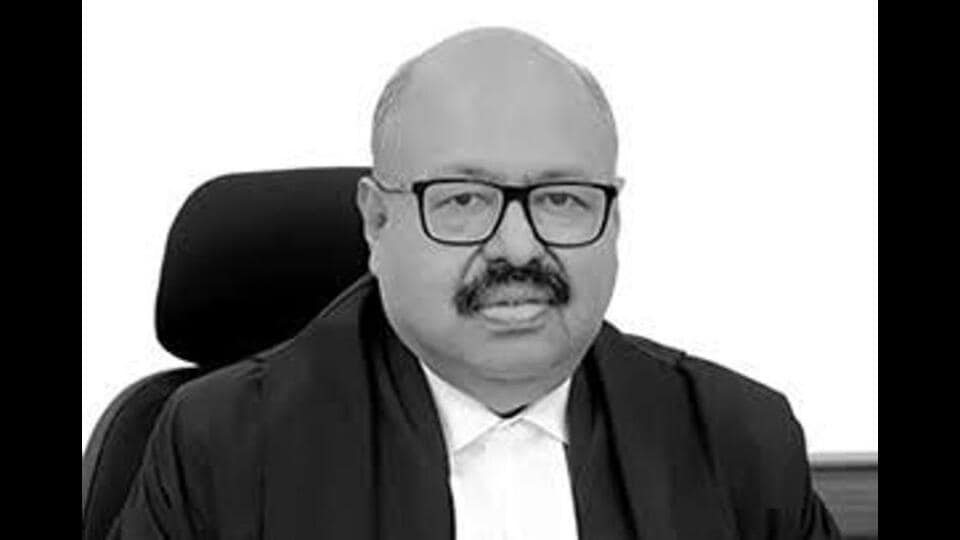
Justice Hrishikesh Roy, who demitted office on Friday after a five-year tenure at the Supreme Court, has underscored a key challenge in judicial accountability -- the existence of a “raksha kavach” (protective armour) in the Constitution that shields both good and bad judges. This form of constitutional and legal protection, he suggested, makes redressal mechanisms inadequate in cases of judicial misconduct, such as the controversy surrounding Allahabad high court judge Shekhar Yadav.
Justice Yadav was called for a meeting with the Supreme Court collegium, which included Justice Roy, on December 17 after his contentious remarks at a Vishwa Hindu Parishad (VHP) event raised questions of bias and constitutional impropriety. While justice Yadav’s purported remarks on December 8, targeting the Muslim community and invoking themes of majority rule and the Uniform Civil Code (UCC), triggered sharp criticism from political and legal circles, no public action has been taken against him so far.
“The ‘raksha kavach’ exists to ensure that a judge functions without fear or favour. But the same ‘raksha kavach’ also protects someone who may not be on the right track,” justice Roy told HT in an interview, although he specifically declined to comment on the controversy surrounding Justice Yadav’s comments.
He acknowledged that existing processes are slow and limited, with impeachment being the only formal method of removal. “You can’t hurry through to reach a hasty conclusion because executing a decision is also a burden on the same system,” added the outgoing judge, pointing out that the Chief Justice of India has initiated an inquiry into the episode.
Justice Roy also addressed concerns regarding the dilution of liberty in Supreme Court rulings, emphasising that such instances should be seen as “aberrations” rather than a systemic failure. While acknowledging that some decisions may have diluted the fundamental value of personal freedom, he argued that the overall judicial framework remains committed to upholding constitutional principles by ways of “course correction”.
On the collegium system of appointing judges in the constitutional courts, which often faces criticism for its opacity, justice Roy maintained that while it may lack transparency in appearance, there is a valid reason for discretion. “Everything about the process cannot be divulged,” he said, stressing that discussions within the collegium involve careful deliberation and the need for confidentiality.
He also reflected on the dilemma of judicial appointments providing adequate representation to the disadvantaged classes. Justice Roy was emphatic that the system must select the best from a disadvantaged pool or wait for an ideal candidate.
However, Roy was candid in admitting that the Supreme Court remains inaccessible for those who lack the resources to engage a good lawyer. “The Supreme Court is certainly not a place for someone who does not have the wherewithal,” he said, highlighting the imbalance in access to justice. Simultaneously, justice Roy acknowledged that virtual hearings have of late accorded a level of balance to the Supreme Court’s accessibility.
On social media, he was clear that judges should not engage with it. While experienced judges may ignore online discourse, newer appointees may feel pressured by constant scrutiny. “Judges are under surveillance every second. Someone picks a stray remark, misinterprets it, and it goes viral. What can you do?” he remarked, acknowledging that misinformation is an unfortunate reality.



