
 E-Paper



Coronavirus crisis: Reverse migration gives hope to north Bengal tea gardens
Bengal Tea Gardens in the northern districts have faced a shortfall of manpower.


With thousands of workers returning to West Bengal as a result of migrants exodus during nationwide lockdown to combat the coronavirus pandemic outbreak, the tea gardens in the Darjeeling hill region and other north Bengal districts are hoping to be able to tide over the shortage of workforce witnessed in recent years.
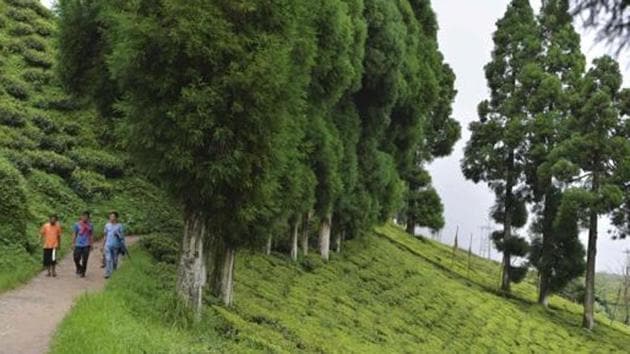
A large section of tea garden labourers - who are paid ₹176 a day at the 283 tea gardens of the region - left their jobs in recent years and went to other states in search of greener pastures. These workers still exist on the payroll of the tea companies as “absentees.”
The tea industry in north Bengal requires around three lakh workers to ensure optimal operation. R P Thapliyal, chairman, Tea Association of India, north Bengal unit, said the daily shortage in manpower hovers around 30 per cent.
The migration to other states resulted in a shortage of workers with planters finding it difficult to carry out maintenance jobs such as cleaning weeds and pruning tea bushes. To overcome this, planters are forced to hire local people from outside the industry. This leads to additional expenditure.
The HT Guide to Coronavirus COVID-19
Planters said the manpower-shortage factor affected the recent harvesting of first flush tea, the most premium product, and it was made worst due to the enforcement of social distancing norms.
S K Lama, general secretary, Himalayan Plantation Workers’ Union, which is affiliated to the Gorkha National Liberation Front, said, “Tea gardens can employ people returning from other states. They used to work in these tea gardens till recently. The trade unions will demand their absorption.”
A senior workers’ welfare officer from a garden owned by a nationally known company said, “Some people have already applied for jobs in our garden in the Dooars region. We are forced to hire workers from outside the industry. If the migrant labourers are declared medically fit, then there should be no problem in allowing them in. After all, they are already trained.”
A planter in the Darjeeling hills, who did not wish to be named, said, “Once the government allows us to operate with full strength we will hire many of these home-bound workers.”
J B Tamang, a senior leader of Darjeeling Terai Dooars Plantation Labour Union (DTDPLU), affiliated to the Binoy Tamang faction of the Gorkha Janmukti Morcha (GJM), said “Some gardens are operating with only 50 per cent manpower. The workers left because the wages in the gardens is lower than what some industries offer in other states.”
The returnees, however, have an obstacle to cross before they can find work again at the tea gardens, according to Ram Avtar Sharma, secretary, Tea Association of India.
“These people are absentees and some disciplinary action has already been initiated against them. The labour laws will follow their own course. Future will decide whether they will be employed, but there is hope.”


