
 E-Paper



Covid underscored need for reliable supply chain: Jaishankar at Future of Asia meet
Addressing the conference organised by Nikkei, Jaishankar said India is working to “strengthen and de-risk the global economy” through partnerships such as the Supply Chain Resilience Initiative with Japan and Australia


The global Covid-19 crisis has highlighted the importance of strategic autonomy for decision-making by nations and the need for reliable supply chains that won’t be affected by events such as pandemics, external affairs minister S Jaishankar said on Thursday.
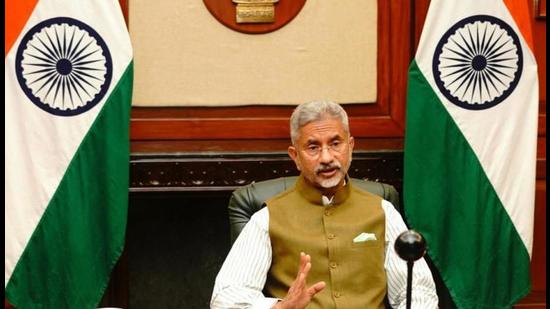
Addressing the Future of Asia conference organised by Nikkei, Jaishankar said India is working to “strengthen and de-risk the global economy” through partnerships such as the Supply Chain Resilience Initiative with Japan and Australia.
“We in India are going through a particularly difficult situation right now. Understandably, the world’s attention is focused primarily on the public health response...What perhaps is yet to be fully comprehended is [the pandemic’s] long-term impact on the global order, including on the future of Asia,” he said.
The Covid-19 crisis has underscored the value of trust and transparency and importance of reliable supply chains, while also heightening risk aversion and encouraging strategic autonomy to address over-dependence, he added.
Jaishankar said countries around the world are now focused on creating greater global capacities so that pandemic-scale challenges can be faced effectively, and establishing resilient supply chains. “Covid-19 has certainly triggered debates on issues like supply chains, global governance, social responsibility and even ethics,” he said.
In an apparent reference to China’s dominance of supply chains, the minister said parts of the world that were previously more sanguine about globalisation have begun attaching more importance to strategic autonomy.
“The efficiency of others may have strengthened bottom-lines in good times; they are now seen as too vulnerable in difficult ones. Disruptions also raised natural concerns about long-term reliability and resilience. In many areas, it became apparent that the global economy was dangerously dependent on specific production centres,” he said.
Also Read | ‘Majority of 80 million jabs to be routed via Covax’: US official
“The nature of the Covid experience has also brought to fore concerns of trust and transparency. Opacity can no longer be overlooked; it has real implications for the rest of the world. It was bad enough to be confronted with shortages and disruptions; worse that they could become pressure points,” he added.
India can help “de-risk” the global economy through more effective partnerships, and it is working with Japan and Australia on the Supply Chain Resilience Initiative. “Where the Quad arrangement that also involves the US is concerned, its agenda today covers vaccine collaboration, critical and emerging technologies, semi-conductors, supply chains, critical materials and of course connectivity,” he said.
Recent summits with the European Union and the UK had witnessed advances towards free trade pacts, he noted.
India has also taken steps to improve its national capacities, including reforms such as production-linked incentive (PLI) schemes to encourage manufacturing in 13 sectors such as mobiles, APIs for pharmaceuticals, medical devices, electronic products, networking products, food items and auto components.
“By creating a level-playing field and encouraging a component eco-system, it will integrate India deeper into the global supply chain,” Jaishankar said.


