
 E-Paper



Defence exports touch record high of ₹23.6k cr
Defence minister Rajnath Singh said India is marching towards achieving the target of increasing defence exports to ₹50,000 crore by 2029

 Prefer HTon Google


NEW DELHI: India’s defence exports touched a record high of ₹23,622 crore in the financial year 2024-25 on the back of policy initiatives and reforms, a growth of 12.04% over last year, the defence ministry said on Tuesday.
The figure stood at ₹21,083 crore in FY 2023-24.
“The defence public sector undertakings have shown a significant increase of 42.85% in their exports in the FY 2024-25 reflecting the growing acceptability of Indian products in the global market and the ability of the Indian defence industry to be a part of the global supply chain,” the ministry said in a statement.
Official data shows that the private sector and DPSUs contributed ₹15,233 crore and ₹8,389 crore to exports in 2024-25, respectively, compared to last year’s corresponding figures of ₹15,209 crore and ₹5,874 crore.
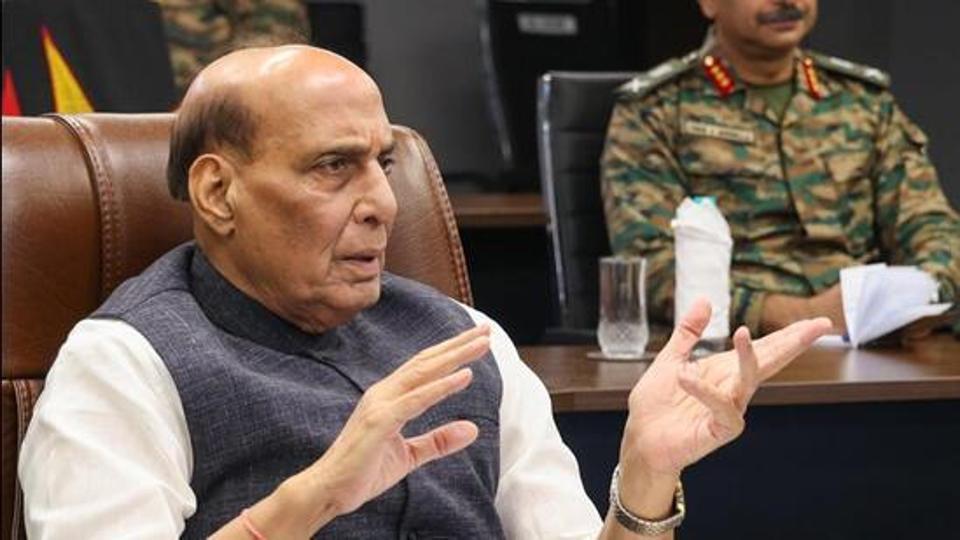
India is marching towards achieving the target of increasing defence exports to ₹50,000 crore by 2029, defence minister Rajnath Singh said.
India has evolved from a largely import-dependent military force to one increasingly focused on self-reliance and indigenous production, the statement said. “In a major boost to defence exports, items ranging from ammunition, arms, sub-systems/systems and parts and components have been exported to around 80 countries in the just-concluded FY.”
In all, 1,762 export authorisations were issued in FY 2024-25 compared to 1,507 in the previous year, a growth of 16.92%. The total number of exporters also grew by 17.4%, the data shows.
Several policy reforms have been ushered in by the government in the past few years to boost the Indian defence industry, including simplification of industrial licensing procedure, removal of parts and components from the license regime, and simplification of export authorisation.
India has also taken several measures to boost self-reliance in the defence manufacturing sector during recent years. These include imposing phased import bans on different types of weapons and systems, creating a separate budget for buying locally made military hardware, increasing foreign direct investment (FDI) from 49% to 74% and improving ease of doing business.


