
 E-Paper



Delayed monsoon hits sowing of kharif crops
Monsoon for the season was 7% deficient between June 1 and July 10, latest available data from the India Meteorological Department (IMD) showed.

 Prefer HTon Google


Planting of kharif or summer-sown crops has been hit by patchy rains in many parts of the country as the southwest monsoon showed a seasonal deficit of more than 5% for the first time this year on July 10.
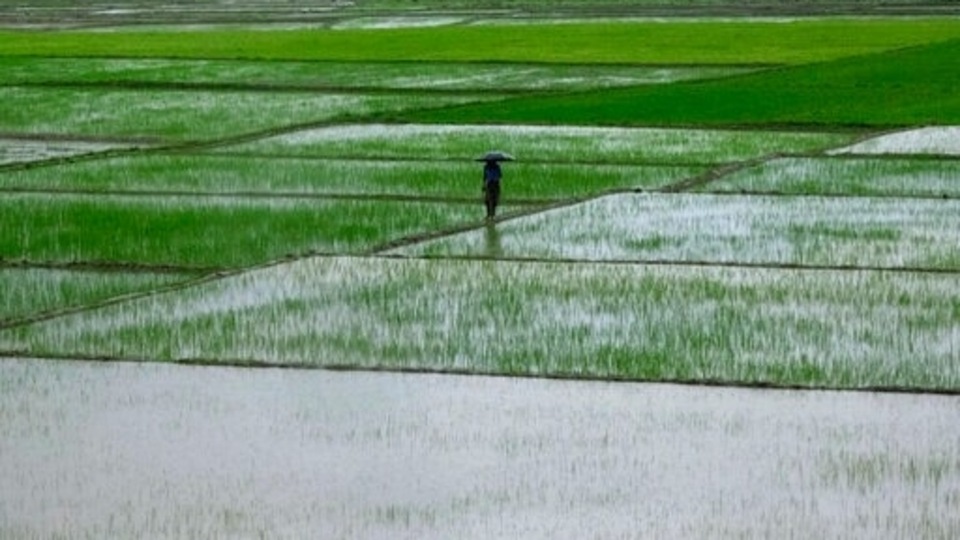
Forecasters said the rain-bearing system should reactivate soon. But the total acreage of kharif crops stood at 49 million hectares, nearly 11% less than 55 million hectares sown during the corresponding period last year, data from the agriculture ministry showed.
Monsoon for the season was 7% deficient between June 1 and July 10, latest available data from the India Meteorological Department (IMD) showed.
While rains were plentiful after their onset in the first week of June, the rain-bearing system entered a hiatus around June 19 driven by unfavourable weather patterns.
The monsoon is critical for Asia’s third largest economy, as nearly 60% of the country’s net-sown area doesn’t have irrigation access and half of the country’s population depends on a farm-derived income. The rains also replenish more than 100 nationally important reservoirs, critical for drinking water, power supply and irrigation.
Millions of farmers depend on the rains to sow a range of summer crops, such as rice, oilseeds, pulses, millets, sugarcane, and cotton. Driven by robust showers during the 2020 kharif season, sowing of kharif crops had picked up sharply, exceeding normal levels in June 2020.
As on July 10, 2021, the area under rice, a key driver of farm incomes, stands at 11 million hectares compared to a normal area of 11.6 million hectares during the corresponding period. Acreage of total coarse cereals, which includes millets such as jowar, has been estimated to be 7.3 million hectares so far compared to a normal of 8.7 million hectares, the ministry’s data showed.
On June 25, total sown area was 21% lower compared to the area cultivated in the same period a year ago.
The rains turned deficient from June 21, IMD data shows. The week ending June 30, rainfall for the whole country was 30.2% below the “long-period average”, which is considered the normal level.
The IMD has forecast normal rainfall for July, saying that the monsoon should pick up by mid-July. “Monthly rainfall for July 2021 over the country as a whole is most likely to be normal (94 to 106 % of Long Period Average),” its latest bulletin for July rainfall stated.
Meteorological subdivisions such as east Madhya Pradesh, Punjab, east Rajasthan, west Rajasthan, parts of Gujarat region, Saurashtra, Kutch, Vidarbha, Madhya Maharashtra, Chhattisgarh, coastal Karnataka, and south interior Karnataka received lower than average precipitation, the data showed.
“July rainfall is the most critical during the four-month kharif season. In areas where irrigation is not available, there will be impact in sowing..,” said Jeet Singh Sandhu, vice-chancellor of the SKN Agricultural University, Jaipur.
Till July 9, the actual cumulative monsoon rainfall received in the country stood at 223 mm against a normal of 234.5 mm between June 1 and July 9.
An agriculture ministry official said sowing was less than normal in Maharashtra, Gujarat, Rajasthan, Haryana, and Punjab due to erratic rain or little rain during the monsoon period so far.


