
 E-Paper



Delhi pollution: Capital breathes toxic air as AQI ‘severe’ in many areas | Details
Delhi air pollution: AQI was in "severe" category in Ashok Vihar, Bawana, Dwarka, Jahangirpuri, Mundka, Moti Bagh, NSIT Dwarka Najafgarh and some other places.


Delhi AQI today: Air pollution in many areas in Delhi remained in the “severe” category for the third consecutive day on Tuesday, with the average Air Quality Index (AQI) in Anand Vihar reaching 448 (PM10) at 10am, the Central Pollution Control Board (CPCB) data showed.
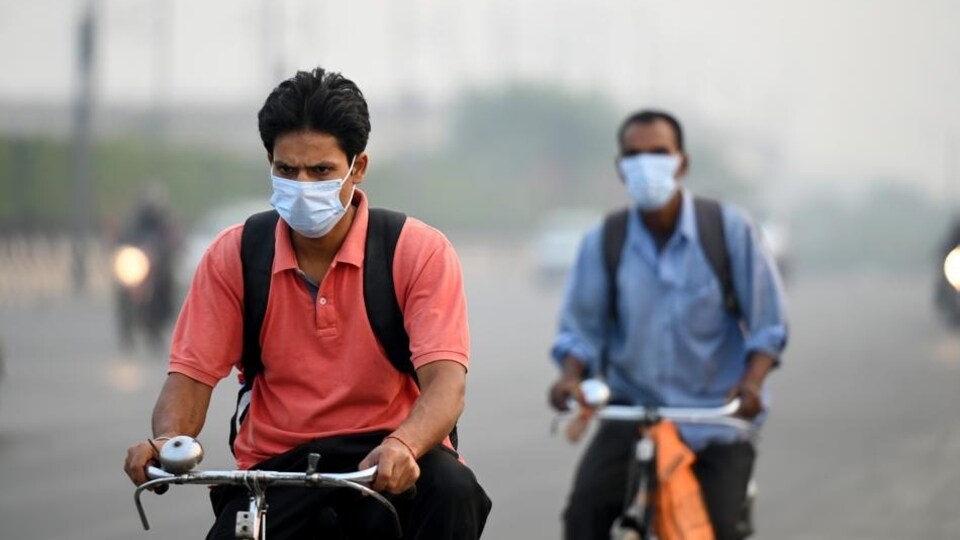
According to the CPCB, 17 monitoring stations recorded AQI in the “severe” category on Monday, with the pollution levels exceeding 400, up from 15 stations on Sunday.
Delhi's 24-hour average AQI, recorded at 4pm daily, stood at 381 on Monday. It was 382 on Sunday.
Also Read | Chandigarh’s AQI remains poor
The AQI was in the "severe" category in Ashok Vihar, Bawana, Dwarka, Jahangirpuri, Mundka, Moti Bagh, NSIT Dwarka, Najafgarh, Nehru Nagar, Okhla Phase 2, Patparganj, Punjabi Bagh, Sonia Vihar, Anand Vihar, Rohini, Wazirpur, and Vivek Vihar.
An AQI between zero and 50 is considered "good", 51 and 100 "satisfactory", 101 and 200 "moderate", 201 and 300 "poor", 301 and 400 "very poor", 401 and 450 "severe" and above 450 "severe plus".
Despite a brief respite from pollution due to favourable winds, Delhi experienced a rise in pollution levels after Diwali, with a significant increase noted on Sunday as conditions worsened.
Also Read | First time post-Diwali, Ghaziabad, Noida air plunges to ‘very poor’ level
Experts pointed out that winds are calming, and without any new western disturbances, the 24-hour average air quality is expected to stay in the “very poor” range, potentially reaching the “severe” category.
Area-wise average AQI in Delhi at 10am:
Anand Vihar: 448 (PM10 pollutant)
Ashok Vihar: 410 (PM2.5 pollutant)
Burari Crossing: 384 (PM2.5 pollutant)
Chandni Chowk: 310 (PM10 pollutant)
Dwarka-Sector 8: 407 (PM2.5 pollutant)
IGI Airport (T3): 385 (PM2.5 pollutant)
Jahangirpuri: 442 (PM10 pollutant)
Mundka: 422 (PM2.5 pollutant)
RK Puram: 400 (PM2.5 pollutant)
The Supreme Court has raised concerns over Delhi's pollution levels during Diwali, noting that the firecracker ban was scarcely enforced. The court asked the Delhi government and police to clarify the steps they took to fully implement the ban on manufacturing, selling, and bursting firecrackers, as well as the actions taken against violators.
Also Read | Delhi likely to end year with no ‘good’ air days
Delhi environment minister Gopal Rai has scheduled a meeting with relevant departments on Tuesday to review the measures under the city's winter action plan.
Across India, several locations recorded "very poor" air quality on Monday. Delhi had the second-worst AQI in the country, followed closely by Noida (Uttar Pradesh), Manesar, Kaithal, and Hisar (Haryana), and Hajipur (Bihar). The city with the highest AQI was Sri Ganganagar in Rajasthan.
Mahesh Palawat, Skymet's vice president, warned that pollution levels may worsen in the coming days due to unfavourable weather. With no significant western disturbance anticipated, calm or stagnant winds may cause pollution to remain in the "very poor" category or even reach "severe" levels.
According to the CPCB, the primary pollutant in Delhi on Monday was PM2.5, a fine particulate matter that can penetrate deep into the lungs, posing health risks. The Centre’s Decision Support System for Air Quality Management identified vehicular emissions as the top contributor to Delhi’s pollution, accounting for around 12.5% on Monday, with projections suggesting it will remain the leading source, contributing about 11% over the next two days.
(With inputs from PTI)


