
 E-Paper



Stricter anti-pollution measures reinforced in Delhi as AQI drops amid cold wave
Delhi-NCR has implemented GRAP-3 due to a spike in pollution levels. Restrictions include a ban on non-essential construction and strict vehicle regulations.

 Prefer HTon Google


The Centre’s air quality panel has invoked the third phase of the Graded Response Action Plan (GRAP-3) in Delhi-NCR as the national capital grapples with a sharp rise in pollution levels. The decision was triggered after the Air Quality Index (AQI) crossed into 'very poor' category on Monday. As a result, the city has imposed stringent measures to curb air pollution, including a complete ban on non-essential construction and demolition activities.
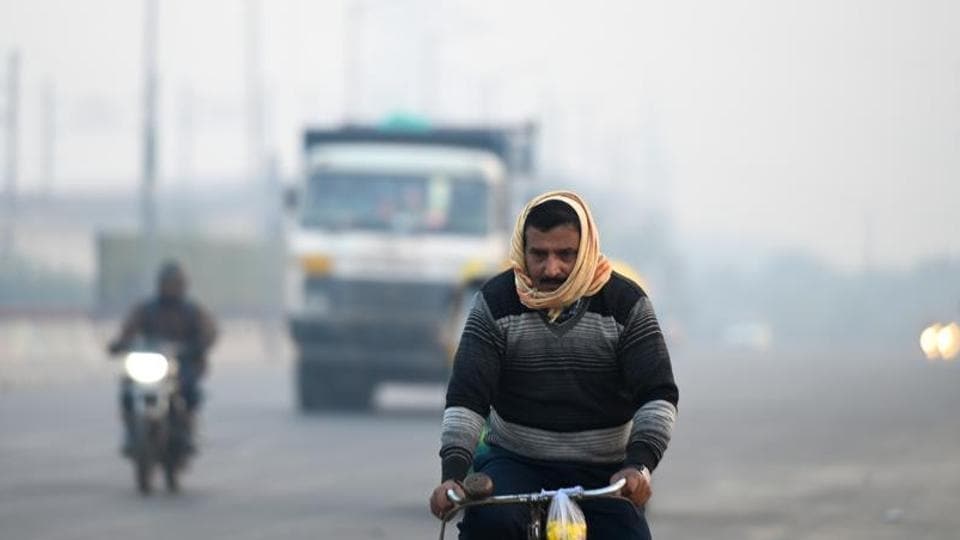
The move comes as Delhi experiences a cold wave, with the India Meteorological Department (IMD) recording a minimum temperature of 4.5°C on Monday morning. The temperatures dipped further in certain areas, reaching 3.5°C in Pusa and 4.1°C in Ayanagar. The combination of low temperatures and poor air quality has worsened the already challenging pollution levels in the city.
What is GRAP 3?
Under the GRAP-3 guidelines, several key restrictions will come into effect. Petrol vehicles that do not meet the BS-III emission norms and diesel vehicles failing to comply with BS-IV standards are prohibited from entering Delhi and parts of the National Capital Region (NCR), including Gurugram, Ghaziabad, Faridabad, and Gautam Budh Nagar. These measures aim to reduce vehicular emissions, which are a major source of pollution during the winter months.
Additionally, the ban on construction work extends to all non-essential projects, though exceptions are made for national security, healthcare, and specific public infrastructure projects. To further combat the pollution, the authorities have ramped up efforts to suppress dust by deploying mechanised road-sweeping and water-sprinkling machines across the city.
Diesel generator sets, another significant contributor to air pollution, will be restricted to emergency use only during this phase. The goal is to minimise the release of particulate matter and other pollutants into the air, which can have severe health impacts, particularly for vulnerable groups such as children, the elderly, and those with respiratory conditions.
Delhi's cold wave
Delhi recorded an Air Quality Index (AQI) of 351 at 9 am, according to the Central Pollution Control Board. An AQI between zero and 50 is considered 'good', 51 and 100 'satisfactory', 101 and 200 'moderate', 201 and 300 'poor', 301 and 400 'very poor' and 401 and 500 'severe'.
The authorities have also forecast a slight improvement in the weather conditions, with the maximum temperature expected to rise to around 23°C. However, the cold wave is expected to persist, making it harder for pollutants to disperse and leading to a continued deterioration of air quality.


