
 E-Paper



Let July 20 probe into Delhi protest kick off: Supreme Court on plea to widen remit
Petitioners seek reconstitution and further inquiry into the roles of government officials, including Union Home Minister Amit Shah.

 Prefer HTon Google


The Supreme Court on Tuesday said the five-member high-powered enquiry committee (HPEC), headed by its former judge Justice R Subhash Reddy, should be allowed to conduct its independent inquiry into allegations of excessive use of force during the July 20 protest in Delhi, even as petitioners sought its reconstitution and a wider probe into the alleged role of Union home minister Amit Shah and some other senior government and police functionaries.
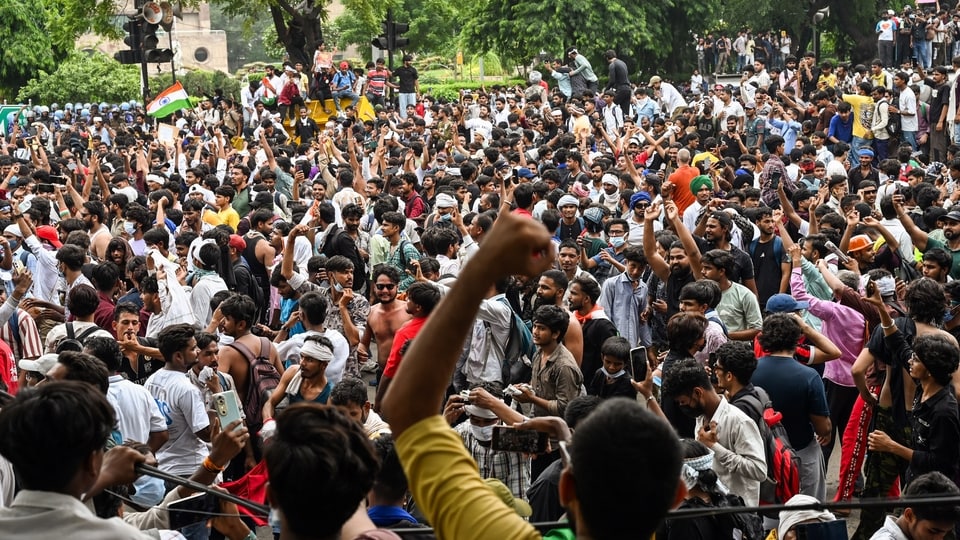
The matter was mentioned before Chief Justice of India Surya Kant by senior advocate Gopal Sankaranarayanan, who sought an early listing of an application filed by the petitioners seeking reconstitution of the committee. The CJI said the application would be listed.
“Whosoever will work, they will work under the direct supervision of this court. We have not disposed of the matter and will monitor everything,” said the C
The court also urged the petitioners to allow the committee to begin its work and raise any concerns before the court as the inquiry progresses.
“Sometimes, we have to also work under some constraints like availability and other factors. You all are also there to assist the committee and can point out to us as and when there are concerns. Let them work and see how they perform,” added the CJI.
Solicitor General Tushar Mehta, appearing for the Delhi Police, opposed the application, describing it as “mischievous” and objecting to the petitioners’ demand for reconstitution of the committee. When Sankaranarayanan said the petitioners were only seeking listing of the application, Mehta pointed out that it also named judges whom the petitioners wanted on the panel, apart from seeking probe against certain ministers.
Also Read | July 20 CJP protest: No separate probe into claims of sexual assault, says SC
“We don’t appreciate mentioning names of the judges like this,” the CJI told Sankaranarayanan.
At this point, advocate Prashant Bhushan, appearing for another petitioner, said there were “some misgivings” among petitioners but stressed that they were pursuing a common cause.
Mehta, however, said some petitioners had “misgivings about everyone and all institutions” and described the application as “certainly not in good taste”.
The application, filed a day ago by petitioner Shailendra Mani Tripathi, seeks reconstitution of the HPEC, contending that it does not have the composition and expertise necessary to conduct an independent probe into the allegations. The petitioner has sought that the committee be headed by a retired Chief Justice of India and include independent members with relevant expertise.
The petitioners had earlier proposed that a former CJI head the panel and had suggested the names of Justices Uday U Lalit, Sanjiv Khanna and Bhushan R Gavai for consideration. They had also proposed the inclusion of a retired woman DGP and a former Attorney General, besides investigative officers and forensic and technical experts.
The application questions the absence of these categories of members from the committee constituted by the Supreme Court on August 18. It alleges that publicly available information about the non-judicial members does not show specialised experience in investigating excessive use of police force or examining senior executive and police officials. It also raises a “structural concern” about the committee’s independence, while clarifying that the objection is not directed at the personal integrity of any member.
The petitioners have specifically sought an inquiry into the alleged role of Union home minister Amit Shah, Delhi Police commissioner Anurag Kumar and other senior officials of the Ministry of Home Affairs, Delhi Police and the Rapid Action Force. The application says such an inquiry would examine, among other things, directions issued before and during the July 20 protest, instructions concerning the use of force, and disciplinary action against personnel accused of excessive or unlawful force.
Probe to examine police chain of command, use of force and alleged evidence planting
The proposed terms of reference also seek an investigation into the chain of command and accountability for alleged excessive use of force, including allegations involving weapons and equipment such as pellet guns and electric batons, as well as alleged planting of evidence at protest sites.
The July 20 march to Parliament by protesting students came weeks after the agitation against leaks in the NEET test paper that necessitated a retest began; the protests, catalysed and headed by the Cockroach Janta Party, also demanded the resignation of then education minister Dharmendra Pradhan. The government eventually gave in to the demands on July 25 and the same day, Pradhan resigned. The government also set up a committee headed by Infosys chairman Nandan Nilekani to reform the test process and launched efforts to strengthen the test conducting agency NTA.
The Supreme Court had on July 28 recorded that the allegations prima facie warranted an independent and impartial investigation into the incidents of violence. The Union government and Delhi government had stated that they had no objection to an independent and fair probe, while denying that the police had committed excesses.
The HPEC, headed by Justice (retired) Reddy, was constituted by the Supreme Court to conduct an independent and impartial inquiry into competing allegations arising from the July 20 student protest -- petitions alleging excessive force by police as well as pleas concerning violence against police personnel and legality of the protest.
Also Read | No separate probe into claims of sexual assault at July 20 protest: Supreme Court
Other members of the committee include Justice (retired) Ravi Shankar Jha, former chief justice of the Punjab and Haryana high court; justice (retired) Shalinder Kaur, former Delhi high court judge; Rishi Kumar Shukla, former Central Bureau of Investigation director; and LR Bishnoi, retired director general of police, Meghalaya.
Its mandate extends beyond the immediate allegations of police violence. The committee has been asked to examine the use of pellet guns, electric batons, lathis and tear gas, the proportionality of police action, the use of blanket prohibitory orders, surveillance of protesters and the invocation of Section 152 of the Bharatiya Nyaya Sanhita, which criminalises acts endangering the sovereignty, unity and integrity of India.
The committee has also been asked to examine allegations of violence by protesters against police personnel, damage to public property and injuries suffered by security personnel.
On the allegations concerning women protesters, the court had specifically directed the panel to examine incidents of targeted violence, harassment, molestation and secondary victimisation, besides assessing medical and other support provided to victims and the possibility of interim compensation.
Also Read | FIR for pellet injury during July 20 stir filed after Rahul Gandhi protests for over 6 hours
The court had also directed the authorities to preserve CCTV and drone footage, body-worn camera recordings, videography, wireless communication records and PCR call logs relating to the protests and hand them over to the committee.
The committee can receive documentary evidence and representations from affected persons and has been permitted to allow anonymous complaints to protect the identities of complainants and witnesses.
The HPEC is required to submit interim findings periodically, with its first report to cover allegations of grievous injuries caused by police and security personnel and the complaints concerning targeted violence, harassment and molestation of women protesters.



