
 E-Paper



Delhi vs Mumbai air pollution: Which city fares better? Take a look
A comparison of the Air Quality Index between the two cities of the last three days.

 Prefer HTon Google


With the winter season looming, pollution levels across major Indian cities have started to touch harmful levels.
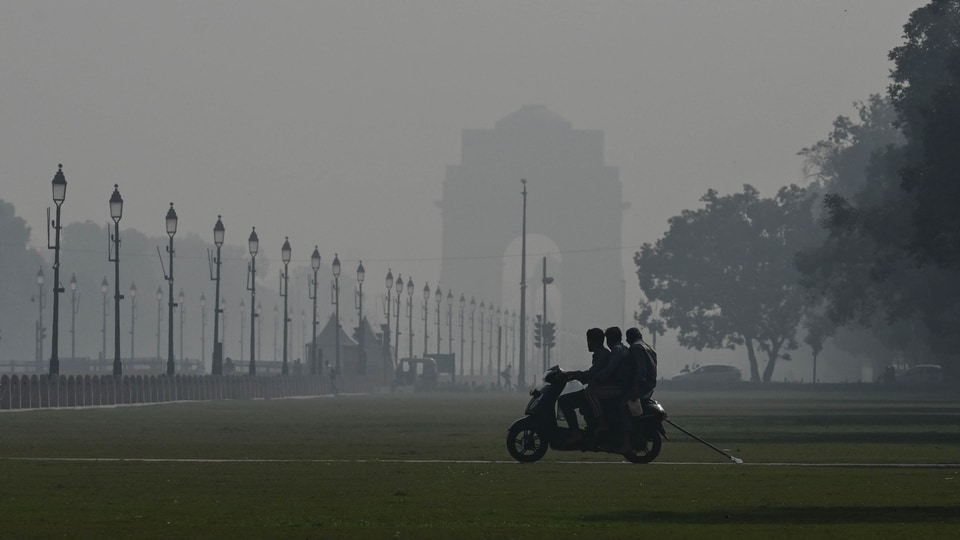
For the last few days, pollution levels in Mumbai and Delhi have once again started to make headlines.
On Sunday, the overall air quality in the national capital Delhi deteriorated to the “very poor” category, with the Air Quality Index (AQI) at 302.
In Mumbai, the situation was a little better as the air quality continued to remain in the ‘moderate’ category with AQI at 132.
An AQI between 0-50 is considered "good", 51-100 "satisfactory", 101-200 "moderate", 201-300 "poor", 301-400 "very poor" and 401-500 "severe". An AQI above 500 falls in the "severe plus" category.
Here we take a look at the pollution levels in Delhi and Mumbai in the last three days.
Delhi vs Mumbai pollution levels: October 21
On Saturday, the average air quality in Delhi clocked at 248 and was predicted to dip into ‘very poor’ category (301-400) on October 23 and 24, due to the unfavourable meteorological and climatic conditions.
Owing to the situation, the Commission for Air Quality Management (CAQM)'s sub-committee invoked the 11-point action plan as per Stage-II of Graded Response Action Plan (GRAP) in the national capital region.
Under GRAP-2 restrictions, there will be a ban on the use of coal and wood-fired stoves, the frequency of CNG and electric buses will be increased, regular cleaning of roads and a sprinkling of water will be done, traffic police will ensure there are no traffic jams to curb the pollution.
VK Soni, a scientist at the India Meteorological Department (IMD) and member of the CAQM sub-committee, attributed the declining air quality to calm winds in the Capital. “The winds are particularly slow now and boundary layer height is shallow. These factors are favourable for the accumulation of pollutants. The contribution from stubble burning is still very small, but picking up,” said Soni.
In Mumbai, the air quality was recorded at moderate levels at 132, according to the System of Air Quality and Weather Forecasting And Research (SAFAR). The Central Pollution Control Board (CPCB), on the other hand, had recorded the air quality of the city at 155.
Delhi vs Mumbai pollution levels: October 20
Delhi's AQI stood at 190 around 7 pm on October 7, data from the CPCB showed. The city recorded a maximum temperature of 31.1 degrees Celsius, a notch below the season's average.
In Mumbai, the air quality in the city was above 200 (poor) at several places in the city during the day, according to CPCB data.
Delhi vs Mumbai pollution levels: October 19
On October 19, Delhi's 24-hour average AQI was recorded at 121 (moderate) on Thursday. It was 129 (moderate) on Wednesday and 89 (satisfactory) on Tuesday.
In Mumbai, on the other hand, the data from the CPCB showed that the average AQI score of Mumbai on the day stood at 156 (moderate).


