
 E-Paper



Does XE variant spread rapidly? What top government expert said
So far, there is no scientific evidence XE is any more serious in disease severity than all Omicron variants. The WHO also said that more data is needed to understand the transmissibility of the mutation

 Prefer HTon Google


The Omicron variant of the coronavirus is giving rise to many variants, Dr NK Arora, National Technical Advisory Group on Immunisation (NTAGI) chief, said on Monday, underlining that it's not a reason to panic. "It's of X series like XE and others... nothing to panic about as none of these are causing serious diseases or at the moment from Indian data it doesn’t show a very rapid spread," COVID-19 task force chairman Dr N K Arora was quoted as saying by news agency ANI.
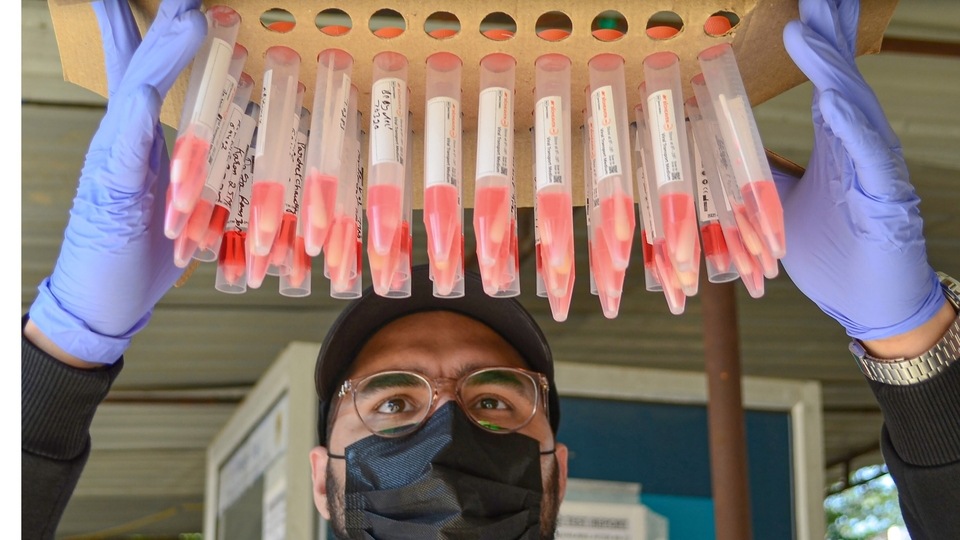
This comes as a case of Omicron sub-variant XE was detected in Gujarat on Saturday. A recombinant variant of two Omicron strains - BA.1 and BA.2 - the subvarianrt was detected as a 67-year-old man tested positive a month ago, state officials said. The centre, however, is yet to confirm the case. Another case was earlier reported in Mumbai by the civic body.
A few days back, the World Health said that the XE variant was first detected in the UK on January 19 and more than 600 sequences were reported and confirmed since then. The subvariant has also been detected in Thailand and New Zealand.
So far, there is no scientific evidence XE is any more serious in disease severity than all Omicron variants. The WHO also said that more data is needed to understand the transmissibility of the mutation
Some of the symptoms to watch out for include fever, sore throat, scratchy throat, cough and cold, skin irritation and discolouration, gastrointestinal distress, etc.
The symptoms of the XE variant can be mild and severe for others, depending on the health condition of an individual. The symptoms and severity also depended on the vaccination status and immunity acquired from earlier infections.


