
 E-Paper



Autoclave seized from Chinese ship can be for Pak’s Shaheen II Nuke Missile
Analysts said DRDO’s confirmation exposes the nuclear nexus between China and its all-weather ally Pakistan.

 Prefer HTon Google


Experts from the Defence Research and Development Organisation (DRDO) have confirmed that an industrial autoclave seized from the Chinese ship Dai Cui Yun can be used for the manufacture of very long-range ballistic missiles or satellite launch rockets. The ship was detained by Customs at Kandla Port while en-route to Port Qasim, Karachi, on February 3 on the basis of an intelligence tip-off and allowed to proceed to the Pakistani port on February 20 after the so-called dual-use (civilian and military) equipment was seized. The autoclave was misdeclared as an industrial dryer.
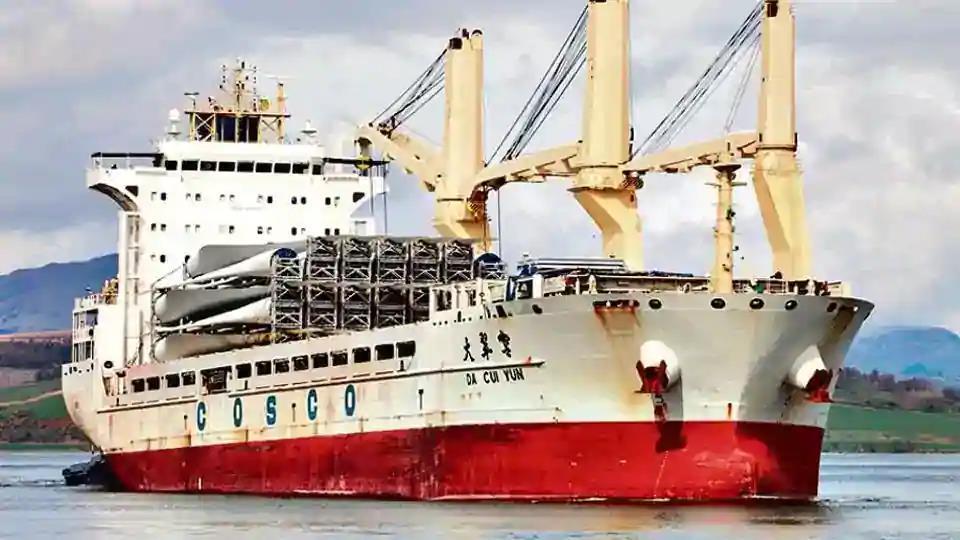
Hindustan Times first reported the seizure.
Analysts said DRDO’s confirmation exposes the nuclear nexus between China and its all-weather ally Pakistan. According to top government and intelligence officials, the DRDO’s technical experts and missile scientists informed the Kandla Customs, the ministry of external affairs and national security planners on Tuesday morning that the seized 18 metre by 4 metre autoclave can indeed be used in the manufacture of weapons of mass destruction (WMD) platforms.
“The autoclave can be used for the manufacture of the motor of very long range missiles, with range upwards of 1,500 kilometres or even in the construction of a motor for the launch of satellites. Pakistan has the Shaheen II missile in the 1,500-2,000 kilometre range and the platform was tested last May,” said one of the officials, who asked not to be named.
According to the officials, it is now up to India’s national security planners to invoke the Weapons of Mass Destruction and Their Delivery Systems (Prohibition of Unlawful Activities) Act 2005 as well as inform the UN under the WMD Convention to expose the nuclear proliferation nexus between Beijing and Islamabad. Under Indian law, any contravention of the above law attracts a punishment of not less than five years’ imprisonment which may be extended to imprisonment for life with an added fine. The autoclave was being imported by the Islamabad-based United Construction Company and Hong Kong-based General Technology had booked the consignment.
North Korea, initially, and then China have helped Pakistan in the development of nuclear missile delivery platforms by supplying M-11 and M-9 missiles. Islamabad’s nuclear missile programme is not indigenous and is based on Chinese design with Beijing helping Islamabad since the 1980s. It is for no other reason that China is blocking India’s entry into the Nuclear Suppliers Group (NSG) till Pakistan is also allowed into the nuclear club.
Given the seizure of the autoclave, India’s friends such as France and the US can now pressure Beijing to allow India into the NSG, the officials said, adding that the country’s record in context of nuclear proliferation was spotless.


