E-Paper



Seek early resolution of issues along LAC: Jaishankar to Chinese counterpart
The two leaders held an hour-long meeting on the margins of a G20 foreign ministers’ meeting being hosted in Bali by Indonesia, the current president of the grouping of the world’s 20 largest economies

 Prefer HTon Google


India on Thursday sought early resolution of all outstanding issues on the Line of Actual Control (LAC), with external affairs minister S Jaishankar pressing his Chinese counterpart Wang Yi to complete the disengagement of troops in order to restore peace and tranquillity in border areas.
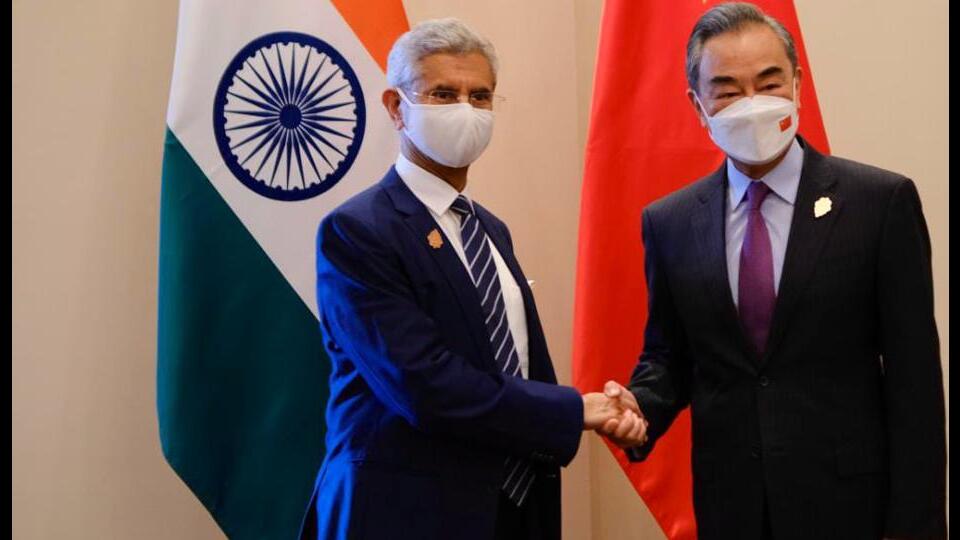
The two leaders held an hour-long meeting on the margins of a G20 foreign ministers’ meeting being hosted in Bali by Indonesia, the current president of the grouping of the world’s 20 largest economies. The dragging military standoff has taken bilateral ties to an all-time low and the two sides have been able to withdraw frontline troops from all friction points despite numerous rounds of talks.
Also Read:EAM Jaishankar meets top Singapore leaders ahead of G20 foreign ministers’ meet
“Began my day in Bali by meeting FM Wang Yi of China. Discussion lasted one hour,” Jaishankar tweeted.
“Focused on specific outstanding issues in our bilateral relationship pertaining to the border situation. Also spoke about other matters including students and flights,” he said. Jaishankar said he and Wang also “shared perspectives on the international situation and its impact on the G20 deliberations”.
A statement from the external affairs ministry said Jaishankar called for an “early resolution of all the outstanding issues along the LAC in eastern Ladakh”.
Recalling the disengagement of troops in some friction areas, Jaishankar “reiterated the need to sustain the momentum to complete disengagement from all the remaining areas to restore peace and tranquillity in the border areas”, the statement said.
He emphasised the importance of “fully abiding” by bilateral agreements and protocols and understandings between the two ministers during their previous conversations.
Both ministers agreed that military and diplomatic officials of India and China should continue maintaining regular contact and looked forward to the next meeting of senior military commanders at an early date.
Jaishankar reiterated that the India-China relationship is “best served by observing the three mutuals – mutual respect, mutual sensitivity and mutual interests”.
He also recalled his meeting with Wang in New Delhi on March 25 and reviewed the progress in some key issues discussed at that time, including the return of Indian students to China. Jaishankar stressed the need to expedite this process and facilitate the return of students at an early date.
This was the fourth meeting between Jaishankar and Wang since the standoff on the LAC began in April-May 2020. A brutal clash at Galwan Valley in June 2020 resulted in the death of 20 Indian soldiers and at least four Chinese troops – the first fatalities on the LAC in 45 years – and the two sides have currently arrayed about 50,000 troops each in the Ladakh sector.
Jaishankar has repeatedly said the standoff on the LAC was the outcome of China violating agreements and protocols for border management by massing large numbers of troops in Ladakh sector and unilaterally attempting to alter the status quo. He has also said bilateral ties cannot be normalised till peace and tranquillity is restored at the border.
On the other hand, China contends the border issue should be put in its “appropriate place” while the two countries take forward relations in other spheres, such as trade.
After the standoff began, Jaishankar and Wang first met on the margins of a meeting of foreign ministers of the Shanghai Cooperation Organisation (SCO) in Moscow in September 2020. A joint statement issued at the time had said the two ministers had agreed the situation in the border areas is not in the interest of either side, and that they had agreed that border troops of both sides “should continue their dialogue, quickly disengage, maintain proper distance and ease tensions”.
Despite numerous rounds of diplomatic and military talks, the two sides only agreed to pull back frontline troops from the north and south banks of Pangong Lake and at Gogra. They are yet to make headway on several other friction points such as Hot Spring and Depsang.
Wang and Jaishankar subsequently met on the margins of a SCO heads of states’ meeting in Dushanbe, Tajikistan, in September 2021. They also held talks when Wang visited New Delhi on March 25.
Jaishankar is set to hold several bilateral meetings with counterparts from other countries on the margins of the G20 foreign ministers’ meet in Bali.