E-Paper



Egypt President Abdel Fattah el-Sisi invited as chief guest for Republic Day 2023
For India, Egypt occupies a strategic position as a link between Africa and West Asia, which New Delhi describes as part of its extended neighbourhood

 Prefer HTon Google


India has invited Egyptian President Abdel Fattah el-Sisi as the chief guest for the Republic Day in 2023, reflecting New Delhi’s continuing focus on the Arab world as it prepares for a year of high-profile diplomatic engagements, people familiar with the matter said.
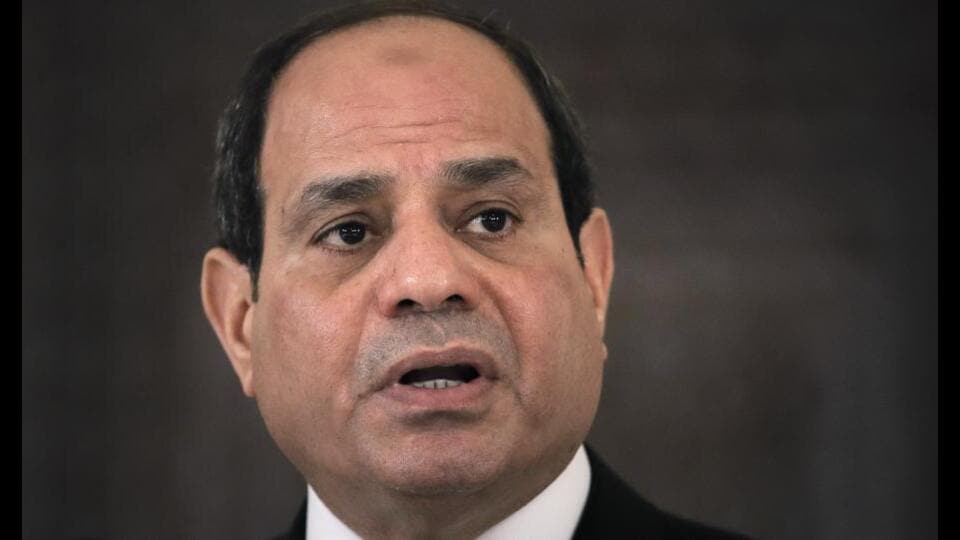
The formal invitation was handed over when external affairs minister S Jaishankar met Sisi in Cairo on October 16 during an official visit to Egypt, the people said. Egypt is among the nine guest countries invited to the G20 Summit under India’s presidency in 2023.
An invitation as chief guest for the Republic Day celebrations on January 26 is a signal honour reserved for the country’s close allies and partners. There were no chief guests at the celebrations in 2021 and 2022, largely because of disruptions caused by the Covid-19 pandemic. Former Brazilian president Jair Bolsonaro was the last chief guest to participate in the 2020 celebrations.
Following his meeting with Sisi last month, Jaishankar said in a tweet that he had conveyed the “warm greetings of PM @narendramodi and handed over a personal message”. Both countries are yet to make a formal announcement about the matter.
The 68-year-old general-turned-politician is set to be the first Egyptian leader to be hosted by India for the Republic Day celebrations though the two countries have enjoyed close relations in past decades, especially as founding members of the Non-Aligned Movement in 1961.
Talmiz Ahmad, who served as India’s ambassador to Saudia Arabia, Oman and the United Arab Emirates, said the invitation to Sisi appeared to be driven by several factors, including Egypt’s resurrection after a serious economic crisis, its independent foreign policy and its growing role in Africa. “This is a step aimed at the recovery of a very substantial traditional relationship that got diluted in the last 20 years,” he said.
Egypt faced serious domestic political issues such as the Arab Spring protests and a severe economic crisis at a time when India’s focus moved towards the Gulf countries because of interests such as energy, trade, investments and the presence of millions of expatriates, Ahmad said.
“But now, Egypt seems to have recovered and has started asserting its role over the past three-four years and it has taken substantial initiatives that are independent of the Gulf countries, such as its position on Syria, Yemen and Turkey. Egypt has also built its relations with Iraq and opened a dialogue with Iran,” he added.
Defence and security cooperation has emerged as a key pillar of India-Egypt relations in the past few years and defence minister Rajnath Singh too met Sisi when he visited Cairo during September 19-20.
Singh and his Egyptian counterpart General Mohamed Zaki signed a memorandum of understanding on enhancing defence cooperation across all sectors, and agreed to identify proposals for expanding cooperation between the defence industries of India and Egypt. The two sides also agreed to enhance joint exercises and exchanges of military personnel for training, especially in counter-insurgency.
Egypt is reportedly eyeing India’s home-grown light combat aircraft Tejas for a plan to acquire some 70 jet fighters. Egyptian Air Force chief Mahmoud Foaad Abd El-Gawad visited India in July to scout for defence equipment. This was followed by the first air force exercise between the two countries in October 2021.
For India, Egypt also occupies a strategic position as a link between Africa and West Asia, which New Delhi describes as part of its extended neighbourhood. Egypt has traditionally been one of India’s most important trading partners in Africa, and India was Egypt’s eighth largest trading partner in 2020-21.
Bilateral trade peaked at $5.45 billion in 2012-13 before declining to $3.23 billion in 2016-17 due to the general economic slowdown and decline in oil prices. Trade witnessed positive growth again from 2017-18 to reach $4.15 billion during 2020-21.