
 E-Paper



Engine of progress lies with emerging markets: Sitharaman
Union finance minister Nirmala Sitharaman on Saturday attended the Fourth and the last G20 Finance Ministers and Central Bank Governors (FMCBG) meeting under India’s Presidency in Marrakech


Union finance minister Nirmala Sitharaman on Saturday said the engine of global growth lies with emerging markets and developing economies, the stand of Prime Minister Narendra Modi at the G20 India Presidency that led to the inclusion of the African Union in this influential group.
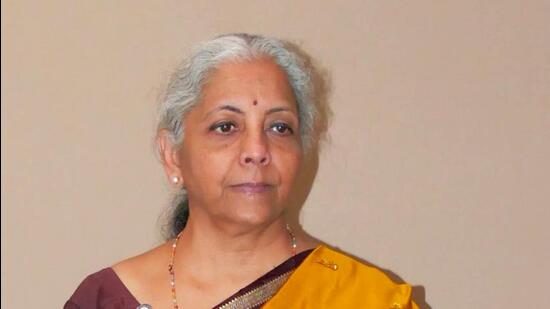
Addressing a keynote address on “Reviving Growth with Inclusivity” in Marrakech (Morocco), she said: “Most of the post-Second World War institutions, global institutions, were fashioned after most European powers or the United States of America with very little, if I may say, very little contribution from countries which have just come out of colonial rule.” So obviously, Africa and many Asian countries were not heard while setting up multilateral institutions, she added.
She was in Marrakech to attend the Fourth and the last G20 Finance Ministers and Central Bank Governors (FMCBG) meeting under India’s Presidency. The G20 Leaders in September this year unanimously adopted ‘The Delhi Declaration’ that proposes a roadmap to revive multilateral institutions such as the International Monetary Fund (IMF) and the World Bank.
Resources that are required for the equitable and inclusive global growth in the 21st century are lying untapped in the African and Latin American continents; she said urging multilateral agencies to include interests of these countries. Talking about the Global South, she said: This “is what Hon’ble Prime Minister of India did as soon as it took over the charge of the G20 Presidency” and he ensured that India’s Presidency will be the Voice of the South.
“Lucky that we had in the troika of the G20, Indonesia before us. And now, Brazil after us. Post that it’s going to be South Africa. So, you have a continuous three-four years with the emerging markets showing the leadership in the G20,” she added.
The finance minister said in today’s environment, the engine of growth actually, lies with “the emerging market economies, the developing economies”.
Stressing the need to revitalise multilateral institutions, she said these institutions were established after the Second World War and they “have stood by us for nearly 70-80 years. But, gradually now, [they are] showing signs of fatigue. And, because of that many of the objectives which were to be served, other than restoring Europe after the War, are still waiting to be served”.
She said that the structure and function of these institutions need to be revamped for greater global good. According to her, the post-Covid, and the fragmented multi-polar world, need these institutions to serve new aspirations and the challenges of 21st century.
Speaking only about Multilateral Development Banks (MDBs), she said they need to become “nimbler” in business formulations like corporate sector or private financial institutions in dealing with finances, raising resources, and handline their objectives -- “speedily and lot more efficiently”.
Earlier in the day, at the plenary meeting of the International Monetary and Financial Committee (IMFC) in Marrakech, Sitharaman said the 2023 has been a year of continued uncertainties and expressed concern about the weak medium-term growth and policy trade-offs confronting policymakers worldwide.
She underlined the need for collective action on shared problems and noted the importance of IMF’s bilateral surveillance and capacity development in providing tailored advice to members, Union finance ministry said in a series of tweets from its twitter handle.
Sitharaman reiterated the importance of IMF quota reforms to ensure an adequately resourced institution at the centre of global financial safety net, bolstering IMF’s lending capacity, and support to members through IMF’s lending toolkit to prevent debt crises.
She highlighted the need for a supportive intellectual property rights (IPR) regime for technology transfer of climate change innovations to developing countries and welcomed the emphasis on the need for global cooperation on the same.
The finance minister supported IMF’s focus on digitalisation, and highlighted that during the G20 Presidency, India has worked towards ensuring that lessons from the Digital Public Infrastructure (DPI) revolution are shared as a global public good.
In the morning at a breakfast meeting of the International Monetary Fund (IMF) on the theme of ‘Dialogue on Policy Challenges’ she expressed concern regarding the slowdown in global growth even and noted the escalating global debt vulnerabilities. She stressed on the importance of global sovereign debt roundtable to foster cooperation on this issue and bring reforms in IMF policies to engage with members in debt distress. She reiterated commitment to a strong, quota-based and adequately resourced IMF at the centre of the global financial safety net, and climate action on the principles of common but differentiated responsibilities and respective capabilities. Sitharaman emphasised that coordinated response of the global community will foster multilateralism in the spirit of ‘Vasudhaiva Kutumbakam’ -- One Earth, One Family, One Future.


