
 E-Paper



Engineers flag outdated tech behind Delhi airport’s air system breakdown
The Air Traffic Safety Electronics Personnel Association (ATSEPA–India) has said the disruption at the Delhi airport was a result of technology failure, not manpower shortage

 Prefer HTon Google


New Delhi: The engineers overseeing India’s air navigation systems have told the civil aviation ministry that the breakdown at Delhi airport was the result of “technology failure” flagging outdated systems and poor technical utilisation as root causes of the crisis.
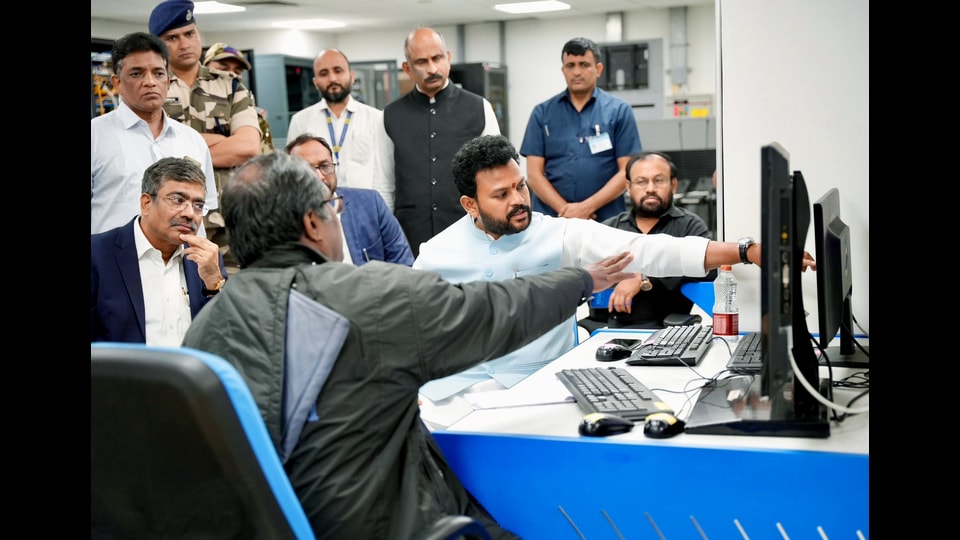
In an e-mail sent to civil aviation minister Ram Mohan Naidu, secretary Samir Kumar Sinha and Airports Authority of India (AAI) chairman Vipin Kumar on Sunday, the Air Traffic Safety Electronics Personnel Association (ATSEPA–India) said the disruption was a result of “technology failure, not manpower shortage,” pointing to the obsolete Aeronautical Message Switching System (AMSS) that “lacks redundancy and modern capability.”
“The recent operational disruptions at Delhi Airport have once again highlighted a long-standing and serious concern repeatedly raised by ATSEPA (India): the neglect of CNS infrastructure and the continuous sidelining of technical inputs provided by CNS engineers to AAI leadership,” the association said in its letter.
ATSEPA added that the crisis was “a direct consequence of over-reliance on automation without parallel strengthening of CNS infrastructure, manual procedures, and technical preparedness.”
There was no immediate response from the civil aviation ministry or the AAI on the ATSEPA’s letter. HT has reached out to the ministry for a comment. The copy will be updated when they respond.
The association, which represents engineers responsible for Communications, Navigation and Surveillance (CNS) systems, said that despite repeated warnings and proposals, the AAI had not acted with the urgency expected of a “24×7 essential aviation service.”
It said the failure that caused massive delays at the country’s busiest airport stemmed from outdated systems such as AMSS “that lack redundancy and modern capability.” “Instead of acknowledging these core issues, public attention has been misdirected toward ATCO manpower — even though ATCOs already have more than sufficient strength,” it said.
Among its key recommendations, ATSEPA called for immediate CNS modernisation across major airports with priority funding, inclusion of engineers’ inputs in all upgrade plans, and a review of operational practices that rely heavily on outdated automation.
It urged the ministry to “initiate immediate CNS modernisation across major airports with priority funding, direct AAI to incorporate CNS engineers’ recommendations while procuring or upgrading operational systems, ensure optimal utilisation of CNS manpower by avoiding their diversion to non-CNS roles, and review ATM operational practices where reluctance to manual fallback and over-dependence on outdated automation have led to avoidable errors.”
“Aviation safety today requires strong technology, competent technical manpower, and modern systems — not expansion of supervisory posts or narratives that shift focus away from real causes,” the e-mail stated.
The association said it remained committed to working with the ministry to build a “reliable, modern, and resilient aviation infrastructure” for the country.
It also raised concern over what it described as a “misdirected narrative” that attributed the problem to a shortage of air traffic controllers (ATCOs). “Public attention has been misdirected toward ATCO manpower — even though ATCOs already have more than sufficient strength,” the e-mail sent by the association’s representative, Yogendra Gautam, said.
ATSEPA further alleged that many trained CNS engineers are being posted in “non-technical or low-utility” roles while key operational stations face manpower shortages. It urged the ministry to ensure that engineers are deployed strictly for CNS functions and that their technical inputs are incorporated at the planning and procurement stages.


