E-Paper



98 killed in Manipur clashes, 36k moved to relief camps, says govt
At least 98 people have died and 310 have been injured in ethnic violence between the Meitei and Kuki communities in Manipur, India. Over 3,700 FIRs related to the violence have been registered, and 65 people have been arrested. 36,450 people are in relief camps across the state. Curfew restrictions have been lifted in some districts, although tensions remain high. The violence began on 3 May during a protest against a court-ordered tweak to the state?s reservation matrix. The authorities imposed a curfew and suspended internet access. Tens of thousands of people have been displaced.

 Prefer HTon Google


Ethnic violence in Manipur have claimed at least 98 lives and left 310 people injured, officials said on Friday, a month after the clashes broke out between the Meitei and Kuki communities.
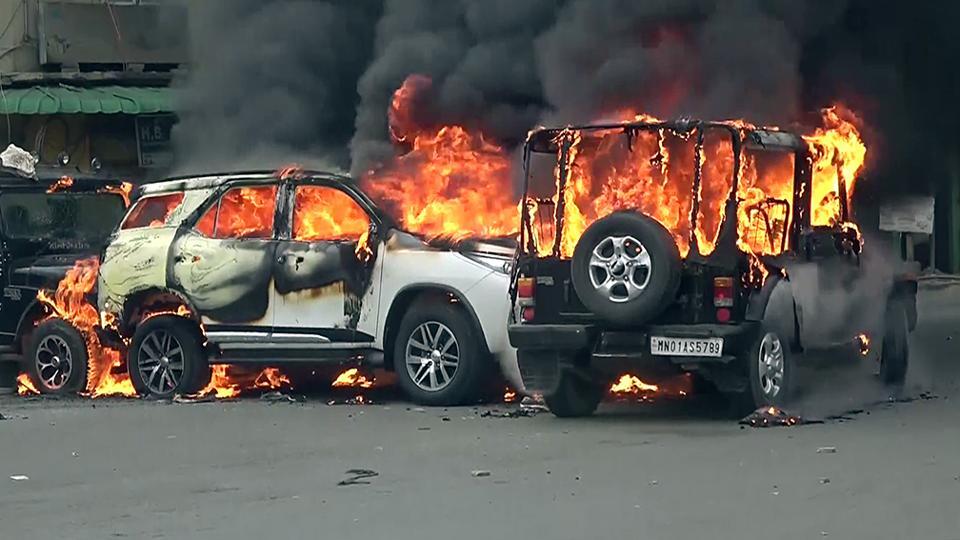
A total of 3,734 FIRs related to the violence have been registered so far, and 65 people arrested for their involvement, Manipur security advisor Kuldiep Singh said.
“The total number of arson cases registered has reached 4014 and at least 36,450 displaced people are taking shelter in 274 relief camps across the state,” Singh told news agency ANI.
After days of confusion over the number of deaths, officials on May 22 said that 74 people were killed, followed by chief minister N Biren Singh, who on May 28, said that 40 Kuki insurgents were killed in a crackdown by security forces in the preceding four days.
Bodies of most of the people killed in the violence remain unclaimed at morgues in Imphal and Churachandpur, the officials said as thousands have fled the affected areas and curfew restrictions are still in effect.
Manipur has been convulsed by ethnic violence since May 3, with the bulk of the clashes between the Meitei community, which constitutes the majority of the state’s population and lives largely in Imphal, and the Kukis, who comprise 16% of the state and live largely in the hill districts.
The officials said that curfew has been lifted from Senapati, Ukhrul, Kamjong, Noney and Tamenglong districts while relaxations from 7am to 11am every day have been announced for the rest 11 districts of the state.
“Apart from few incidents of firing taking place there has been no major violent incident since Thursday,” Singh said.
Security forced deployed in the state, meanwhile, are focusing on the recovery of arms and ammunition looted from police stations and government armouries over the last one month.
“Till now 144 weapons and 11 magazines have been surrendered. In Imphal East, 102 weapons have been surrendered, 35 in Tengnoupal, 2 from Imphal West and 5 from Thoubal,” another senior official said.
The surrendered weapons include 36 SLRs, 18 carbines, four AK47, 34 INSAS rifles, four INSAS light machine guns, 8 .303 rifles, one 9mm pistol, five .302 pistols, five M16 rifles, one country-made rifle, four smoke guns, eight local-made pistols, one Sten gun, three modified rifles, one JVP carbine and 10 grenade launchers, the officials said, a day after Union home minister Amit Shah appealed to all concerned to surrender their weapons to the security forces and administration.
An official in the Manipur government said that the assessment showed that at least 500,000 bullets, including mortars, and 3,500 guns were stolen since violence first broke out. Of these, security agencies have managed to recover144 guns, people familiar with the matter said.
On Friday, senior Congress leader and former Manipur chief minister Okram Ibobi Singh hit out at Shah for reaching the state over three weeks after clashes erupted, saying that several lives could be spared if Shah had acted sooner.
Clashes between the Kukis and Meiteis first erupted on May 3 during a protest against a court-ordered tweak to the state’s reservation matrix, granting scheduled tribe (ST) status to the latter. Violence quickly engulfed the state where ethnic fault lines run deep, displacing tens of thousands of people who fled burning homes and neighbourhoods into jungles, often across state borders. The authorities quickly clamped a curfew and suspended internet, pumping in additional security forces to force a break in the spiraling clashes. Internet is still not back in the state.
But tensions were simmering for much longer, owing to the state government’s decision to exit the tripartite accord and move against some forest dwelling groups it termed as encroachers.