
 E-Paper



‘Even Hindu dharma not registered’: Bhagwat on RSS legal status and tax exemption, cites bans to claim ‘recognition’
“We were banned thrice; hence government has recognised us. If we were not there, whom did they ban?” said Bhagwat, who leads the ideological parent body of BJP

 Prefer HTon Google


Rashtriya Swayamsewak Sangh (RSS) chief Mohan Bhagwat has responded to an ongoing debate over why the organisation is not formally registered. “Many things are not registered. Even Hindu dharma (religion) is not registered,” Bhagwat has said, as per news agency PTI on Sunday, November 9.
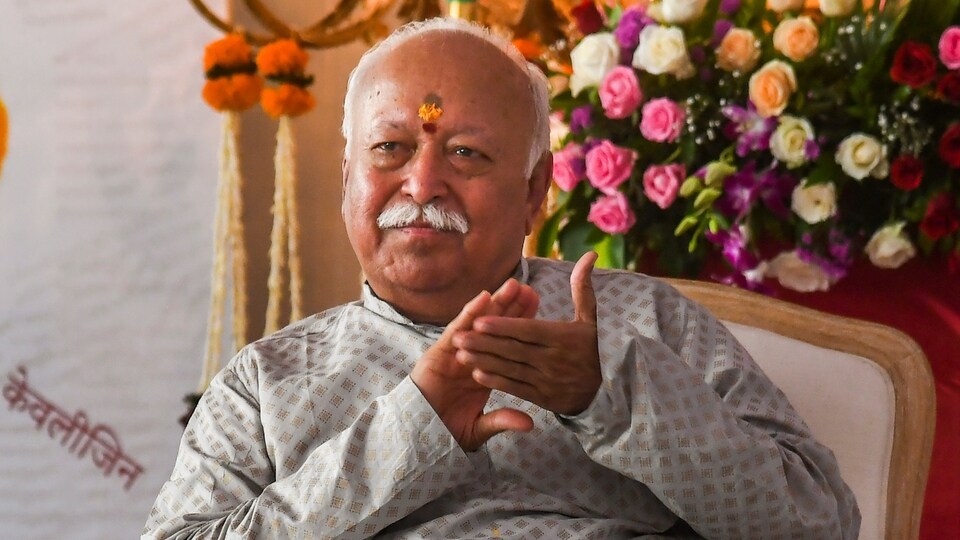
He also cited the three times the RSS has been banned in the past, “hence the government has recognised us”. “If we were not there, whom did they ban?” argued Bhagwat, who leads the umbrella organisation that's the parent body of the ruling BJP, and from which PM Narendra Modi started his public engagement career before moving to fulltime politics.
Also read | ‘Patriotic’ or ‘RSS’? Row over song by Kerala school students on Vande Bharat Express
Bhagwat was responding to selected questions at an event in Bengaluru, Karnataka, where the Congress government has been making it tougher for the RSS to use public spaces, and minister Priyank Kharge has been ballistic against what he terms is a “communal” organisation.
Referring to the RSS's 100-years history, he further argued, “Should we have registered RSS with British government as it was established in 1925?” As for after Independence in 1947, Bhagwat said, “The government did not make it compulsory to register.
The chief of RSS also spoke on its tax status. He claimed the income tax department and courts have “noted that RSS is a body of individuals”, and exempted it from tax.
Also read | RSS chief on next BJP president: ‘If we were to decide, would it have taken so long?'
A day earlier, also in Bengaluru, Bhagwat said the RSS aims to organise Hindu society, and not for power but for “the glory of the nation”.
Hindus are "responsible" for Bharat, he asserted and went on to reiterate the RSS definition of Hindu as all Indians. There is no "Ahindu" (non-Hindu) in India, he argued, as everyone in India, including Muslims and Christians for instance, are descendants of the same ancestors, and the “core culture of the country is Hindu”.
Bhagwat made these remarks on Saturday while delivering a lecture on ‘100 Years of Sangh Journey: New Horizons’.
On what the RSS aims to achieve, he said, “When an organised force is raised in the form of Sangh (RSS), it doesn’t want power. It doesn’t want prominence in the society. It just wants to serve, organise the society for the glory of Bharat Mata (Mother India). Somehow, in our country, people found it very hard to believe, but now they believe.”
HE also said, “Sanatan Dharma is Hindu Rashtra and the progress of Sanatan Dharma is the progress of Bharat.”
Saying that the path for RSS has not been easy, Bhagwat referred to its banning by governments over the years. “There were two bans; a third as well, but it was not much of a ban. There was opposition, criticism. Swayamsevaks were murdered. In every way, it was tried that we should not thrive. But Swayamsevaks give their all to the Sangh, and don’t want anything in return.”
Reiterating that RSS is not a reactionary body, he said, "It is not in opposition to anything. It is an organisation ‘of’ the society, not ‘in’ the society. Now we have a strong presence in the country, but we are not satisfied, because the whole society has to be organised. Organisation of society through individual development."
"We want to organise the Hindu society, the whole of the Hindu society — all 142 crore people with so many religious denominations. And some of them came from outside during the course of history," he said, adding that RSS has started dialogue with those who do not consider themselves Hindus.


