E-Paper

Grocery store owner
Musharraf Ali, 35, lives with his wife Rihanna Ali, 27, in a small two-bedroom house in northeast Delhi’s Ghonda neighbourhood. Originally from Uttar Pradesh’s Hardoi district, the couple does not have any children.


Subscribe Now! Get features like


 Prefer HTon Google


Musharraf Ali, 35, lives with his wife Rihanna Ali, 27, in a small two-bedroom house in northeast Delhi’s Ghonda neighbourhood. Originally from Uttar Pradesh’s Hardoi district, the couple does not have any children.
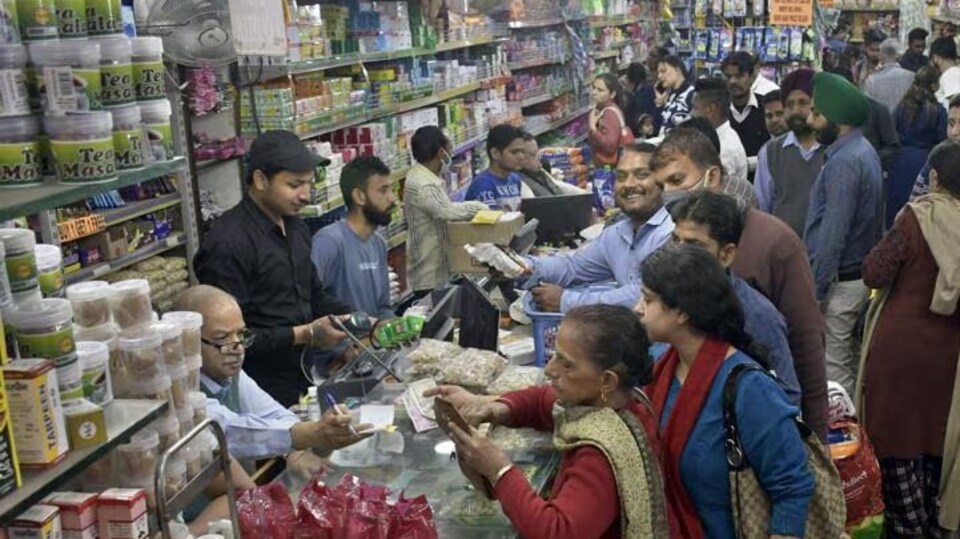
For the last 13 years, Ali has run a grocery store selling soft drinks, snacks, chocolates, rice, lentils, butter, ghee, etc. His annual income comes up to around ₹3.5 lakh per annum or around ₹30,000 a month.
He owns a two-bedroom house and a big chunk of his expenditure is on food.
“We spend about ₹20,000 on ration, dairy and meat products every month and it takes up a large chunk of my earnings,” he said, adding that his electricity bill is usually zero because he ensures that his consumption doesn’t cross 200 units every month. In Delhi, the state government provides free electricity to households that consume below 200 units and a 50% subsidy to households that use only 201-400 units per month.
“Why will I get a bill? We don’t have an air conditioner at home or even a geyser,” he said. The water bill, he said, comes sometimes but hovers between ₹500 and ₹700. Ali owns a scooter and spends around ₹1,500 a month on petrol.

Ali and Rihanna have been married for three years but not once have they gone out on vacation. Now, they are, however, saving up for a trip to Manali next year. “We have planned to go to the hills. We really hope we are able to execute it,” he said. The new changes in the Goods and Services Tax (GST) regime could help him – hotel rooms that cost less than ₹7,500 are set to get cheaper.
The grocery shop is open on all days but sometimes, the couple goes to the zoo or Jama Masjid. But they are careful. “We never spend more than ₹1000,” he said.
For Ali, the biggest benefit of the GST rejig will come in his household bill because milk, milk products, food, fruits, are set to become cheaper.
“It’s a welcome step as medicines, milk and other dairy products which people like me think twice about before spending on will become cheaper. We may start buying that without thinking a lot,” he said.
It’s a double-edged sword. A small seller like him stocks items in bulk for his shop, often on credit. Many items that he sells in the shop – such as ghee and packaged foods – will become cheaper. Depending on how much of the rate cut benefit the company chooses to retain, pass on to the wholesaler, and finally the consumer, his margins might also come under pressure.
“I am assuming that if prices come down, people will be able to buy items more frequently, which, in turn, would mean that my sales will go up, but it may also mean that my margin will become less. I will have to wait and watch,” he said.
But he’s sure of one thing. The GST cuts will not tempt him to make a big purchase soon. “A few thousand less on a television or air conditioner wouldn’t make me buy it because the cost will still be a lot,” he said.
Delhi-based trial court advocate Ravi Drall, 37, lives in a joint family of 14 people, with his siblings working as teachers and government servants.

The joint family lives in a 10-bedroom family house in Tikri Kalan. Over the years, as the family has grown and children have married, they have added more rooms to accommodate more people.
Drall, who has a two-and-a-half-year-old son, earns about ₹10-11 lakh per annum but said his savings are minimal due to expenditure on groceries, utilities, play school fee and other bills. He said his four brothers and him pool in money and spend between ₹2-3 lakh per month on domestic expenses.
“Each day, we get close to 5 litres of milk. We also spend a lot on butter, bread, oil, ghee and vegetables. My brother’s wife just gave birth to a baby and as a family, we have to think of managing expenses now. I also have to think of a budget for blood pressure and sugar medicines,” he said.
On milk, bread, butter and other grocery items, the GST rate cuts hold good news. They are set to become significantly cheaper. “We will definitely benefit as right now, I feel that prices of milk and oil keep increasing,” he said.
But he is apprehensive about health care and life insurance. While the GST Council has reduced the tax on these products to nil from 18% earlier, Drall said companies might add other charges or taxes. “If I am taking a ₹1 lakh insurance for my son, why should I pay ₹18,000 as taxes? This was completely foolish and greedy…I hope the changes get implemented in the right way,” he said.
He was particularly happy over the rate cuts on life-saving medicines because the family has to spend thousands on young children and the elderly. Since he is a lawyer and has teachers and other working professionals in the family, the decision to reduce GST prices on stationery has made him happy. “Everyone likes to buy stationery at our home…it will definitely benefit us. I can’t say that some huge changes will be there. But we will have some relief, I think.”
At 42, Vikas Dhull epitomises the new-age wealthy entrepreneur in Gurugram.
A poultry business owner, Dhull lives in one of Gurugram’s upscale residential sectors with his wife and two school-going children. His life is defined by global travel, premium conveniences, and high-ticket indulgences. Yet, even for someone like Dhull, who embodies the lifestyle of India’s high-income families, the recent GST rationalisation can precipitate material changes.
The family lives in a sprawling five-bedroom apartment, equipped with the latest home appliances, gym equipment, and smart technology. Their monthly expenses reflect their status – school fees for his children run into ₹3 lakh a quarter, groceries and utilities amount to nearly ₹1 lakh a month, and another ₹2-3 lakh goes into paying for the domestic help, fuel, and dining out. His monthly income is around ₹1 crore.
He travels abroad every other month for business, mainly to West Africa, and combines work with short family getaways to destinations such as Dubai, Singapore, or Europe. “We are used to planning spontaneous trips. For us, travel has always been about freedom and comfort,” he said.

Dhull is worried that the new GST structure, while simplifying the regime, could make certain luxuries more expensive, particularly travel and high-end hospitality. Airfares, hotel tariffs, and international spends might bite into his planned expenses, even though everyday spends might track lower.
“Travel might get expensive now, and our plans for holidays will definitely be more thought-out. Instead of three or four trips abroad, we may settle for one long vacation and one domestic trip,” he said.
But Dhull sees an opportunity in other areas. With GST on goods such as ACs, refrigerators, and home appliances rationalised, he believes it’s the right time to invest in upgrading household equipment. “I was planning to change all the air conditioners at home, and now they have become cheaper. We will go ahead with that. In fact, for home appliances, GST changes are a boon,” he said.
The family is also evaluating bigger investments. Dhull has his eye on a luxury SUV (which might become more expensive), while discussions around upgrading to a larger apartment (which might also become more expensive) in Gurugram’s Golf Course Road remain on the table. His wife is keen on redoing the interiors of their current home, an expense likely to run into several lakhs.
For Dhull, the GST changes have introduced a balancing act. On one hand, everyday luxuries such as high-end gadgets and home improvements are becoming more attractive. On the other hand, discretionary spending on foreign travel will likely be pared down. “Luxurious life is going to get expensive in some ways. It’s about planning better now, not stopping,” he said with a smile.