
 E-Paper



EVM-VVPAT verification case: Supreme Court calls Election Commission official at 2pm to explain queries
Petitions have sought complete cross-verification of votes cast using EVMs with Voter Verifiable Paper Audit Trail (VVPAT).

 Prefer HTon Google


The Supreme Court called a senior official of the Election Commission of India at 2pm on Wednesday, April 24, to explain some of its queries regarding EVMs and Voter Verifiable Paper Audit Trail (VVPAT). The court's questions pertain to the functions of the micro-controller installed in the EVMs, securing the EVMs and VVPATs and the maximum period for which the machines are to be retained.
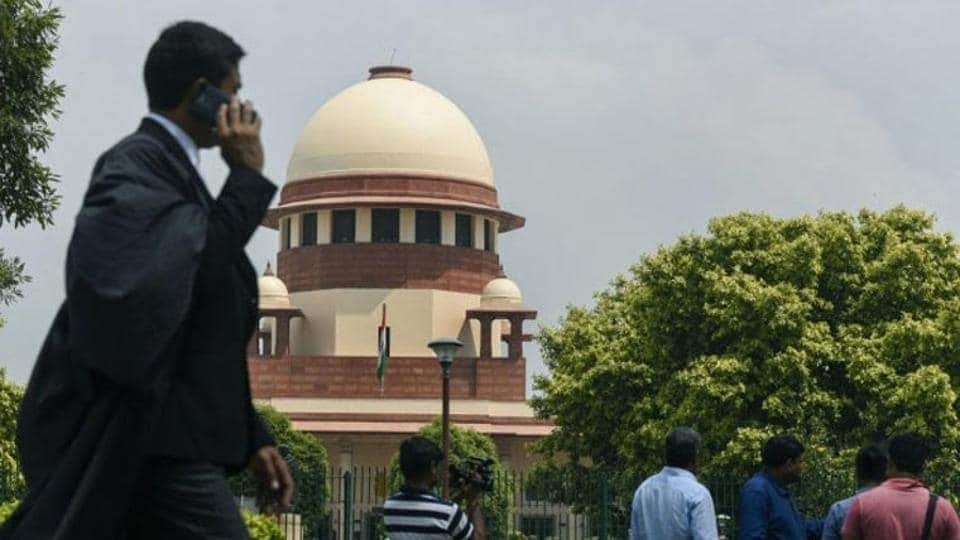
The Supreme Court is set to pronounce certain directions on a batch of petitions seeking complete cross-verification of votes cast using EVMs with VVPAT. The VVPAT is an independent vote verification system which enables electors to see whether their votes have been cast correctly.
A Supreme Court bench of Justices Sanjiv Khanna and Dipankar Datta will pronounce the directions on the petitions in which the order was reserved by the apex court on April 18.
Live Law reported that during the hearing, Justice Khanna said the bench had certain queries. These were listed thus:
- Is the micro-controller installed in the Control Unit or in the VVPAT? We were under the impression that it is installed in the Control Unit, but in Frequently Asked Questions, it is indicated that it is installed in VVPAT.
- Is the micro-controller which is installed one-time programmable? (ECI stand is that it is, implying it cannot be modified)
- How many Symbol Loading Units are available?
- Limitation period for filing election petition is 30 days as such storage is 45 days. But as per Section 81 of the Representation of People Act, limitation period is 45 days. This needs to be clarified. "Accordingly, storage should be increased. If it's 45, it can be 60".
- On securing of EVMs, do both control unit and VVPAT bear seals?
The seven-phase Lok Sabha elections 2024 began on April 19 and the second phase is slated to be held on April 26.
Follow full coverage of Lok Sabha election 2024 here
Pleas on 100% EVM-VVPAT verification in SC: Top points
- NGO Association for Democratic Reforms (ADR), one of the petitioners, sought a reversal of the election commission's 2017 decision to replace the transparent glass on VVPAT machines with an opaque glass through which a voter can see the slip only when the light is on for seven seconds.
- The ADR has sought matching the count in EVMs with votes that have been verifiably "recorded as cast" and to ensure the voter can verify through the VVPAT slip that his vote, as recorded on the paper slip, has been "counted as recorded".
- During the hearing, which spanned for nearly two days, the Supreme Court had told petitioners, who sought its direction to go back to using ballot papers, not to suspect the efficacy of Electronic Voting Machines (EVM) and to appreciate if the election commission does good work.
- The bench, during the hearing, had interacted for nearly an hour with senior deputy election commissioner Nitesh Kumar Vyas to understand the functioning of EVMs and told advocate Prashant Bhushan, appearing for the NGO that voter satisfaction and trust are at the core of the electoral process, news agency PTI reported.
- Senior advocate Maninder Singh, appearing for the ECI, had submitted that EVMs are standalone machines and cannot be tampered with but the possibility of human error cannot be ruled out.
- On April 16, the Supreme Court deprecated criticism of EVMs and called for reverting to ballot papers, saying the electoral process in India is a “humongous task” and attempts should not be made to “bring down the system”.
(With inputs from agencies)


