
 E-Paper



‘Excessively harsh’: Centre defends marital rape exception in Supreme Court
The government acknowledged that while a husband has no “fundamental right” to violate his wife’s consent, invoking the full force of the law as applied to rape cases involving strangers could destabilise the matrimonial framework.

 Prefer HTon Google


The Union government on Thursday defended the marital rape exception before the Supreme Court, arguing that applying the stringent penal provisions of rape within marriage would be “excessively harsh” and could have serious socio-legal implications on the institution of marriage.
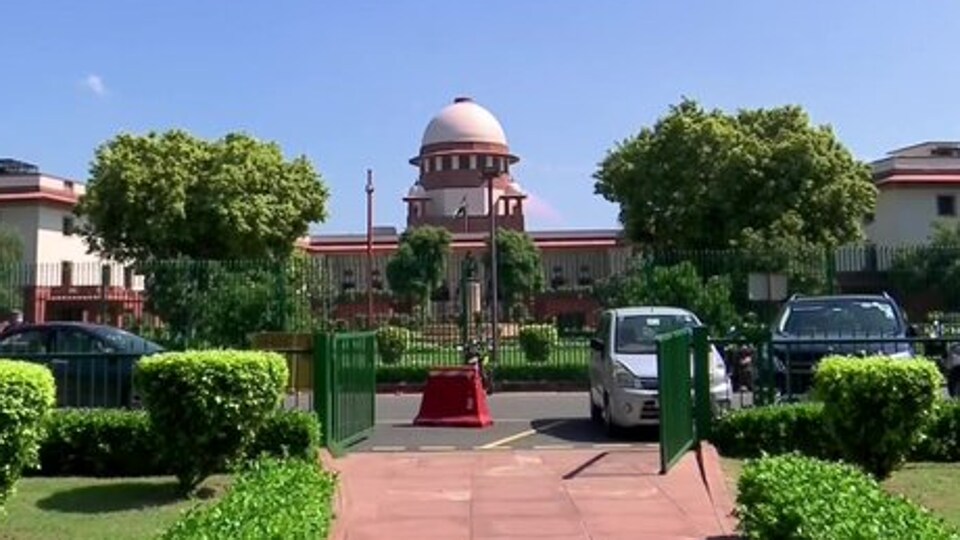
The government acknowledged that while a husband has no “fundamental right” to violate his wife’s consent, invoking the full force of the law as applied to rape cases involving strangers could destabilise the matrimonial framework.
The government’s position was submitted in response to petitions challenging the constitutional validity of Exception 2 to Section 375 of the Indian Penal Code (IPC), which exempts husbands from being prosecuted for rape if the victim is their wife. The government, through its affidavit filed by the Union ministry of home affairs (MHA), underscored that the institution of marriage brings with it distinct societal expectations and obligations. It contended that while a woman’s consent is not nullified by marriage, the violation of such consent within matrimony warrants different legal treatment than that applied to non-marital relationships.
The affidavit explained that there are alternative legal provisions, including Sections 354, 354A, 354B, and 498A of the IPC, as well as the Protection of Women from Domestic Violence Act, 2005, which provide adequate remedies for violations of consent within marriage. These provisions relating to sexual assault and use of criminal force, the government maintained, ensure serious penal consequences while preserving the institution of marriage by avoiding the “ghastly” label of rape.
The government expressed concern over the far-reaching consequences of applying rape laws in matrimonial relationships, asserting that such an approach fails to account for the unique dynamics of conjugal relationships, where expectations of sexual access exist. While consent is critical, the government argued that imposing the strict penalties associated with rape laws on violations within marriage could disrupt the institution and lead to “serious disturbances” in conjugal relationships.
Furthermore, the government emphasised that Parliament has deliberately chosen to retain the marital rape exception despite contrary recommendations from the Justice JS Verma Committee in 2013, which had called for its removal following the 2012 Delhi gang rape case. Parliament, according to the affidavit, had considered the complexity of marital consent and sought to maintain a “delicate balance” between individual rights and the preservation of marriage as a social institution.
The affidavit also raised concerns about the potential misuse of marital rape laws, warning that striking down the exception could lead to an increase in false allegations and destabilize marriages. The government urged the Supreme Court to respect Parliament’s decision and exercise judicial restraint on such a sensitive issue, noting that regulation of marital relationships falls within the legislative domain, which is better equipped to address societal complexities.
The case before the Supreme Court involves multiple petitions challenging the constitutionality of the marital rape exception, with petitioners arguing that it discriminates against married women. A split verdict by the Delhi high court in May 2022 remains unresolved, with one judge declaring the exception “morally repugnant” and the other upholding its validity.



