
 E-Paper



Ex-servicemen voice discontent after Supreme Court judgement on OROP
The court found no merit in the main demand of the ex-servicemen petitioners that the pensions of veterans should be automatically revised every year instead of the current model that is based on a review once in five years.

 Prefer HTon Google


Former servicemen on Wednesday expressed disappointment with the final outcome of their case in the Supreme Court against the Centre’s implementation of the one rank one pension (OROP) scheme, which was announced by the Bharatiya Janata Party (BJP)-led government in 2015.
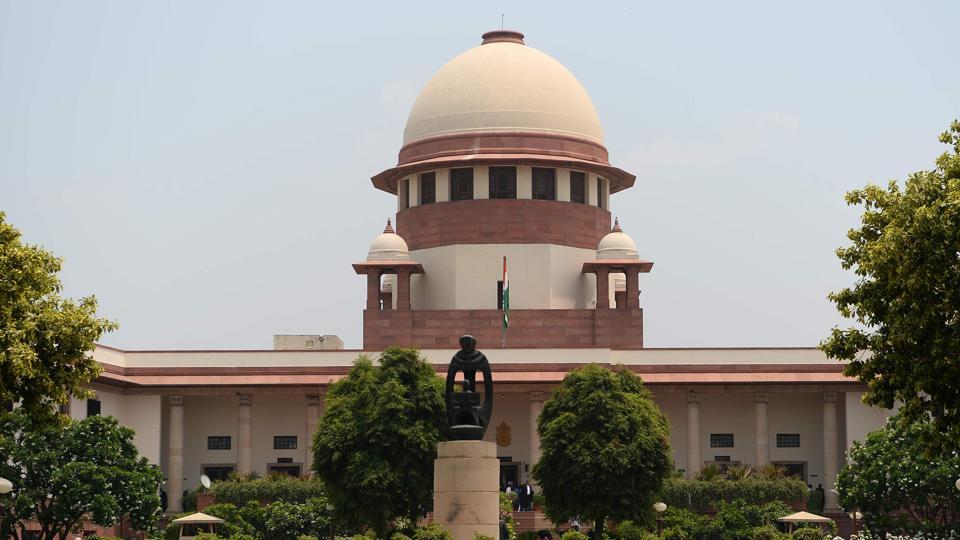
In its highly anticipated ruling, the apex court upheld the government’s implementation of the scheme and found no constitutional infirmity in the OROP principle adopted by it.
The scheme, a decades-old demand of former servicemen, promised equal pension to military personnel retiring in the same rank with the same length of service, regardless of the date of their retirement. The court found no merit in the main demand of the ex-servicemen petitioners that the pensions of veterans should be automatically revised every year instead of the current model that is based on a review once in five years.
“We respect the Supreme Court’s ruling but our position on the matter remains the same. We have still not been given OROP. What we have got is one rank many pensions,” said Group Captain VK Gandhi (retd), vice chairman, Indian Ex-servicemen Movement.
He said the November 7 notification, issued by the defence ministry, for the implementation of OROP from July 1, 2014, had contradictory provisions.
“On the one hand, it talked about uniform pension for former servicemen. On the other, it prescribed a revision once in five years. The two don’t go together,” Gandhi said.
The notification said, “OROP implies that uniform pension be paid to the defence forces personnel retiring in the same rank with the same length of service, regardless of their date of retirement, which implies bridging the gap between the rates of pension of current and past pensioners at periodic intervals.”
It also said in future, the pension would be re-fixed every five years.
Disposing of the petition, the Supreme Court held that the quinquennial re-fixing of pensions of veterans was in line with the November 7 notification.
The veteran community is disheartened and feels it has been given step-motherly treatment by the government, said Colonel Mukul Dev (retd), a former officer in the army’s Judge Advocate General branch. “Pension revision once in five years amounts to one rank five pensions,” he added.
The contention of veterans is that the current OROP model will result in senior officers receiving lesser pension than junior officers.
While a defence ministry spokesperson did not comment on the Supreme Court ruling, officials said the government had implemented the November 7 order and delivered what was promised to veterans.
The Congress party accused the government of betraying former servicemen.
“OROP Denied - it is now “One Rank, Five Pensions”! Ex Servicemen & Armed Forces betrayed by our own Govt, which opposed right of persons “holding the same rank, with the same length of service to get same pension, irrespective of date of retirement,” Congress general secretary Randeep Singh Surjewala said on Twitter.
Also Read | Show us how people have benefitted from OROP, SC asks Centre
In another tweet, he asked the Prime Minister and defence minister why the government opposed OROP in Supreme Court and refused to implement an April 2014 order of the United Progressive Alliance (UPA) regime to grant OROP.
Before the 2014 general elections, the Congress-led UPA government allocated ₹500 crore for OROP, an amount that was considered insufficient to implement the scheme. The National Democratic Alliance (NDA) government implemented OROP seven years ago with an initial corpus of ₹8,300 crore.
The Supreme Court order on the OROP issue has come at a time when the government’s pension bills have been mounting.
In the 2022-23 Union Budget announced on February 1, India allocated ₹5.25 lakh crore for military spending, including a pension outlay of ₹1.19 lakh crore. In 2021-22, India’s defence budget stood at ₹4.78 lakh crore, with a pension bill of ₹1.15 lakh crore.
India has at least 3.3 million defence pensioners.


