
 E-Paper



Factors at play in Bengal, Assam 2nd-phase voting
Here are three charts explaining the importance of the second phase of polling in West Bengal and Assam.


West Bengal and Assam – two of the four states going to the polls in this election cycle – will vote in the second phase of polling on Thursday. Thirty out of 294 assembly constituencies (ACs) in West Bengal and 39 out of 126 ACs in Assam will vote in this phase.
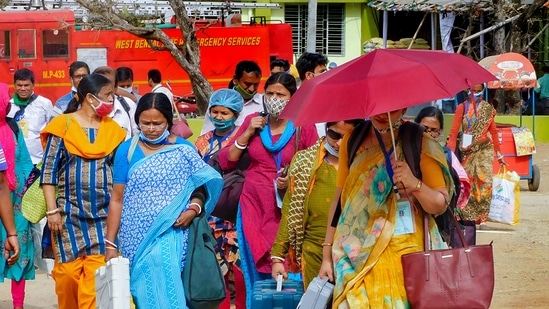
After this round, over two-thirds of ACs in Assam and a fifth of West Bengal ACs will have voted.
While Assam will vote in just one more phase on April 6, polling in West Bengal will take place in six more phases until April 29.
Here are three charts explaining the importance of the second phase of polling in West Bengal and Assam.
Where are the polls taking place?
In West Bengal, all of Jangalmahal region, western districts of Purulia, Bankura, Jhargram and Paschim Medinipur would have voted after the second phase. All of Purba Medinipur district, which includes the high profile Nandigram assembly constituency (AC), would also have voted.
Four ACs in South 24 Parganas, among the biggest districts in the state, which has 31 ACs in total, will also vote in the second phase.
In Assam, the second phase of polling will include 12 districts in the state. This includes all three districts of Barak Valley (Karimganj, Hailakandi, and Cachar); Dima Hasao, Karbi Anglong, Marigaon, and a small part of Nagaon in Central Assam; Darrang and Udalguri in North Assam; and small parts of Kamrup, Nalbari, and Baksa districts in lower Assam.
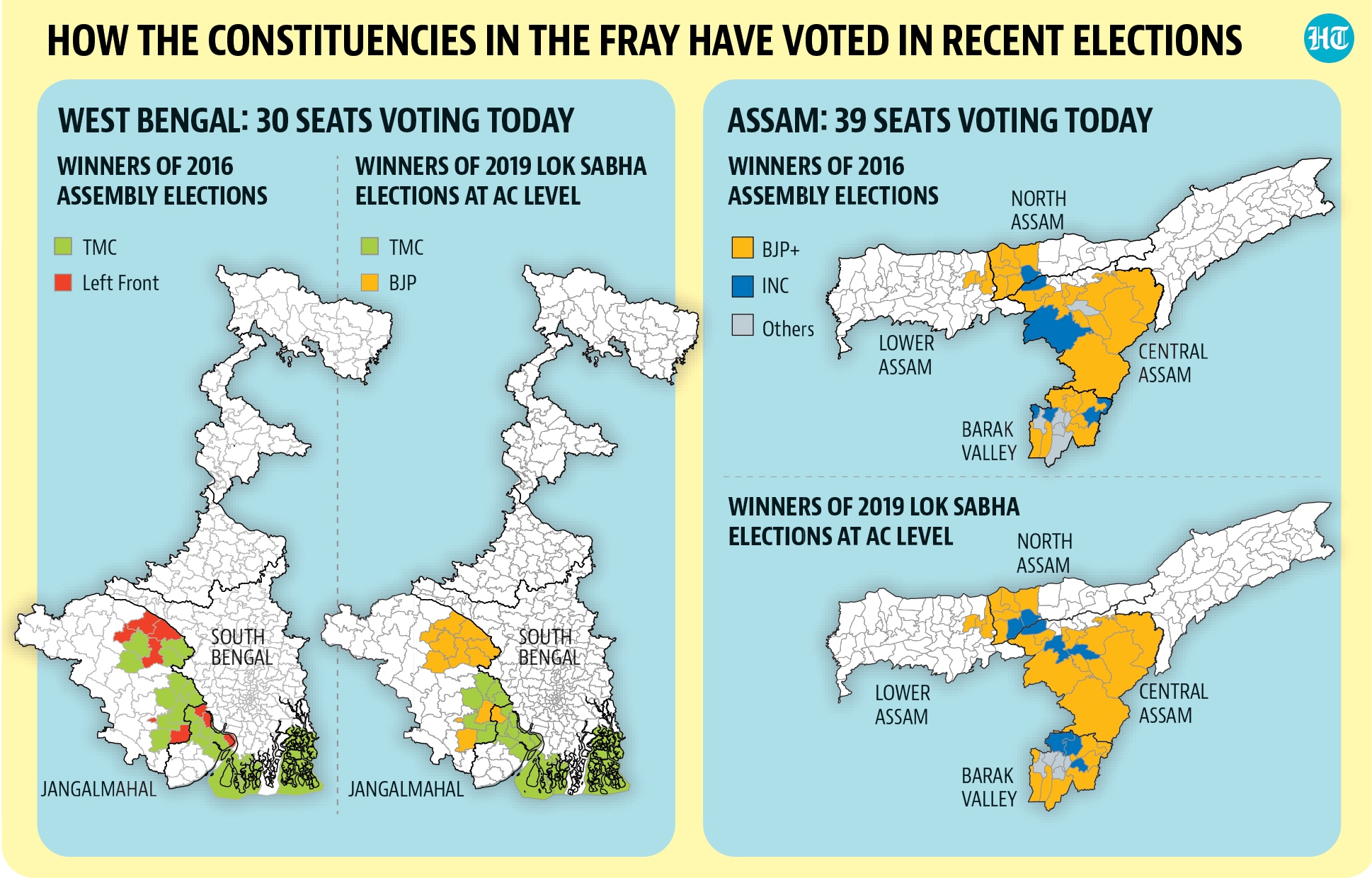
The political arithmetic in second phase
The Bharatiya Janata Party (BJP) and its allies (in Assam) won 3.3% and 72% out of the 30 and 39 ACs going to polls in this phase of elections in West Bengal and Assam in the 2016 assembly elections.
While the BJP alliance’s performance marginally worsened in Assam in the 2019 Lok Sabha elections (it won one AC less than in 2016), it improved significantly in West Bengal. The BJP and its allies won 40% and 69% of the ACs in West Bengal and Assam in the 2019 elections.
The All India Trinamool Congress (TMC) and the Congress, on the other hand, face a different set of challenges in this phase. The Nandigram contest between Chief Minister Mamata Banerjee and her one time lieutenant Suvendu Adhikari, who has now defected to the BJP, epitomises the challenge the TMC is facing on account of defections to the BJP.
The Congress, which is the leader of the anti-BJP alliance in Assam, will be hoping to gain from its alliance with the All India United Democratic Front (AIUDF) in the Barak valley region, which accounts for 15 out of the 126 ACs in the state.
In the 2016 elections, the BJP won eight ACs in this region. In five out of these 8 ACs, the Congress or AIUDF played spoiler for each other paving way for a BJP victory.
The Bodoland Peoples Front (BPF), which has switched from the BJP alliance to the Congress alliance in this election, might also have a role to play in this phase of election, although lesser than the last phase. It won all the four 2nd phase ACs it contested in 2016 assembly election, but didn’t contest any in the 2019 Lok Sabha election.
Voter profile in the second phase
The ACs going to polls in the second phase vary drastically in terms of composition of the electorate.
For example, while the three districts in Barak valley in Assam are overwhelmingly Bengali speaking and also have a very high share of Muslims, a large part of Karbi Anglong’s population is made up of Scheduled Tribe (ST) groups.
Similarly, Muslims have a share of 35.6% in the South 24 Parganas district, which begins voting in the second phase, compared to just 8.1% and 10.5% in the districts of Bankura and Paschim Medinipur, which also vote in this phase.
The share of Schedule Caste (SC) and ST-reserved ACs voting in the second phase is 28% and 27% in Assam and West Bengal.


