
 E-Paper



Failed lab experiment to bats and pangolins: Theories around origin of Covid-19
There are many theories doing the rounds when it comes to the origin of the novel coronavirus. Some even believe it was a result of a failed lab experiment.

 Prefer HTon Google


What is known about the coronavirus pandemic is that it originated in China and in a matter of months spread across the globe killing lakhs of people and infecting millions.
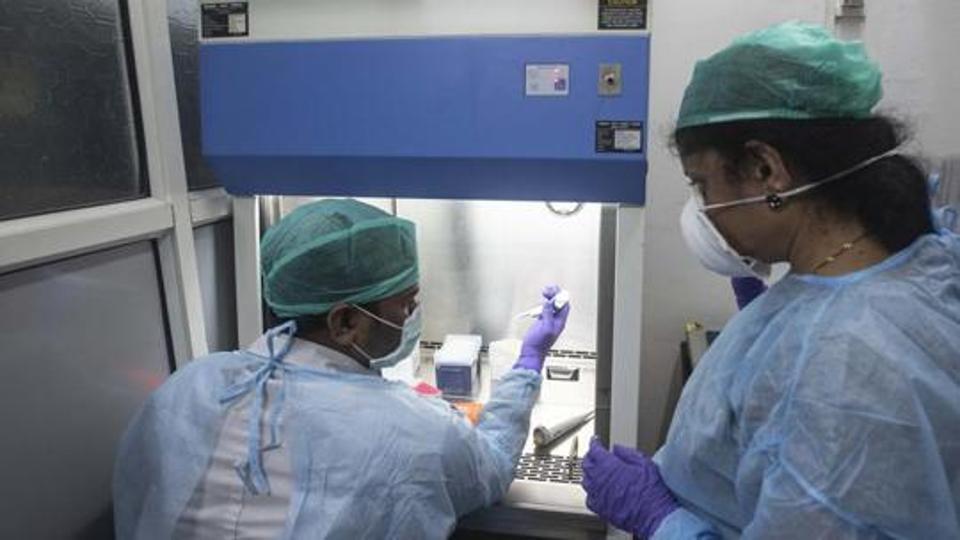
While the contagion has brought more than half of the planet to a grinding halt, scientists are busy tracing Covid-19’s path to the human body.
There are many theories doing the rounds when it comes to the origin of the novel coronavirus. Some even believe it was a result of a failed lab experiment. A study conducted by the Pew Research Centre suggests that most Americans believe that Covid-19 was lab-grown. Nearly three in ten Americans or a quarter of the American population, as many as 29% of those surveyed, believe that novel coronavirus was grown in a lab, the survey indicated. 43% of Americans believe that the virus came about naturally.
The more scientific and believable theories rest on the premise that links the virus to its zoonotic traces, connecting it to bats.
China’s world-famous Huanan seafood market in Wuhan, which is a live animal market, was the place where a man was first reported to have got the infection from an animal. How did the infection reach Wuhan’s seafood market is still debatable.
The identity of the animal source of coronavirus remains a key and an urgent question.
Coronavirus is being increasingly linked to bats as the obscure animals have traditionally been found to have links with outbreaks in countries like Uganda and Bangladesh. Bats are believed to be the natural hosts of the SARS, MERS and the Ebola virus.
In the case of SARS and MERS, the virus came from bats but was transmitted to humans via other animals.
The 2002 Sars outbreak got to humans from bats through cat-like civets. MERS-CoV spread from bats to camels to humans.
Some of the recently conducted studies point at scaly, ant-eating pangolins to be the intermediary animal between bats and humans in the case of Covid-19.
Researchers in Guangzhou, China believe pangolins could be the probable animal source of the coronavirus outbreak.
However, it is reported that pangolins were not listed on the inventory of items sold in Wuhan, the sale of the mammal is illegal.
As per a research paper published in the Journal of Medical Virology, two researchers from the South China Agricultural University in Guangzhou identified pangolins as the potential source of the Covid-19 virus. The researchers made their theory public in February 2020.
The experts based their findings on “genetic comparison of coronaviruses taken from pangolins and from humans infected during the recent outbreak,” the research published in the Journal of Medical Virology read.
“By analyzing more than 1 000 metagenomic samples and using molecular biology testing, they found that the positive rate of β coronavirus in pangolins was 70% and that the genome sequence of an isolated virus strain was 99% similar to that of the SARS-CoV-2 virus”.
The study, therefore, called for further investigation into the role of pangolins in transmitting coronavirus to humans.
Earlier this week, the Indian Council of Medical Research also stated the possibility of pangolins acting as the intermediary animal between bats and humans.
“We also conducted surveillance, in which we found that there are two types of bats, and they carried coronavirus which was not capable of affecting humans. It’s rare, maybe once in 1,000 years that it gets transmitted from bats to humans,” Indian Council of Medical Research’s (CMR) Gangakhedkar said during the press conference.
“As per research in China, it was found that coronavirus might have originated due to mutation in bats. Bats might have transmitted it to pangolins, from pangolins it got transmitted to humans,” Gangakhedkar added.


