
 E-Paper



Bharat Bandh on Feb 16: Farmers, trade unions say they will block major roads across India
Gramin Bharat Bandh is scheduled from 6am to 4pm on Friday, with farmers participating in chakka jam on major roads across the country.

 Prefer HTon Google


The Samyukta Kisan Morcha (SKM) along with central trade unions have released instructions for the upcoming Gramin Bharat Bandh slated for February 16.
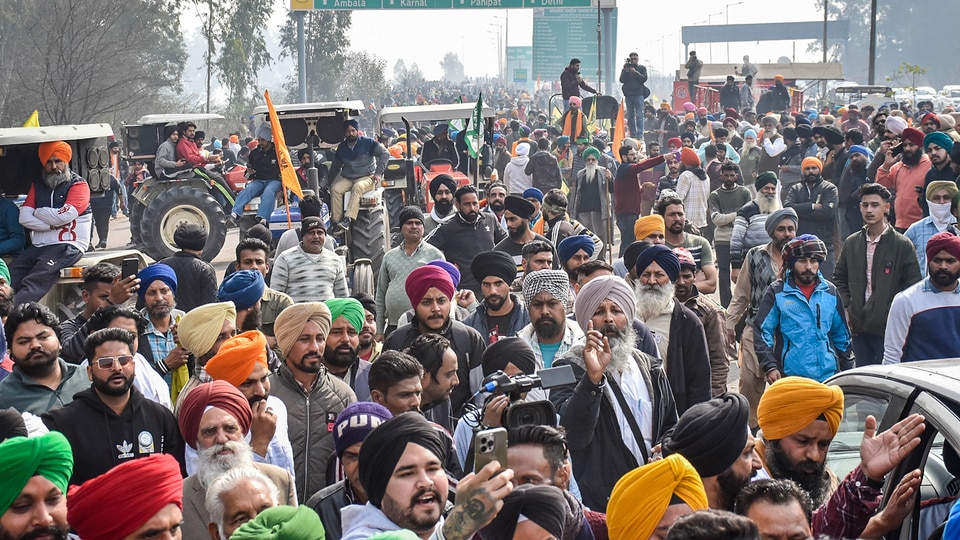
The bandh is scheduled to be observed from 6 am to 4 pm, with farmers participating in a widespread chakka jam on major roads across the country from 12 pm to 4 pm. In Punjab, a significant portion of both state and national highways will be closed for four hours during the protest.
During a meeting convened in Ludhiana on Saturday, Harinder Singh Lakhowal, the General Secretary of BKU Lakhowal, unveiled the strategy concerning the Gramin Bharat Bandh.
Follow Farmers Protest LIVE Updates Here.
Farmers, predominantly from Punjab, joined by counterparts from Haryana and Uttar Pradesh, commenced their 'Chalo Delhi' march on February 13 following an inconclusive meeting with the Union government. The Samyukta Kisan Morcha (Non-Political) and the Kisan Mazdoor Morcha called the protest to press the Centre to accept their demands, including the enactment of a law to guarantee a minimum support price (MSP) for crops.
SKM National Coordination Committee (NCC) member Dr Darshan Pal said speaking to Indian Express, “The Gramin Bharat bandh call had been planned in December. On this day, villages will remain closed for all agricultural activities and MNREGA and rural works. No farmer, agricultural worker or rural worker will work that day. We will ensure passage to emergency services of ambulances, death, marriage, medical shops, newspaper supply, students going for board exams and passengers to the airport.”
He further mentioned that the trading and procurement of vegetables and other crops would be halted. Village shops, grain markets, vegetable markets, governmental and nongovernmental offices, rural industrial and service sector establishments, as well as private sector enterprises, have been urged to shut down. Additionally, shops and businesses in towns neighbouring the villages will remain closed during the strike period.
Read Here: Why are farmers' protest 2.0 that choked Delhi roads a test for both PM Modi's BJP and INDIA bloc?
Since roadway employee unions are also a part of this protest, public transport is likely to be operational.
What are their demands?
The demands mirror those put forth by two farmer union forums advocating the 'Dilli Chalo' movement. Besides Minimum Support Price (MSP) for crops and pensions for farmers, they include issues related to employees such as the withdrawal of Operational Performance-linked Salary (OPS) implementation, amendments to labour laws, and various other demands.
These also encompass a minimum wage of ₹26,000 per month, repeal of four labour codes, guaranteed employment as a fundamental right, opposition to privatization of Public Sector Undertakings (PSUs) and contextualization of the workforce, and abolition of fixed-term employment, Indian ExpressI reported.
Additionally, they seek to strengthen the Mahatma Gandhi National Rural Employment Guarantee Scheme (MGNREGS), restore the old pension scheme, and ensure pension and social security for all in both formal and informal sectors.


