
 E-Paper



Federalism needs reset: CM Stalin tables justice Kurian report
Tamil Nadu CM MK Stalin calls for a structural reset of India's federalism

 Prefer HTon Google


India’s federalism needs a structural reset, Tamil Nadu chief minister MK Stalin said on Wednesday while tabling the first part of the justice Kurian Joseph report on the Union-state relations in the assembly,
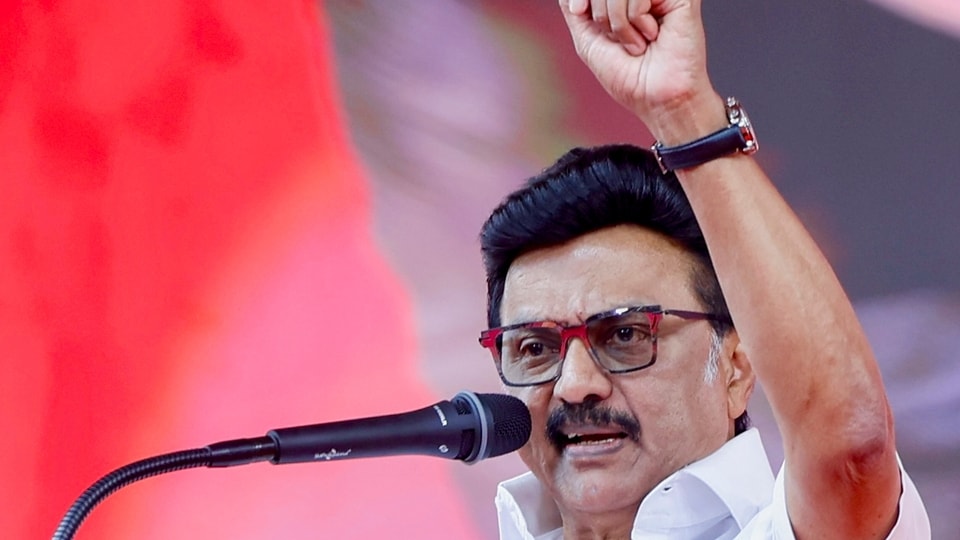
The three-member committee, headed by the retired Supreme Court judge, had submitted the report to the CM on Monday. The high-level panel was formed by the state government in April 2025 to review the relationship between the Union and the states in opening a front to the tussle over federal rights.
Tabling the report, the chief minister reiterated that states must be autonomous while the Union government must be federal in nature. “India’s federalism needs a structural reset. If we wish, we can again amend the constitution. Meaningful federalism is not about control, but about trust, autonomy, and governance that responds to people’s realities,” Stalin said.
In the first part of the report, the panel made recommendation on a range of issues, including the amendment of the Constitution, state-led appointments of governors, the Goods and Services Tax (GST), delimitation binding timelines for assenting to Bills and a fixed five-year term. HT has seen a copy of the 586-page report.
“At its core the crisis surrounding the governor’s office is a crisis of trust,” the panel said. “Each episode of the gubernatorial overreach – manipulating government formation or collapse, refusing to summon the assembly, withholding or indefinitely delaying assent, publicly criticising an elected government or turning Raj Bhavan into a partisan outpost of the ruling dispensation at the Centre – erodes the confidence in the institution…the damage is profound.”
The panel recommended amending Article 155 to bind the President to appoint one of the three names approved by a majority of the total membership of the state legislative assembly as governor of that state.
It sought “a single, fixed, non-renewable five-year term for Governors” with ineligibility for further constitutional office except that of President or Vice-President. “Incorporate a new Thirteenth Schedule—‘Instrument of Instructions for Governors’—codifying binding limits on discretion to ensure neutrality, prevent misuse, and reinforce federalism and constitutional balance,” the panel suggested.
The panel recommended amending Articles 200 and 201 to impose mandatory timelines for gubernatorial and presidential action on state bills.
“Except for the limited high court safeguard under Article 200, governors shall not reserve State List bills for presidential consideration and must act within 15 days; re-passed bills must receive assent within a further 15-day period,” the panel said.
The panel seeks to put a stop to governors in non-Bharatiya Janata Party (BJP) ruled states in criticising state governments, suggesting that a governor shall maintain constitutional dignity.
The panel further recommended against the adoption of the ‘One Nation, One Language’ concept.
The panel called the three-language formula a “profound policy failure lacking clear benefits and ignoring cognitive, financial and operational realities—India should shift to high-proficiency bilingualism: English for economic mobility and global competitiveness, and the regional language or mother tongue for cultural continuity and effective local governance.”


