
 E-Paper



First supermoon of 2026 lights up skies in India: When and where it's visible
In India, the spectacle was visible shortly after sunset, giving skywatchers a particularly striking early-evening view.

 Prefer HTon Google


The first supermoon of 2026 illuminates the night sky on January 3, offering a brighter and slightly larger-than-usual full Moon.
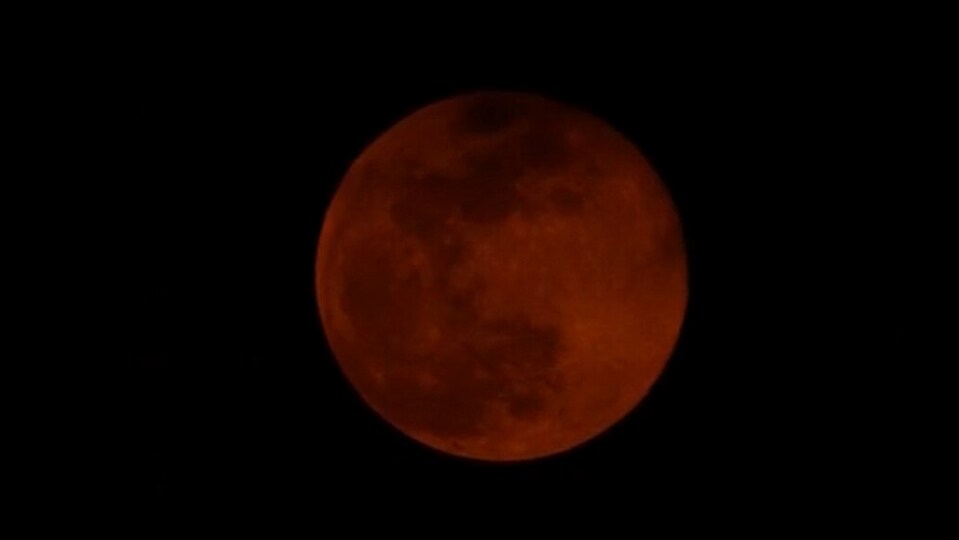
On this evening, the Moon appears about 30 per cent brighter and roughly 14 per cent larger than the most distant full Moon of the year.
In India, the spectacle is visible shortly after sunset, giving skywatchers a particularly striking early-evening view.
As it rises close to the horizon, the Moon glows with a warm orange-yellow tint, a result of moonlight passing through a thicker layer of Earth’s atmosphere.
At its closest point, the Moon is about 362,641 km from Earth, making it one of the most visually impressive lunar events of the year.
Also Read | First Supermoon of 2026 today: When will it be visible in India?
When to spot the supermoon in India?
The January 3 supermoon marks the conclusion of a four-month supermoon run that began in October. After this, the next supermoon is not expected until the end of 2026.
Globally, the supermoon reached its peak at 5:30 am EST (4 pm IST) on January 3, according to Space.com.
In India, however, the most appealing views will came around 5:45 pm and 6 pm IST, when the Moon might have been in its full phase and near perigee, as noted by NASA.
The first supermoon of 2026 was witnessed lighting up the night sky over Bhubaneswar and Guwahati.
Peak viewing times will vary across regions.
In New York, the supermoon peaks at 5:30 am EST, while London sees it at 10:03 am GMT. Viewers in Tokyo can catch it around 7:30 pm local time, and in Sydney at about 9:03 pm.
The moon’s apparent size near the horizon is enhanced by the so-called moon illusion, which makes low-hanging Moons look larger than when they are higher in the sky.
The orange-yellow hue is also most noticeable at this stage for the same atmospheric reasons.
January’s full moon is traditionally known as the Wolf Moon, a name rooted in Northern Hemisphere folklore that associates it with wolves howling during long winter nights.
It is also sometimes called the Moon after Yule.
How to spot the supermoon?
The supermoon can be enjoyed easily with the naked eye, and no special equipment is needed. Binoculars or a small telescope, however, can reveal finer details on the lunar surface for those looking for a closer view.
The Moon’s orbit around Earth is elliptical rather than perfectly circular, which means its distance from our planet varies. At perigee, the Moon is closest to Earth, while at apogee it is farthest away.
A supermoon occurs when a full moon coincides with or comes very close to perigee, typically within about 90 percent of that closest distance.
Because the moon’s orbit subtly shifts depending on the relative positions of the Earth and the Sun, not all supermoons are equally close. Supermoons usually occur three to four times a year and appear consecutively, as the timing of perigee and the full Moon only occasionally overlap.
Beyond its visual appeal, a supermoon can also have tangible effects on Earth, including slightly higher tides due to the Moon’s stronger gravitational pull at closer range.


