
 E-Paper



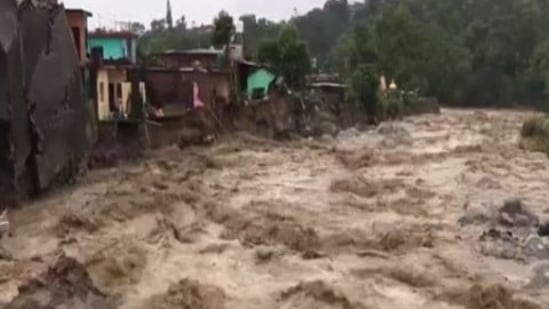
Flash floods in Himachal Pradesh: What is a cloudburst and what causes it
Cloudbursts are a common phenomenon in hill states like Himachal Pradesh and Uttarakhand.


Flash floods after cloudbursts have been reported from the hill state of Himachal Pradesh even as more than 70 people have lost their lives due to lightning strikes in Rajasthan, Madhya Pradesh and Uttar Pradesh in the last 24 hours. Prime Minister Narendra Modi and Union home minister Amit Shah have said they are closely monitoring the situation in Himachal Pradesh and assured chief minister Jairam Thakur of all possible help.
Here's what you need to know about a cloudburst:
(1.) Britannica.com describes cloudburst as a "sudden, very heavy" rainfall, which lasts only for a short period of time and is extremely local in nature.
Also Read | IMD alerts: Heavy rainfall to continue in Himachal, Uttarakhand for 2 days
(2.) Cloudbursts usually occur in connection with a thunderstorm. During these thunderstorms, a large amount of water may accumulate at high levels and, if the upward currents are weakened, the accumulated water comes down at one time, causing flash floods.
(3.) Mountainous areas witness cloudbursts on a regular basis. This explains why hill states like Himachal Pradesh and Uttarakhand are frequently affected by this phenomenon. The frequent occurrence of cloudbursts in such areas takes place probably because the warm air currents in a thunderstorm tend to follow the upward slope of a mountain.
(4.) Cloudbursts cause great devastation in hilly areas because the water gets concentrated in gullies and valleys. The flash floods due to mountain cloudbursts are "sudden" and "destructive."
(5.) Uttarakhand in particular has seen devastation due to cloudbursts. The Uttarakhand State Disaster Management Authority (USDMA) has listed several cloudburst-related incidents on its website, including the June 2013 flash floods.
(6.) The agency has also listed several measures to mitigate the effects of a cloudburst. It suggests that instead of valleys, people should live in areas on slopes with firm ground for safety reasons. In areas where ground fissures have developed, appropriate steps should be taken to check the infiltration of rainwater and surface water. It also suggests banning "indiscriminate" and "unscientific" construction works.


