
 E-Paper



Food stocks aplenty, but Centre warns of more steps to curb prices
The Union food and public distribution secretary on June 2 met several representatives of the edible-oil industry, pressing for further cuts in retail prices.


As widely predicted, the El Nino weather pattern could hold back India’s June-September monsoon rains critical for food output, and the Union government is closely tracking prices and supplies of key items, an official said, adding that the authorities could initiate more measures to contain inflation.
Read here: Centre imposes stock limits on two pulses to control prices
The Union food and public distribution secretary, Sanjeev Chopra, on June 2 met several representatives of the edible-oil industry, pressing for further cuts in retail prices amid a continued fall in global prices, according to the official who declined to be named. This was the top food ministry official’s second meeting with cooking-oil processors and importers in a week.
On the same day, the Centre imposed caps on the quantity of tur (pigeon pea) and urad (black gram) -- two commonly consumed pulses variety -- that retail shops and traders are allowed to store, a measure known as stockholding limit usually invoked when there are signs of a potential price spiral.
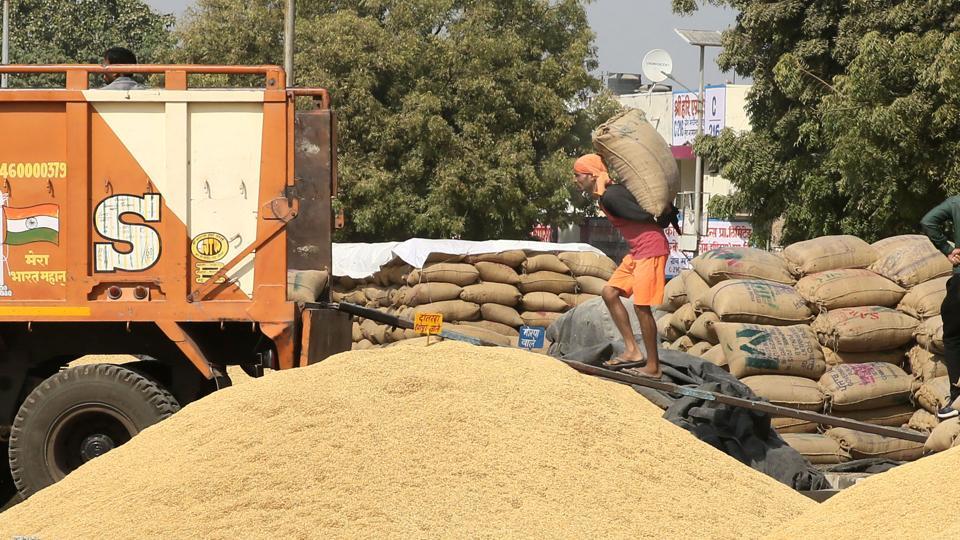
The country’s food stocks are returning to sufficient levels after last year’s shortages and rocketing prices due to better-than-expected winter harvests, despite weather shocks, the official said. Top officials of the food as well consumer affairs ministries held a review last week.
The review showed the combined stock position of wheat and rice in central stockpiles stood over 57.9 million tonne on June 1 as wheat purchases by the Centre crossed 26 million tonne despite untimely rain damaging yields of the staple in April. Last year, extreme heat during early summer plunged federally held wheat stocks to just 18 million tonne, less than half of what was targeted to be procured.
The country now has 31.2 million tonne of wheat and 26.7 million tonne of rice. “This has placed the country in a comfortable position to meet its requirements of food grains,” a second official said, wishing to remain unnamed.
The Reserve Bank of India, in its annual report last week, said growth momentum of Asia’s third-largest economy is likely to be sustained in 2023-24 in an “atmosphere of easing inflationary pressures”.
At the same time, a second government official said the likelihood of an El Nino arriving this summer remains a concern, which could worry food producers. The weather pattern’s impacts ripple across the globe, from heavier rains in Americas to dry, hot summers in India.
“Edible oil prices have come down significantly from last year. But the industry has more scope to cut prices as global prices are still falling. That was the agenda of the meeting,” the official with knowledge of the matter said. India relies on imports up to two-thirds of its domestic cooking oil demand.
Read here: Retail inflation at 18-month low of 4.7%
An advance estimate of food grain production for 2022-23 released by the government on May 25 showed the country had a harvest 330.5 million tonne, a record.
However, the government wants industry to further cut prices of items such as edible oils. “If cereal inflation shows signs of firming up, then the government could impose stock limits on cereals too,” the first official said.


