
 E-Paper



Centre imposes stock limits on two pulses to control prices
Stock limits, for each of the pulses variety, will be 200 tonne for wholesalers, while retailers can only maintain stocks of 5 tonne.

 Prefer HTon Google


The Centre on Friday imposed caps on the quantity of two widely consumed variety of pulses -- tur (pigeon pea) and urad (black gram) – that retail shops and traders are allowed to store, a measure known as stock-holding limits that is invoked to control inflation.
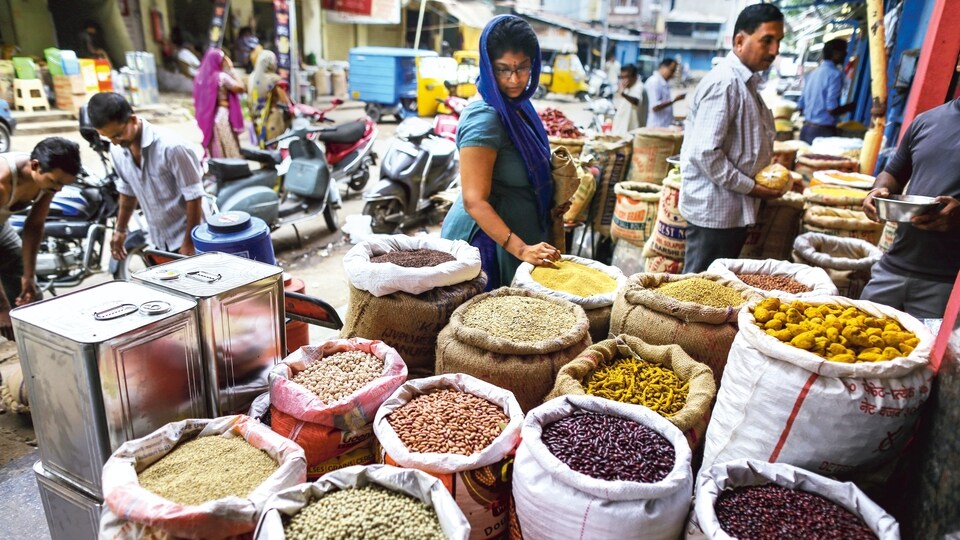
According to a notification issued by the Union consumer affairs department, the Centre has passed the Removal of Licensing Requirements, Stock Limits and Movement Restrictions on Specified Foodstuffs (Amendment) Order, 2023, specifying stock limits for wholesalers, retailers, supermarkets, millers and importers for the two commodities.
“In order to prevent hoarding and unscrupulous speculation and also to improve affordability to the consumers in respect of tur dal and urad dal, the Government of India has issued an order where it has imposed stock limits on the pulses,” the order said.
Also Read: India to export cereals under humanitarian assistance
Retail prices in pulses increased 5.28% in April, against a 4.33% climb in the preceding month, according to latest available consumer inflation data released on May 12. Overall, the consumer price index-based inflation rate stood at 4.7% in April, an 18-month low, led by a fall in food prices.
According to the third advance estimates of food production issued by the agriculture ministry on May 25, total pulses production during 2022-23 is estimated to be 27.5 million tonne, which is higher by about 200,000 tonne than previous year’s output of 27.3 million tonnes.
Still, the Centre has been tracking prices and availability of pulses after a reported drop in output in some varieties due to a patchy monsoon in 2022, an official said. The likelihood of an El Nino weather pattern, which can impede the monsoon, is another concern for the government. The summer rains are critical for robust kharif or summer-sown harvests, as slightly less than half of the country’s sown area doesn’t have access to irrigation.
The stock limits, for each of the pulses variety, will be 200 tonne for wholesalers, while retailers can only maintain stocks of 5 tonne at any given time, Friday’s order said. Supermarkets and big-chain retailers cannot stock more than 200 tonne. Millers can stock a quantity equivalent to the last 3 months of production or 25% of annual installed capacity, whichever is higher.
Importers cannot hold imported stock beyond 30 days from the date of customs clearance, the order added.
“These two pulses varieties had shown a spike in inflation last year. This is a pre-emptive move to stop prices from rising during the summer months, especially in view of weather uncertainties,” said Abhishek Agrawal of Comtrade, a commodity trading firm.
In May 2021, the Centre has allowed duty-free imports of three pulses --tur, urad and moong – to ease prices of lentils. The import policy measures had resulted in a substantial increase in imports of pulses, which augmented supplies and decreased prices.


