E-Paper



Food, vets at ‘highlands’ to protect Assam’s Kaziranga animals from floods
Park authorities have created 33 highlands, artificially constructed elevated spots, where small and large animals are expected to take refuge when flood waters submerge most of the park’s area.


Authorities in Assam’s Kaziranga National Park are busy with preparations, including building highlands, to avoid loss of animal lives with monsoon and the accompanying floods barely a few weeks away.
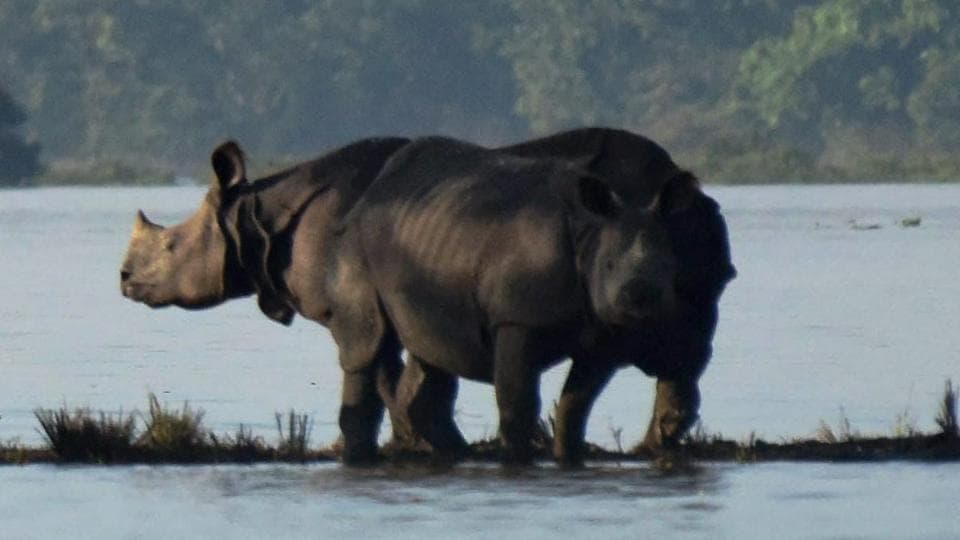
Park authorities have created 33 highlands, artificially constructed elevated spots, where small and large animals are expected to take refuge when flood waters submerge most of the park’s area.
Floods inundated nearly 85% of the Kaziranga Park in 2017 and claimed the lives of nearly 400 animals, including 31 rhinos. The situation was much better last year due to less rainfall.
On Sunday, Assam’s chief minister Sarbananda Sonowal inspected parts of the 860-sqkm park, famous for being the largest habitat of one-horned rhinos in the world, and took stock of the flood control measures.
“Highlands inside the park act as safe grounds for animals during floods. Inspected a highland and urged officials to ensure availability of food stock and vets there,” Sonowal tweeted.
Wild animals in the park usually move outside the park to the hills of neighbouring Karbi Anglong district during floods. But authorities hope they would use the highlands instead to escape poachers.
Besides the highlands, authorities regulate the movement of vehicles on the national highway that runs along the park’s boundary for a stretch to prevent the deaths of animals fleeing floods in accidents.
Highlands are not new to Kaziranga. Over 100, with a height of 12 feet and the ability to provide shelter to nearly 50 large animals, were built during the 90s. The 33 new ones have an additional elevation of four feet.
“Besides the artificial highlands, there are several natural ones inside the park as well. They have helped in reducing the number of animal casualties during severe floods,” NK Vasu, former principal chief conservator of forests, said.
Not everyone agrees with the idea of constructing artificial highlands to protect animals from floods and also the idea of providing them food and medicines on those elevated spots.
“There’s enough vegetation in the highlands to provide for the animals. Providing additional food is not prescribed,” said Vasu.
“Is giving food and medicine to the wild animals of the park possible? Or is the chief minister speaking without basic knowledge?” environment activist Rohit Choudhury wrote on Facebook.
Some are of the opinion the animals should be allowed to move to higher grounds in Karbi Anglong district with adequate monitoring done to ensure their safety.
The 118-year-old park, a UNESCO World Heritage Site, is home to over 2,400 rhinos, 104 royal Bengal tigers and a host of other animals including elephants, wild buffaloes and several species of deer.