
 E-Paper



Former CJI Ranjan Gogoi's Rajya Sabha term concludes: 53% attendance, spoke in 1 debate, asked zero questions
"The House will certainly miss his wise counsel, measured intervention, and the gravitas he brought to our discussion”: CP Radhakrishnan in farewell message.

 Prefer HTon Google


While there was an electoral contest on among parties for over three dozen Rajya Sabha seats falling vacant soon, another member bid farewell to the Rajya Sabha on Monday. Ranjan Gogoi, former Chief Justice of India, completed his six-year term as a nominated member in the Upper House of Parliament on March 16. A farewell message for him was given in the House by Vice President of India and RS chairman CP Radhakrishnan.
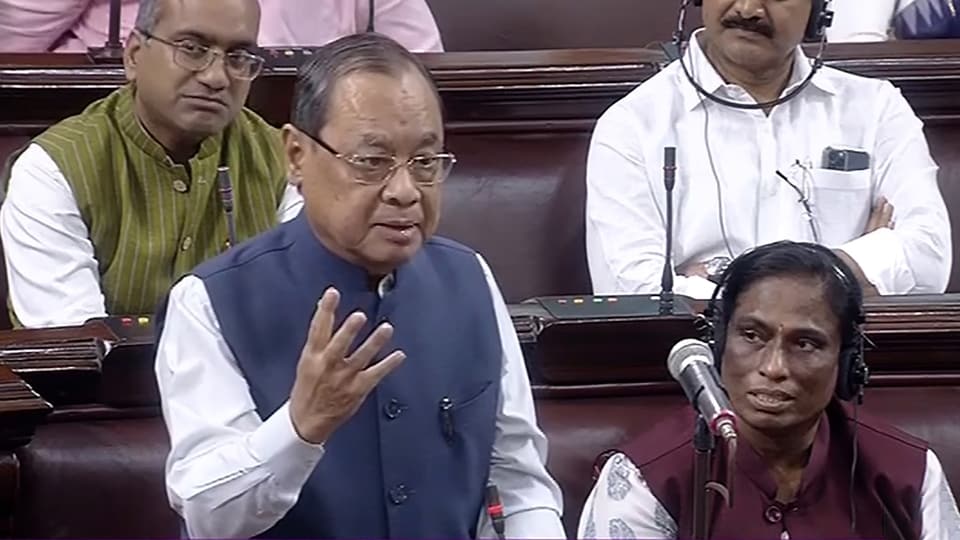
“As a distinguished jurist, he brought unparalleled legal acumen and experience to the deliberations of the Rajya Sabha. His intervention in the Rajya Sabha reflected his deep understanding of legislative process and public interest. The House will certainly miss his wise counsel, measured intervention, and the gravitas he brought to our discussion,” CP Radhakrishnan said.
Rajya Sabha record showed Gogoi was absent — the attendance register was not signed as of Monday evening, as per the Digital Sansad portal.
His overall attendance in his six-year tenure stood at 53%. The average for all members is 80%.
The Sansad record showed he asked no questions; introduced no private member’s bills, and spoke in one debate.
Gogoi was nominated to the Rajya Sabha just six months after his retirement after serving as the CJI for 13 months, superannuating after an illustrious career involving cases such as the Ayodhya Ram Mandir land dispute.
He became the first ex-CJI to have been nominated to the Rajya Sabha, leading to some questions over propriety. He said his acceptance of the nomination was based on a need for the legislature and the judiciary to "meet at one point of time".
Also read | ONOP bill does not take away voting rights, says former CJI Ranjan Gogoi
During his tenure in Parliament, major legislations including the later-revoked farm laws, the new criminal codes, laws related to waqf and women's reservation, were among those debated or passed.
On why he did not speak much in Parliament, he recently told ThePrint: “It is because of the House having witnessed disruptions for one reason or the other. It is only of late that the question hour and the zero hour in the Rajya Sabha is being held in a meaningful manner.” He added that he didn’t ask questions for the sake of it “because I’m not a professional politician who needs to make a mark for a rise in career politics”.
He said he contributed as an MP by “addressing foreign delegations, heads of mission, law enforcing agencies on varied topics starting with the evolution of the constitution, its detailed provisions, its actual working, the role of the judiciary and the legislature under the constitution”.
Up to 2021, the first year or so of his tenure, his attendance was barely around 10%. When asked about it in an NDTV interview at the time, he'd said he had informed the chairperson that “because of Covid (pandemic), on medical advice, I am not attending the session”. He had noted that as a nominated member, he was “not governed by any party”: “I go there at my choice, and I come out at my choice."
The debate he did participate in, was about federal structure of governance in India, pointedly about distribution of powers under the Government of National Capital Territory of Delhi (Amendment) Bill, 2023. The bill later cleared Parliament to become an Act.
He supported it: “The bill is perfectly valid. The position in my perception is this — the State legislature makes laws for the States, the Parliament makes laws for the union territories. For NCT of Delhi, the legislature makes laws on state subjects except three. By virtue of (Article) 239AA(3)(b), Parliament has the power to frame laws beyond these three. That is exactly what the Bill is seeking to do. Therefore there is no question of overreaching."
That was when the spat between the elected AAP government of Delhi and the lieutenant governor, who reports to the Union home ministry, was at its peak, mainly over control of the bureaucracy.
In 2018, the top court had ruled that land, police and public order were under the Centre and the rest of the departments under the elected Delhi government. But the tussle continued, and in May 2023, the top court affirmed its earlier verdict. Eight days later, the Union government brought the bill that effectively overrode the SC verdict and gave powers over the bureaucracy to the Centre and the L-G.
Gogoi, in his speech, also questioned the assertion that the bill was against the basic structure of the Constitution. “I have to say something about the basic feature. There is a book by Mr TM Andhyarujina, former Solicitor General of India, on the Kesavananda Bharti case. Having read the book, my view is that the doctrine of the basic structure of the Constitution has a debatable, a very debatable jurisprudential basis… I would not say anything more,” he said.
Gogoi remained a member of the the parliamentary committee on personnel, public grievances, law and justice during his RS tenure. In the farewell message for him on Monday, the chairperson further said, “I wish that he will continue to contribute to the nation in different capacities with the same dedication, integrity, and spirit of service that he has exemplified throughout his illustrious career."


