
 E-Paper



‘Fixed Delhi excise policy to favour associates’: CBI on jailed AAP leader Manish Sisodia
Calling Sisodia the “main architect”, CBI alleged that the policy was “approved by the council of ministers on May 21, 2021 in a hurried manner.”

 Prefer HTon Google


From manufacturing suggestions from the public and stakeholders’, introducing arbitrary provisions without any discussions or study, destroying phones to hiding a cabinet note as well as legal opinions that favoured the status quo, and clearing the policy in a hurried manner, former deputy chief minister Manish Sisodia did everything to bring an excise policy in Delhi that was in his interest and of his associates, according to the Central Bureau of Investigation (CBI) charge sheet filed against him last month.
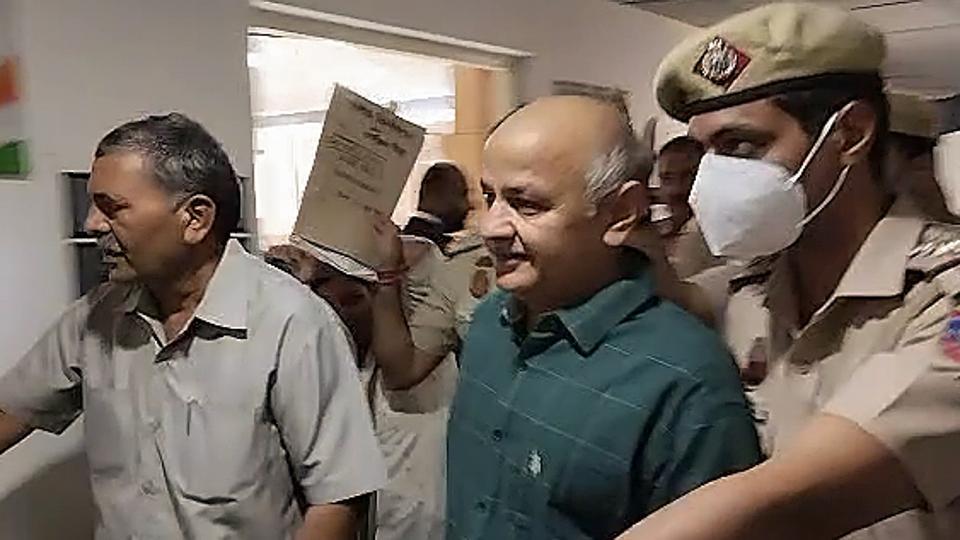
A Delhi court on Saturday took cognizance of the charge sheet, filed on April 25, after which it became a public document.
Read: Sisodia withdraws interim bail pleas pending before Delhi high court
The charge sheet, reviewed by HT, said Sisodia was unhappy with the report of an expert committee led by former excise commissioner Ravi Dhawan and sought public comments on it. “... to manipulate the process of seeking comments or suggestions from the public or stakeholders, (Sisodia) got fabricated certain emails through Zakir Khan, chairperson of Delhi Minorities Commission, which were sent by the interns of DMC on the dedicated email ID of the excise department – i.e. excise.policy@delhi.gov.in with the copy to the email ID of Sisodia – msisodia@gmail.com on January 14-15, 2021,” it said.
CBI said its probe found that suggestions given in these emails such as allotment of retail licences through auction of zones, reduction of excise and VAT as well as enhancement of licence fee and increase in the number of liquor vends, were handed over by Sisodia to Zakir Khan “in a handwritten note with the direction to get multiple emails on the said lines sent to the dedicated email address”.
All these provisions were ultimately incorporated in the new excise policy, and which were at complete variance with the recommendations of the expert committee. “This proves that the accused Manish Sisodia was working with pre-conceived ideas for the formulation of the excise policy and was planting the manufactured public opinions/suggestions in support of the same,” CBI said.
The jailed Aam Aadmi Party (AAP) leader was arrested by CBI on February 26 and has been called the architect of the excise police scam by the federal probe agency.
Read: AAP alleges misbehaviour with Manish Sisodia in Delhi court
CBI said its investigations found that Sisodia had asked former excise commissioner Rahul Singh to prepare a draft cabinet note on given lines along with a summary of the suggestions/comments for placing before the council of ministers on January 28, 2021.
With the draft note, Singh annexed public comments and three legal opinions by former chief justices of India Ranjan Gogoi and KG Balakrishnan, and senior advocate Mukul Rohatgi, obtained by the Alcobev retailers association and forwarded by them to the excise department. These legal opinions were in favour of maintaining the status quo, CBI said.
The file with the note was signed by relevant officers of the excise department on January 28, 2021, at the chief minister’s residence and was handed over to Sisodia for the CM’s approval, the charge sheet said. “However, the cabinet note was not considered by the council of ministers. It has also been revealed that after the meeting, Sisodia called Singh and expressed his anger for incorporating comments of the legal experts in the cabinet note,” it added.
It was never given back to excise officials by Sisodia and is untraceable, CBI said.
Thereafter, Sisodia initiated a fresh note on February 2, 2021, with the directions to include the expert committee report and public comments. However, the previous cabinet note was not mentioned in it. The fresh note was put before the council of ministers on February 5, 2021.
“These facts establish that Sisodia, in criminal conspiracy with other accused persons, was working with a pre-conceived idea to formulate the excise policy in a particular manner to suit the designs of co-accused persons and dishonestly and deliberately did not put up the cabinet note containing comments of legal experts as annexure in the cabinet meeting dated January 28, 2021 and destroyed/caused disappearance of the file of the said note, because it was not suiting their ulterior designs,” the charge sheet added.
CBI said that in February 2021, 8-10 meetings of the GoM were held in which some data was sought from the excise department but “no proper minutes or record of discussions of the said meetings were prepared”, there was no decision on incorporating the GoM report, no discussion on a wholesale model, and there was no study regarding a profit margin of 12% for wholesalers.
Arva Gopi Krishna, who became excise commissioner on March 5, 2021, was never invited to any of the GoM meetings nor did he attend any, CBI added.
Krishna, who was named as accused in the CBI first information report (FIR) filed on August 17 last year, has been given the clean chit by the agency in its charge sheet and is a key witness against Sisodia. He has recorded statements under sections 161 and 164 of the criminal procedure code against Sisodia.
The charge sheet further said that Sisodia sat with officials from time to time to give directions about certain changes or modifications and also got certain points/paragraphs highlighted in red colour when a new GoM draft was being prepared on March 18-19, 2021.
“...in this draft GoM report, the profit margin for wholesalers was abruptly increased from 5% to 12%. Further, the eligibility criterion of turnover for wholesalers was increased from ₹100 crore to ₹500 crore, every year for the past five years.”
Calling him the “main architect”, CBI said that “the report was then finalised by Sisodia on March 20, 2021”. It was retrieved from his computer by the CBI.
The agency alleged that the new policy was finally formulated on May 20 and 21, 2021, and it was “processed and approved by the council of ministers through circulation on May 21, 2021 in a very hurried manner despite it being the peak of the Covid-19 pandemic.”
The charge sheet said Sisodia used three mobile phones from January 1, 2020 to August 19, 2022. “The last one which was used by him was seized from him on August 19, 2022 during the searches in the case. This handset was being used on July 22, 2022, the date on which the instant matter was referred by the ministry of home affairs for a CBI enquiry. The two handsets which were used prior to July 22 have been admittedly destroyed by Sisodia as confirmed by him in his response to the notice. This wilful disposal of handsets containing incriminating evidence related to the policy is another incriminating circumstance against Sisodia,” the CBI added.
The agency linked Sisodia to Vijay Nair, arrested AAP communications in-charge, who was meeting the accused persons from the alleged South Group as part of a criminal conspiracy to incorporate favourable provisions in the policy.
Read: ED searches AAP MP Sanjay Singh's aides' homes, offices in liquor policy case
CBI said further investigation in respect of the post-tender violations of the excise policy, the role of excise officials of the Punjab government in coercing the surrender of L1 licence of Mahadev Liquor, the role of other suspects in the larger conspiracy, and the money trail, etc needed to be continued. Supplementary charge sheets will be filed later in the case, it said.
The Delhi government’s 2021-22 excise policy aimed to revitalise the city’s flagging liquor business. It aimed to replace a sales-volume based regime with a licence fee one for traders, and promised swankier stores, free of the infamous metal grilles, ultimately giving customers a better buying experience. The policy also introduced discounts and offers on the purchase of liquor, a first for Delhi.
The plan, however, came to an abrupt end, with Delhi’s lieutenant governor Vinai Kumar Saxena recommending a probe into alleged irregularities in the regime. This ultimately resulted in the policy being scrapped prematurely and being replaced by the 2020-21 regime, with the AAP alleging that Saxena’s predecessor sabotaged the move with a few last-minute changes that resulted in lower-than-expected revenues.
AAP did not issue an official comment on the matter. It also did not respond to HT’s queries for a response on the development.


