
 E-Paper



4 French air force jets to come for wargames with IAF’s Rafale jets from 19 Jan
India is also considering a French proposal to acquire six Airbus 330 multi-role transport tanker aircraft on a government-to-government basis for expanding the strike capability of the Indian Air Force

 Prefer HTon Google


Four Rafale fighters of the French Air Force will land in India this month to participate in joint exercises with the Indian Air Force’s Golden Arrows Squadron that was resurrected in September last with the induction of the Rafale fighter jets. The exercises have been scheduled between 19 and 25 January in the skies over the deserts of Rajasthan, people familiar with the matter said.
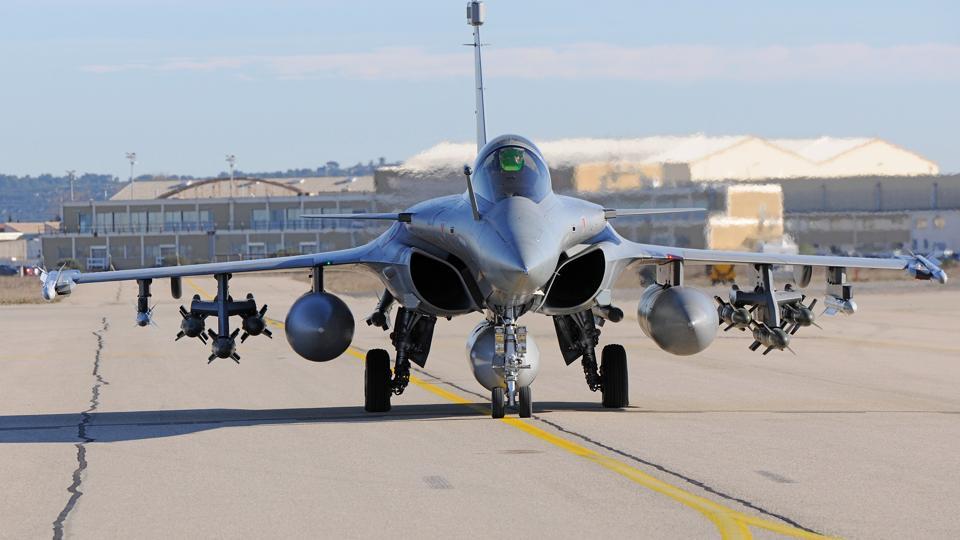
The French air force’s Rafales will be accompanied by the Airbus A330 multi-role tanker transport aircraft (MRTT) for aerial refuelling support. The four fighters will also participate in joint exercises with the Australian Air Force before reaching India.
The wargames, named Exercise Skyros, will take place over the air force firing range in Rajasthan’s Pokhran that had seen Indian Air Force fighters participate in Exercise Vayu Shakti. The 2019 exercise was designed to let the pilots practise and showcase the IAF’s ability to strike targets including radars and enemy convoys on the ground.
The joint exercises are expected to focus on interoperability, low flying over the desert and manoeuvrability of the omni role fighters. The exercises involving the Rafales - which would be India’s frontline fighter in case of conflict in East Ladakh or elsewhere - are being held weeks after Chinese and Pakistani air force carried out joint exercises near India’s western border.
Also Read: Rafale’s deep-strike cruise missile gets an upgrade for targets in mountains
Exercise Skyros will be the first joint exercise involving the Indian Air Force’s Rafale fighter jets and is cited as another example of the deepening military ties between the two countries, a senior Indian military officer said.
The Indian Air Force has inducted 11 of the 36 Rafale jets ordered by New Delhi at a cost of Rs 59,000 crore. Seven more fighters have been handed over to India by Dassault but these are being used for training IAF pilots in France. The third batch of three fighter jets is scheduled to land on January 27.
A top Indian Air Force officer said there was a possibility that the three Rafale jets could, logistics permitting, fly together with the French Air Force’s four fighters and the Airbus A300 MRTT.
India is also considering a French proposal to acquire six Airbus 330 multi-role transport tanker aircraft on a government-to-government basis for expanding the strike capability of the Indian Air Force (IAF). The mid-air refuelers can be turned into purely a tanker or transport or air ambulance or all three at the same time with a total crew of three. Else, it can transport 260 personnel in the cabin and fuel in the cargo hold.
The refuelers are crucial to expand the operational envelope of the fighter jets of the air force and the navy by extending range, letting a Su-30 MKI or Rafale flying from Port Blair fly all the way up to Sunda, Lombard and Malacca Straits for freedom of navigation missions.
A senior IAF official had earlier described the French proposal as a win-win for the Indian air force and France.
The Indo-Pacific is home to 1.5 million French citizens on island territories that give it an exclusive economic zone of more than 11 million sq km, the second largest in the world.
France has spoken out for India on several occasions in the context of the stand-off with China along the Line of Actual Control. Back in June when 20 Indian soldiers laid down their lives to repel China People’s Liberation Army troopers in Galwan Valley, the French defence minister Parly had made it a point to write to defence minister Rajnath Singh to convey her country’s “steadfast and friendly” support in these “difficult circumstances”.
France has traditionally been the most dependable and consistent supporter of India at the United Nations and elsewhere too. Like when India carried out the 1998 nuclear tests, France was the only country among the five permanent members of the United Nations Security Council that did criticise or back sanctions against India.


