India’s first domestically developed mRNA-based Covid-19 vaccine candidate has been found safe in its interim Phase 1 clinical trials, and the national drugs regulator has granted approval to its maker, Pune-based Gennova Biopharmaceuticals, to begin Phase 2/3 trials, the Union ministry of science and technology said on Tuesday.
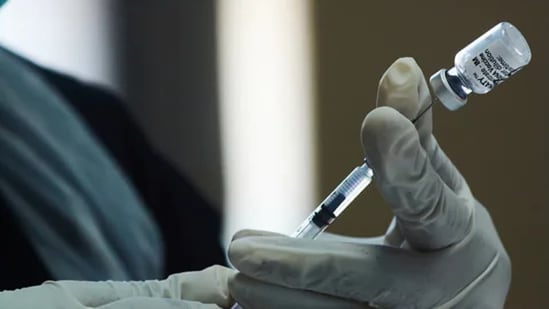
The development of HGCO19, the country’s first vaccine based on messenger-RNA (mRNA) technology, is a key step in India’s target of vaccinating all adults by the end of the year as senior government officials have said that — subject to trials and approval — they are looking at availability of 60 million vaccine doses by December.
The candidate could join a club of mRNA-based vaccines currently consisting of just two American vaccines – by Pfizer-BioNTech and Moderna Inc – both of which have the highest efficacy among those currently being administered globally.
“Gennova Biopharmaceuticals Ltd., the Pune-based biotechnology company, working on the nation’s first mRNA-based Covid-19 vaccine, submitted the interim clinical data of the Phase I study to the Central Drugs Standard Control Organisation (CDSCO), the Government of India’s National Regulatory Authority (NRA). Vaccine Subject Expert Committee (SEC) reviewed the interim Phase I data and found that HGCO19 was safe, tolerable, and immunogenic in the participants of the study,” science and technology ministry said in a statement issued on Tuesday.
The company began Phase 1 trial in April. HGCO19’s development is being supported by central government’s Department of Biotechnology-Biotechnology Industry Research Assistance Council (DBT-BIRAC).
{{/usCountry}}The company began Phase 1 trial in April. HGCO19’s development is being supported by central government’s Department of Biotechnology-Biotechnology Industry Research Assistance Council (DBT-BIRAC).
{{/usCountry}}“It is a matter of great pride that Nation’s first mRNA-based vaccine is found to be safe and the Drugs Controller General of India (DCGI) has approved Phase 2/3 trials. We are confident that this will be an important vaccine for both India and the world. This is an important milestone in our indigenous vaccine development mission and positions India on the global map for novel vaccine development,” said Renu Swarup, secretary, DBT, and chairperson, BIRAC.
According to the company, the study will be conducted across the country at around 10-15 sites in Phase 2, and 22-27 sites in Phase 3. Gennova plans to use the DBT-Indian Council of Medical Research (ICMR) clinical trial network sites for this.
Swarup earlier said that DBT was hand-holding Gennova from the start, and had also provided seed funding for the development of HGCO19.
Gennova developed this vaccine candidate in collaboration with HDT Biotech Corporation, United States.
“After establishing the safety of our mRNA-based Covid-19 vaccine candidate HGCO19 in Phase 1 clinical trial, Gennova’s focus is to start Phase 2/3 pivotal clinical trial. In parallel, Gennova is investing in scaling up its manufacturing capacity to cater to the nation’s vaccine requirement,” said Sanjay Singh, chief executive officer, Gennova Biopharmaceuticals Ltd.
Gennova submitted the proposed Phase 2 and Phase 3 study titled “A Prospective, Multicentre, Randomized, Active-controlled, Observer-blind, Phase II study seamlessly followed by a Phase III study to evaluate the safety, tolerability, and immunogenicity of the candidate HGCO19 (Covid-19 vaccine) in healthy subjects” that was approved by the office of the DCGI, CDSCO.