
 E-Paper



Glimpses of Gandhi: Places you can visit
From Porbandar to Delhi, the Father of the Nation spent his life in these places as he preached non-violence and satyagraha to thousands of Indians.


Mahatma Gandhi lived in and visited hundreds of places during India’s freedom movement and they have became an integral part of the Indian history.
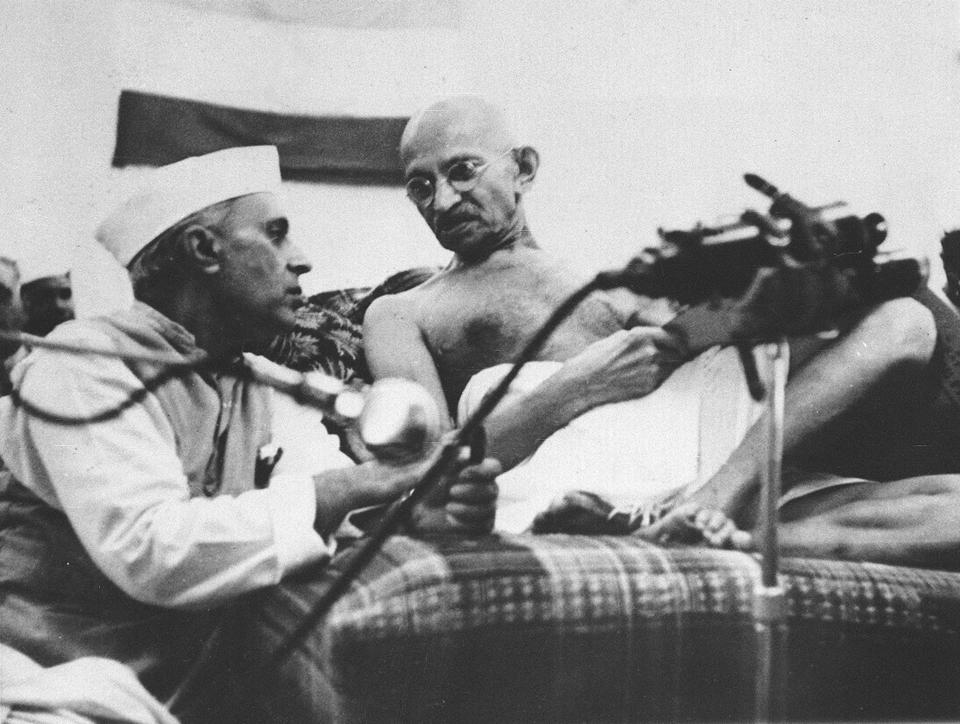
From Porbandar to Delhi, the Father of the Nation spent his life in these places as he preached non-violence and satyagraha to thousands of Indians.
Here are a few places associated with the Mahatma which you can visit as the country marks the 150th anniversary of his birth:
Porbandar
Porbandar, the birthplace of Mahatma Gandhi, is port city at the end of Saurashtra in Gujarat.
A 79-feet building has been built in the lane where Bapu was born in 1869 in the picturesque seaport on the Arabian Sea.
The prime attraction is the Kirti Mandir— the three-storeyed ancestral house of Gandhi where the exact place where his mother Putlibai had given birth to him is marked with a ‘swastik’.
Behind Kirti Mandir is Navi Khadi, where Kasturba, Gandhiji’s wife was born. The new building adjoining Kirti Mandir houses a library, a prayer hall, a nursery and a steeple decorated with episodes from Gandhi’s life.
Sabarmati Ashram
Sabarmati Ashram in Ahmedabad was founded by Mahatma Gandhi on June 17, 1917, which served as his residence for the next approximately 13 years till 1930.
Gandhi’s daily routine, while at the Ashram, consisted of writing, reading, praying, giving speeches, planting trees, spinning, cleaning toilets etc. Though Gandhi lived there for only about 13 years – and during that period spent just 1528 days at the Ashram, since he was travelling all over – the Ashram has forever become a part of his identity.
Along with Harijan seva and reviving khadi, Gandhi started editing journals like Navajivan and Young India during his years at Sabarmati, and in 1920 founded the Gujarat Vidyapith university.
It was while staying at the Ashram that Gandhi was arrested in 1922, and tried for sedition (for publishing certain revolutionary articles) in what has since come to be known as “The Great Ahmedabad Trial”. Gandhi pleaded guilty and was jailed for six years, but released after two years for medical reasons.
Gandhi also wrote his autobiography at the Sabarmati Ashram over a period of 658 days.
Gyarah Murti
The massive black sculpture is installed at the head of Sardar Patel Marg near President’s Estate in New Delhi. Created by renowned sculptor Deviprasad Roychowdhury, the statue was Independent India’s tribute to generations of Indians who struggled for freedom, with Gandhi leading the way.
The 10 statues behind Gandhi’s depict people of different religions and backgrounds to showcase India’s diversity during the Dandi March in 1931 stands proudly in the heart of the city.
National Gandhi Museum
The National Gandhi Museum or Gandhi Memorial Museum in New Delhi showcases the life and principles of Mahatma Gandhi. The museum, first opened in Mumbai shortly after Gandhi was assassinated in 1948, has been relocated several times before moving to Raj Ghat in 1961.
The Gandhi Museum’s library has books written by or about Gandhi and on other subjects. There are currently over 35,000 books or documents in the museum’s library. It also has a collection of 2,000 periodicals in both English and Hindi on Gandhi’s life.
The memorial’s gallery has a large number of paintings and personal items of Mahatma Gandhi.
Raj Ghat
Raj Ghat is the final resting place of Mahatma Gandhi in Delhi. The memorial made of black marble marks the spot of Mahatma Gandhi’s cremation on January 31, 1948, a day after his assassination. The structure is under the open sky with an eternal flame burning at one end. A stone footpath flanked by lawns leads to the walled enclosure that houses the memorial Ring Road, officially known as Mahatma Gandhi Road.
Gandhi Smriti
Gandhi Smriti, housed in the Old Birla House on 5, Tees January Marg in New Delhi, is where Mahatma Gandhi was killed on January 30, 1948. Mahatma Gandhi had lived in this house during the last 144 days of his life from September 9, 1947, to January 30, 1948.
The Old Birla House was acquired by the government in 1971. It was converted into a national memorial of the Father of the Nation and opened to the public on August 15, 1973.
It includes the room where Gandhi lived and the prayer ground where mass congregation used to be held. The building and the landscape have been preserved as they were in those days.
Bapu Niwas
Bapu Niwas is perhaps the least known among the destinations associated with the Mahatma in Delhi.
Tucked within the premises of a beautiful Valmiki Temple on Delhi’s Mandir Marg, Gandhi lived in a one-room quarter inside its premises from April 1, 1946, to June 1, 1947. The room has preserved the table and pen stand used by him at that time.
Kasturba Kutir
Kasturba Kutir is another destination associated with the Mahatma that does not attract many visitors. It was restored a couple of years back and is now a museum.
The Mahatma lived for 180 days at Kasturba Kutir in the 1930s and 40s with his wife Kasturba Gandhi. While Kasturba Gandhi lived on the ground floor, the Mahatma lived on the upper floor. Many top national leaders such as Jawaharlal Nehru, Bhimrao Ambedkar and Sardar Patel used to visit him there.
National Salt Satyagraha Memorial
The memorial in Gujarat’s Dandi has statues of Mahatma Gandhi and the 80 Satyagrahis, who had marched with him during the historic Salt March in 1930 to make salt from seawater against the British law.
It also has 24-narrative murals depicting various events and stories from the Salt March. Solar trees have also been installed to meet the energy requirements of the memorial complex.


