
 E-Paper



'Go to Iran' vs 'Israel your fatherland': West Asia war echoes in Lok Sabha as Kashmir MP pays tribute to Ali Khamenei
Ruhullah Mehdi, NC MP from Srinagar, got into a slanging match over comments made at him when he sought to to express condolences for Iran Supreme Leader

 Prefer HTon Google


Jammu and Kashmir National Conference MP Agha Syed Ruhullah Mehdi castigated the ruling BJP-led NDA government in Parliament as he mentioned the ongoing conflict in West Asia after the US and Israel attacked Iran over two weeks ago.
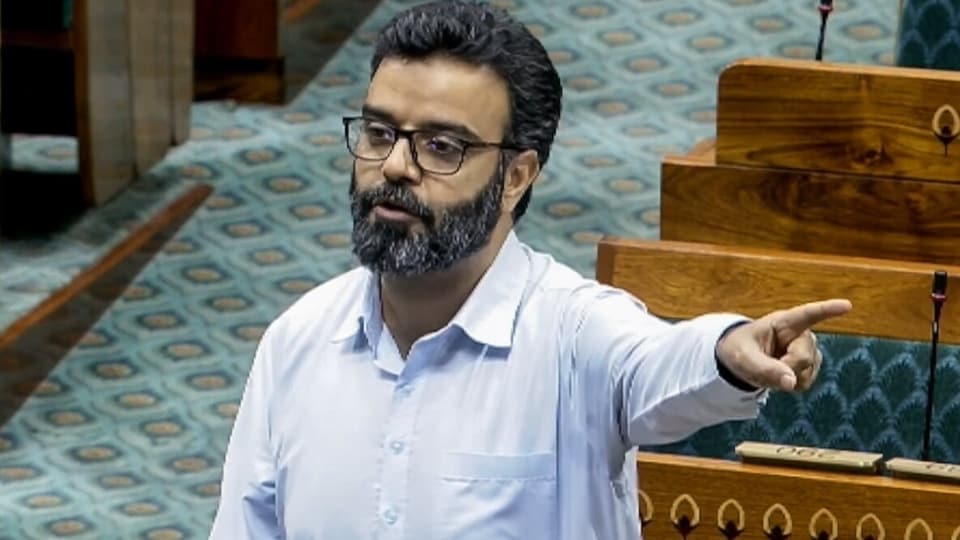
He was speaking on Monday on the budget allocation for the railways when he sought to “take 10-15 seconds" to express condolences on the “martyrdom” of Ayatollah Ali Khamenei, the Iran Supreme Leader who was killed in the American-Israeli airstrikes on February 28.
He underlined “the killing of innocent people, more than 150 girls, children , in a school (in Iran's Minab)”.
“I express my condolences to the people of Iran, to the peace-loving people, the just people all around the world,” he said, as per the Sansad TV broadcast.
At this, a member from the ruling alliance's side interjected and purportedly told him to “go to Iran”. It was not clear which member said it. The House's presiding MP, NK Premachandran, urged Ruhullah Mehdi to only speak on the railway budget allocation. But Mehdi replied to the “go to Iran” jibe instead.
“Kyun chala jaoon? Main Iran kyun chala jaoon? (Why should I leave? Why should I go to Iran?” he said, switching to Hindi. “I am condemning Israel, but why are you getting upset?” he said.
He further remarked, “Aapne unko apna ‘fatherland’ banaya hoga, apna pita-shree banaya hoga; hamara nahin hai. (You must have made Israel your ‘fatherland’, made it your dear father; we have not.)" PM Narendra Modi visited Israel just ahead of the start of the war in late February, where he'd said in his address to the Israeli parliament Knesset that Jews in India consider “India their motherland and Israel as fatherland”.
Again told by the chairperson to stick to the budget, the Srinagar MP then moved to speaking about the railways for a bit. He thanked minister Ashwini Vaishnaw that a plan to build a rail line for Shopian and Pahalgam, among other places, “has been permanently dropped”. He said that project would have negatively impact orchards in the region. He also raised the demand for rail linkages for the Chenab valley and better connections with Jammu.
He went back to the war subject after this: “Baaki unka khwaab hai jo humein kabhi Pakistan, kabhi Iran bhejna chahte hain. (Some here have dreams; sometimes they want us to go to Pakistan, sometimes to Iran.)”
He added, “I am from the lineage of Haidar-e-Karrar,” referring to a title for Imam Ali, the first Imam of Shia Islam. “I take a stand for what's just and rightful.”
The chairperson then moved on to the next speaker.


