
 E-Paper



Goa govt bus covers 2,800km to pick up migrants from Bengal
With the number of Goans stranded across the country being too small , the Goa government has decided that, rather than organise trains like many of the bigger states have done, it is better off dispatching buses.


On Saturday evening, a bus arranged by the Government of Goa set off from Darjeeling in West Bengal , after picking up its sole passenger. It was to pick up four more from Kolkata and begin its 2,800 km long journey back to Goa.
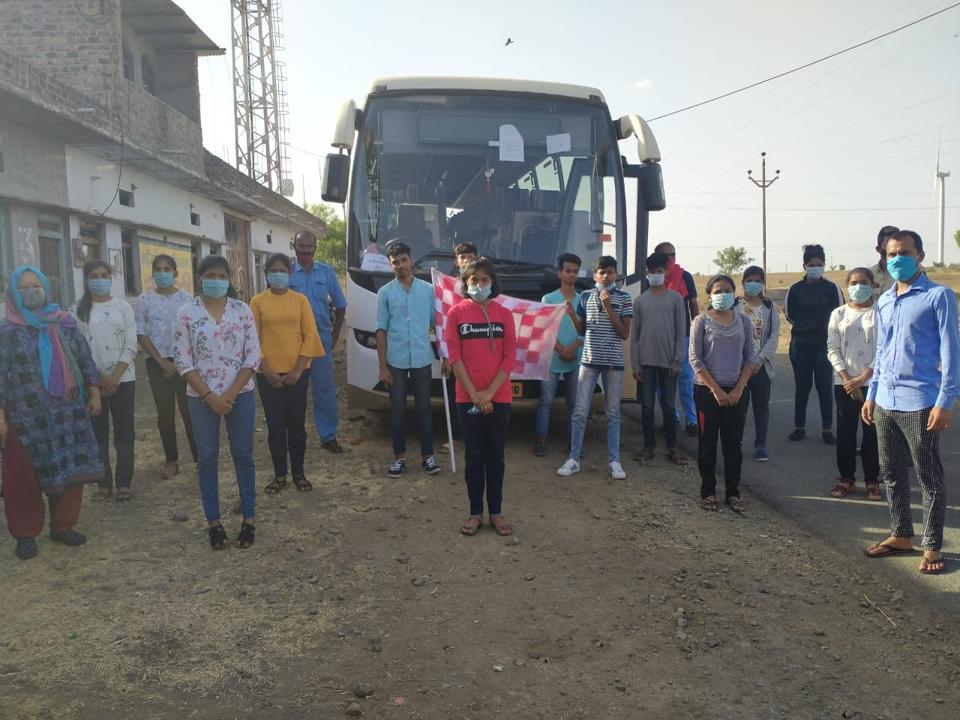
The bus was dispatched to West Bengal earlier this week and arrived in Darjeeling on Friday. By the time it finishes its round trip, it would have travelled from one end of the country to the other -- and back.
Another bus left Goa for Baleshwar (Balasore), Odisha on a similar mission earlier this week.
With the number of Goans stranded across the country being too small , the Goa government has decided that, rather than organise trains like many of the bigger states have done, it is better off dispatching buses -- those operated by the state government run Kadamba Transport Corporation or those that have been arranged through private operators -- to help stranded Goans return home. The buses are coordinated by the Interstate Movement Cell that has been set up specifically for the purpose.
At least 6,200 people have approached the cell for help in being brought home (in some states the number runs into lakhs) . While most bus trips are of a shorter duration and involve bringing students from Kerala or neighbouring Karnataka, buses by the Kadamba Transport Corporation have travelledas far as Udaipur in Rajasthan and Ratlam in Madhya Pradesh.
“The movement is planned through judicious use of buses in consultation with nodal officials of different states,” the state government said in a statement.
“Once they register on the Goa government portal, those wishing to be brought back are informed through sms/calls by the control room once the travel plan for a particular destination is finalised,” the statement added.
Over the last week, 15 buses have brought back to Goa 241 people stranded from Kerala (Kasargod), Karnataka (Mangluru, Bengaluru, Belgaum,Hubli, Dharwad, Khanapur, Jamboti and Gadag), Maharashtra (Navi Mumbai, Pune), Gujarat (Ahmedabad,Vadodara and Surat), Dadra and Nagar Haveli.
“Driving a Volvo is relaxing. However, crossing the state borders, changing routes due to blockages in Red Zones, waiting in long queues for constant security checks was hectic. This was an unforgettable experience,” Savlo Parab, 55, a driver of the KTCL who drove to Ratlam, said.
The journeys are fraught with risk; a Goa bound bus that began its journey from Chennai via Bengaluru met with an accident injuring 21 passengers after the driver allegedly dozed off at 4:30 am in Gadag, Karnataka.
But barring this solitary incident, the bus-based evacuation model has worked well for the state.
“Today, I am proud and feel more responsible. The government has arranged the trip well. Each person was provided with masks and sanitizers, food and other essentials. We did not halt anywhere except for food,” Mahesh Khanolkar, 45, another driver said.


