E-Paper



Goa House passes bill to restart mining amid Oppn’s walkout
State hopeful that restarting mining through a state-run corporation will help restart industry shuttered twice since 2012

 Prefer HTon Google


Panaji: The Goa Legislative Assembly on Friday passed the Goa Mineral Development Corporation Bill, 2021, for the formation of a state-run corporation “to carry out mining operations in an orderly, scientific and ecological sustainable manner” in a bid to restart the industry that has been halted since 2018 when the Supreme Court cancelled the renewals of 88 mining leases.
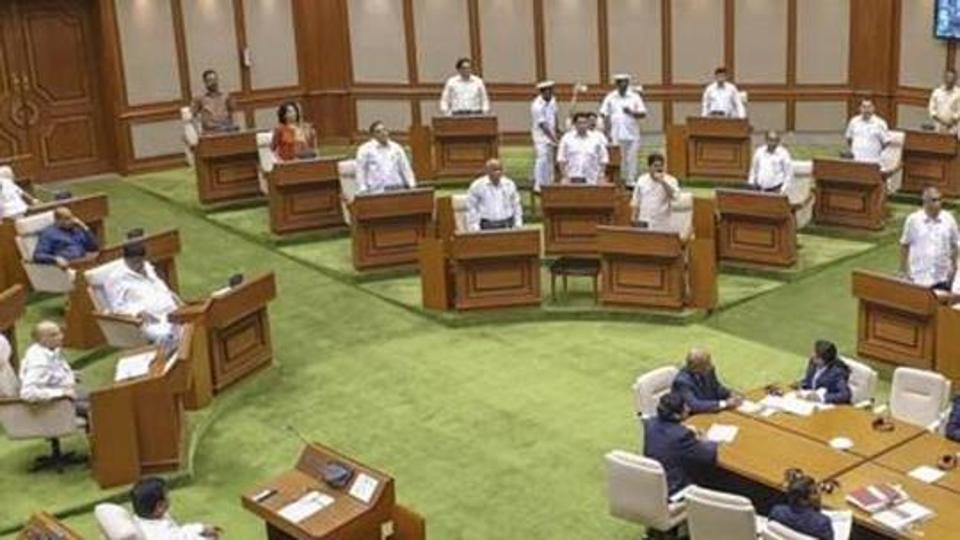
The Bill was passed sans any discussion amid a walkout by the opposition parties.
“We were not allowed to put forth our views and discuss issues of importance to Goa. We do not wish to be part of this illegal act and hence, walked out of the house,” Goa Forward Party MLA Vijai Sardesai said.
The Corporation, according to the Bill, will be headed by the chief minister as the ex-officio chairperson and will have on board secretaries of mines, finance and environment as its members.
The Corporation will be empowered to obtain mining leases/grants and prospect licenses, etc. under the Mines and Mineral Development and Regulation Act, 1957, and carry out all mining operations.
Goa’s iron ore mining industry, which dates back to the Portuguese days, ran into legal wrangles following the tabling of the Justice M B Shah Commission report in Parliament in 2012. The report pointed out that Goa’s iron ore mining scam was worth ₹35,000 crore. The voluminous report held the state government and central government agencies as parties to the scam, along with the powerful mining operators here, who according to Justice Shah, plundered natural resource and facilitated an “unrestricted, unchecked and unregulated export of iron ore to China”, which made the exporters of ore “richer and richer”.
In the case that ensued, the Supreme Court noted that Goa’s mining leases had expired and directed that fresh licenses be granted. The order was upheld in 2018 when the top court cancelled all the leases that were renewed by the state government and reiterated its earlier stance of granting fresh licenses. The state government had filed a review petition but it was dismissed last week.
Goa’s legacy mining lease holders continue to claim rights to the leases that were initially granted as perpetual concessions by the Portuguese colonial administration.
“The main petitions and SLPs (special leave petitions) filed by Vedanta and Geetabala Parulekar (another leaseholder) are listed to be heard, which are on the basis of leases being valid till 2037. We remain optimistic that we will place the legal positions before the Supreme Court and mining will eventually restart,” the Goa Mineral Ore Exporters Association, the body of legacy leaseholders, had earlier said in a statement.
The Goa Foundation, an environmental non-governmental organisation whose petitions resulted in the shuttering of Goa’s mining industry, in 2018 had suggested that setting up the corporation could be the quickest route to restart mining activity and bring relief to mining workers and truck operators who have been out of work since then.
Reacting to the Bill, the Goa Foundation said that while “the government is to be congratulated for introducing the Bill, considering that the idea was opposed tooth and nail by the mining lobby, it could have involved itself in a more creative and imaginative enterprise”.
“The features of the new Bill are routine and unexceptional. It has largely been copied from existing Acts governing other public sector corporations (PSUs). When dealing with mineral resources belonging to the people of the state, definitely a corporation with a different character would have been preferred,” Claude Alvares, the Director of Goa Foundation, said.
“The present board of directors, as constituted, will ensure the corporation does not run efficiently or properly. The chief minister as chairman is a bad idea, not only because of conflicts of interest, but also because the corporation needs professional people to run it and not politicians. GMDC must be a professionally-run corporation. Reliance on only political appointees and politicians will surely ensure it runs fairly soon into the ground,” he added.