E-Paper



Government introduces book that links Kerala scholars to calculus
A new book by India's education ministry highlights ancient scientific contributions

 Prefer HTon Google


From almanacs (panchangams) and the precise calendrical systems of astrology and astronomy (jyotisa ), to ingenious astronomical instruments such as the Ghatika Yantra and Samrat Yantra for empirical observations, a new book released by the Union ministry of education’s Indian Knowledge Systems (IKS) division has highlighted India’s ancient scientific heritage—and says it is aimed at bridging “ancient insight with modern inquiry” and sparking “scientific curiosity and cultural confidence among students and educators.”
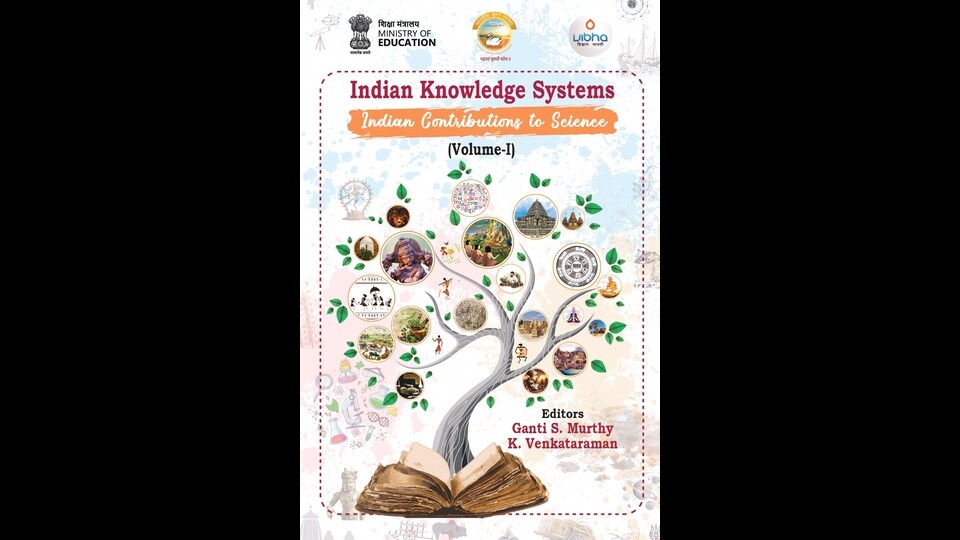
The 430-page “Indian Knowledge Systems: Indian Contributions to Science, Volume I,” showcases India’s contribution to mathematics stating that long before Issac Newton and Gottfried Wilhelm Leibniz formalized calculus in Europe, scholars in medieval Kerala, led by Madhava of Sangamagrama (circa 14th century), “were already exploring infinite series and laying the foundations for mathematical analysis.” The book also states that ancient Indian traditions fostered harmony between science and spirituality, “unlike the Western world, where clashes between science and religion were common.”
The book is also intended for students of Classes 6 to 12 to prepare for the Vidyarthi Vigyan Manthan (VVM)—a national science talent search exam conducted by non-profit Vijnana Bharati, which promotes the “Swadeshi Science Movement” in collaboration with NCERT and the National Council of Science Museums (NCSM).
Union education minister Dharmendra Pradhan said the book “highlights our nation’s rich legacy of scientific enquiry and holistic wisdom.” In his message to the readers of the book, he added that it connects ancient Indian thought with contemporary challenges and will “inspire curiosity, strengthen cultural confidence and motivate our youth” towards creating a developed India by 2047.

The book is the first in a proposed multi-volume series on traditional knowledge systems being developed by IKS in line with the National Education Policy (NEP) 2020, which urges schools and universities to integrate traditional wisdom into curricula and research.
“This volume is a thoughtful contribution to the ongoing dialogue between India’s ancient wisdom and contemporary inquiry,” said the editors of the book , Ganti S. Murthy, national co-ordinator of IKS and K. Venkataraman, a Physics teacher at PMB Gujarati Science College, Indore, Madhya Pradesh. “It is crafted for the curious mind—the student, educator, and professional seeking to understand the depth and contemporary relevance of India’s knowledge traditions.”
The book is divided into eight chapters written by professors and scholars of the Indian Institutes of Technology (IITs), Indian Institute of Science Education and Research Pune (IISER ) and All India Institute of Medical Sciences (AIIMS), New Delhi. Focusing on various aspects of science, technology, engineering, and mathematics (STEM), each chapter in the book is itself structured on the basis of a traditional Indian rhetorical model, the Anubandha-Chatustaya (four aspects) framework—addressing the learner (Adhikari), subject (Visaya), purpose (Prayojana), and relevance (Sambandha).
Prof. Anil D. Sahasrabudhe, chairman of National Educational Technology Forum (NETF) in the foreword of the book said that, “It is not merely a record of past achievements, but a bridge connecting timeless knowledge to modern scientific inquiry and innovation.”
Dr S. Krishnaswamy, vice president of the All India People’s Science Network (AIPSN) and retired senior professor at Madurai Kamaraj University, Tamil Nadi cautioned against the promotion of IKS initiative in education, calling it “a bad and unsustainable approach.”
He acknowledged that indigenous knowledge traditions—like the Kerala School of Mathematics, known for its remarkable early work—are well recognised. However, he noted that “these systems stood frozen in time due to the lack of interactions and exchange,” while mathematics and science continued to evolve globally.
Criticising the current push to mainstream IKS in higher education, including through the recent UGC’s Learning Outcome Curriculum Framework (LOCF) he said such efforts risk “alienating everyone” rather than inspiring learning. “It will neither blend modern enquiry with ancient insight nor build scientific curiosity and cultural confidence,” he said while warning that this approach could leave students “half-baked—fit for neither exploring the ancient systems rigorously nor the modern systems scientifically.”
Abha Dev Habib, associate professor of Physics at Delhi University’s Miranda House, warned that “the lines between mythology, fiction, and fact are being blurred.” She said the priority should be addressing today’s education gaps, adding that “no nation can progress by faking histories to feel proud—what matters is safeguarding the future generations.”