
 E-Paper



Govt looks to strengthen emergency care services
With Covid-19 pandemic underlining the importance of having a robust critical health care system, the central government is focusing on strengthening emergency care services in its hospitals across the country to save lives


With Covid-19 pandemic underlining the importance of having a robust critical health care system, the central government is focusing on strengthening emergency care services in its hospitals across the country to save lives.
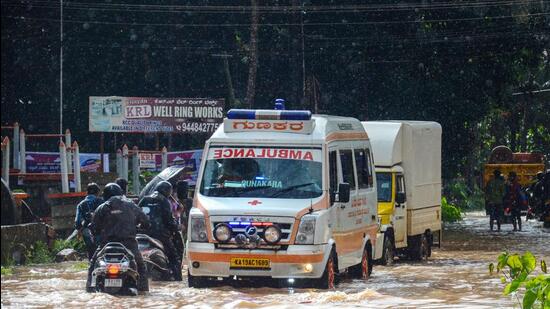
“Not just the infrastructure, the aim is also to create adequately trained human resource so that all kinds of emergency cases are handled in a standardised manner in our hospitals,” a government official said, requesting anonymity. “At the moment, critical care is a weak point, especially in tier-2-3 cities, but we know it is a critical service, as we saw during Covid times how intensivists were in great demand because of the care that was required for patients admitted into the ICU (intensive care unit).”
An intensivist is a physician who provides special care for critically ill patients .
The health ministry has recently launched National Emergency Life Support courses for doctors, nurses and paramedics, specifically keeping critical care demand in mind.
Apart from the training modules, the programme also includes developing training infrastructure in all states and union territories to implement the courses under the programme, and creating a cadre of trainers to train doctors, nurses and paramedics working in emergency departments of government hospitals and ambulance services.
“The fact that anaesthesiologists have multiple roles and responsibilities, apart from administering anaesthesia, is less known to the general public. Very few are aware that anaesthesia is a very highly specialised and advanced field and intensive training of at least six years after medical graduation is required to independently administer anaesthesia in a normal healthy patient,” said Dr Babita Gupta, professor, anaesthesia department at JPN Apex Trauma Centre, All India Institute of Medical Sciences, New Delhi.
“A patient with multiple diseases and scheduled for surgery may be an easy operation from a surgical perspective, but highly challenging for anaesthesiologists as they are responsible for managing the medical problems perioperatively as well as managing intraoperative and postoperative complications, which sometimes also include surgical complications,” Dr Gupta said. “Hence, anaesthesiologists are also called perioperative physicians.”
Anaesthesiologists widely worked as critical care physicians during the Covid-19 pandemic, not only in India but globally.
Sound knowledge of respiratory and cardiovascular physiology, expert skills in invasive procedures and experience in managing ventilators make them intensivists by default, according to Dr Gupta.
To acknowledge their efforts and celebrate the discovery of anaesthesia that has helped patients to not experience physical pain during surgical procedures, October 16 is observed as World Anaesthesia Day every year.


