
 E-Paper



Govt plan to take over mine auctions faces opposition from a few states
The changes have been opposed by some states who see it as another attempt by the Centre to take over mining auctions and impose central rules on a state domain.


The Union mines ministry has proposed amendments to the Mines and Minerals (Development and Regulation) Act, 1957, allowing captive mine owners to sell up to 50% of the approved capacity in the open market and giving itself the power to auction mines that the states have failed to auction.
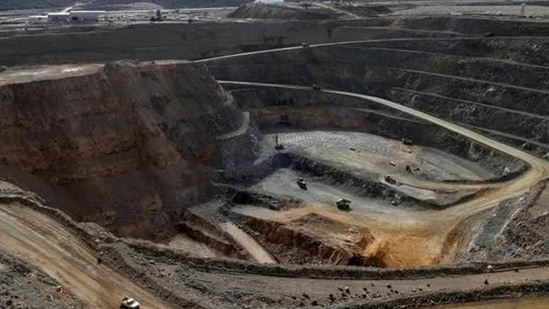
The changes have been opposed by some states who see it as another attempt by the Centre to take over mining auctions and impose central rules on a state domain. Except coal, states are allowed to auction other mines in consultation with the central ministry. Parliament in September 2020 approved an Ordinance promulgated in June to improve revenue from the mining sector and the Centre now wants states to carry out these changes too.
In a note to amend the law, circulated to all states, the mines ministry said the amendments have been proposed after consultation with Union ministries and states to improve revenue from the mining sector and to reduce dependence on imports.
The ministry has proposed to allow sale of 50% of minerals from captive mines in open market after meeting the need of plants they are attached to.
Under the captive mines scheme, the mineral can be mined only for the plant to which it is attached and no royalty is charged for the same.
With the change in law, the government aims at increasing production, especially from the captive coal mines. There are 194 captive coal blocks in India that were auctioned between 1993 and 2011, and which have coal reserves of 44 billion tonnes.
“This (market sale) will help to increase coal production from captive mines, coal availability in the market leading to reduction in import. This will also ensure additional revenue to the states and lead to Atmanirbhar Bharat,” the proposal said.
To improve revenue, the ministry has fixed up to 2.5 times of the existing royalty for allowing commercial sales from the captive mines. A decision on how much mineral from each captive mine can be sold will be taken by the mines and coal ministries, the note says.
Licence holders currently pay a royalty of ₹50 to ₹250 for a tonne of coal depending on its quality and ₹800 per tonne of asbestos. For several other minerals, the royalty is charged on ad valorem (percentage of the sale price) basis as per the rates published by Indian Bureau of Mines. The ad valorem royalty ranges from 0.4% per tonne for bauxite to 12% for copper. A mines ministry official said that streamlining of the auctions would help in better utilisation of mines and ensuring flow of minerals for industries. “There are many indirect benefits as it improves tax collections for the Centre and states and also create additional job avenues,” he said.
The ministry justified changes in the auction rules saying it would “ensure continuous supply of minerals in the country.” Any delay in auction will have substantial impact on the availability as well as prices of minerals, the note said.
Another amendment proposed is to empower the Centre to auction mines that states have failed to auction. Of the 143 such mines listed for auctioning, states have auctioned only 7 since 2015, the proposal said. According to ministry officials, states were getting about ₹10,000 crore as revenue from these mines. “Further, mining lease in relation to 334 blocks expired on 31 March 2020, out of which 46 are working mines. Ministry of Mines is pursuing with the state governments since early 2019 for early auction of these blocks ensuring continuity in production of minerals. Only 28 blocks have been auctioned till date,” added the ministry.
However, some states have opposed the proposal.
Chhattisgarh mines secretary, P Anbalgan, said there are various reasons including the feasibility of a mine and the net mineable reserves as against the estimated resources in a mine and market conditions apart from the time needed for technical preparations for delay in mine auctions. “Like Centre, every state is interested in auction of mines but limitations are there for both... In cooperative federalism, states should be allowed to exercise their right to bring their mines to auction after considering all parameters,” he said.
Shankar Sinha, Jharkhand’s Director, Mines, said, “The state government was finalising its own policy on the issues listed in the mines ministry proposal. Once done, we would send our suggestions to the Centre....”
Odisha mines minister Prafulla Mallik said they have reservation on certain provisions of the proposed changes. “We have questions regarding why the Centre wants to take over auctions and have sought clarifications,” he said, while supporting the proposal to hike rates for sale of minerals from captive mines.
The Goa Mining People’s Front, a collective of mine worker unions in the state, has also opposed the proposal.
(With inputs from Vishal Kant in Raipur, Debabrata Mohanty in Bhubaneswar & Ritesh Mishra in Raipur)


