E-Paper



Green clearances for airports set to be made easier
Currently, B2 projects are exempt from an Environmental Impact Assessment report or public consultation.

 Prefer HTon Google


The Union environment ministry has decided to downgrade the environmental assessments needed for all expansion/modernisation activities of airports.
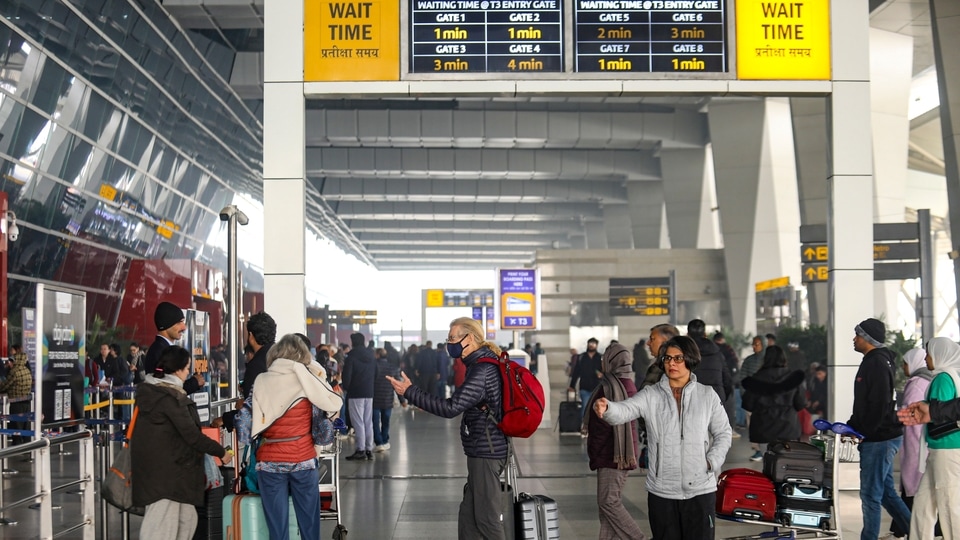
In an office memorandum dated September 30, uploaded on environment ministry’s Parivesh website this week, the environment ministry has said that it has received a representation from the Airports Authority of India (AAI) seeking rationalisation of EC (environmental clearance) requirements for expansion activities confined within the existing boundaries of airports.
It has been submitted that under the flagship UDAN (Ude Desh ka Aam Nagrik) scheme, air travel is being expanded to improve accessibility and affordability, and the Krishi UDAN scheme has facilitated movement of agricultural produce from remote areas to markets.
These initiatives have led to significant growth in passenger traffic and cargo movement, necessitating capacity enhancement at both major and regional airports. It has further been informed that such expansion work --- covering terminal buildings, allied facilities (including Air Traffic Control towers, fire stations, cargo terminals) as well as extension or construction of runways, taxiways, aprons, and other operational infrastructure --- is undertaken entirely within the already acquired land of existing airports and does not involve any additional land acquisition. These works are primarily operational in nature, aimed at improving passenger convenience, safety, and efficiency in view of rising demand, the memorandum states.
The representation was examined by the sectoral Expert Appraisal Committee (EAC). The committee observed that such expansion activities are unlikely to result in incremental environmental impact beyond the existing operational footprint of the airport.
“Further, airports are already subject to comprehensive regulatory oversight under Civil Aviation Requirements, DGCA guidelines, and statutory provisions of the Water (Prevention and Control of Pollution) Act, 1974 and the Air (Prevention and Control of Pollution) Act, 1981,” it said
The recommendations of the sectoral EAC were placed before the Expert Advisory Committee. After due deliberation, the committee was of the considered view that expansion and development activities undertaken strictly within the existing airport boundaries, and not involving any additional land, may be categorized as B2 projects.
“The EIA notification, 2006 provides that for categorisation of projects into B1 or B2, the ministry shall issue guidelines from time to time. Accordingly, in exercise of the said provision, and based on the recommendations of the Sectoral Expert Appraisal Committee and the Expert Advisory Committee, it is hereby directed that all expansion/modernisation activities of airports having valid ECs shall be appraised as category B2 projects, provided there is no increase in land area,” the memorandum states.
Currently, B2 projects are exempt from an Environmental Impact Assessment report or public consultation.
All new projects, including airstrips intended for commercial use, are categorised as Category A projects, while expansion projects, including airstrips for commercial use, were categorised as Category B projects until now. Expansion of terminal buildings and allied buildings within existing airport premises, having built-up area greater than 20,000 sqm and up to 150,000 sqm, is appraised under Item 8(a) of the Schedule (which deals with construction and building projects in EIA notification 2006) to the EIA Notification, 2006, provided there is no increase in the overall land area of the airport.
HT has previously reported that the environment ministry has exempted certain sectors from mandatory ECs. For example, the ministry has proposed to exempt from obtaining prior environmental clearance stand-alone cement grinding units which do not have captive power plants and transport raw materials and finished products either through the railways or electric vehicles.