
 E-Paper



Ground zero: Day in the life of the Gyanvapi mosque hearings
In many ways, after the Ayodhya verdict in the Supreme Court in November 2019, it is the Gyanvapi hearing that is a key marker in India’s balancing act between religion, polity, and law.


An old courtyard, paint peeling off its walls, is teeming with policemen who are keeping an eye on every movement. Some are clasping guns, others have batons at the ready. They are just as curious as the onlookers they’re meant to keep vigil on. The personnel talk in urgent, excited whispers, shushing each other as senior officers walk past. Passersby, lawyers, and journalists would earlier congregate around a small crack in a window . But that spot is out of bounds after a judge was made aware of the breach.
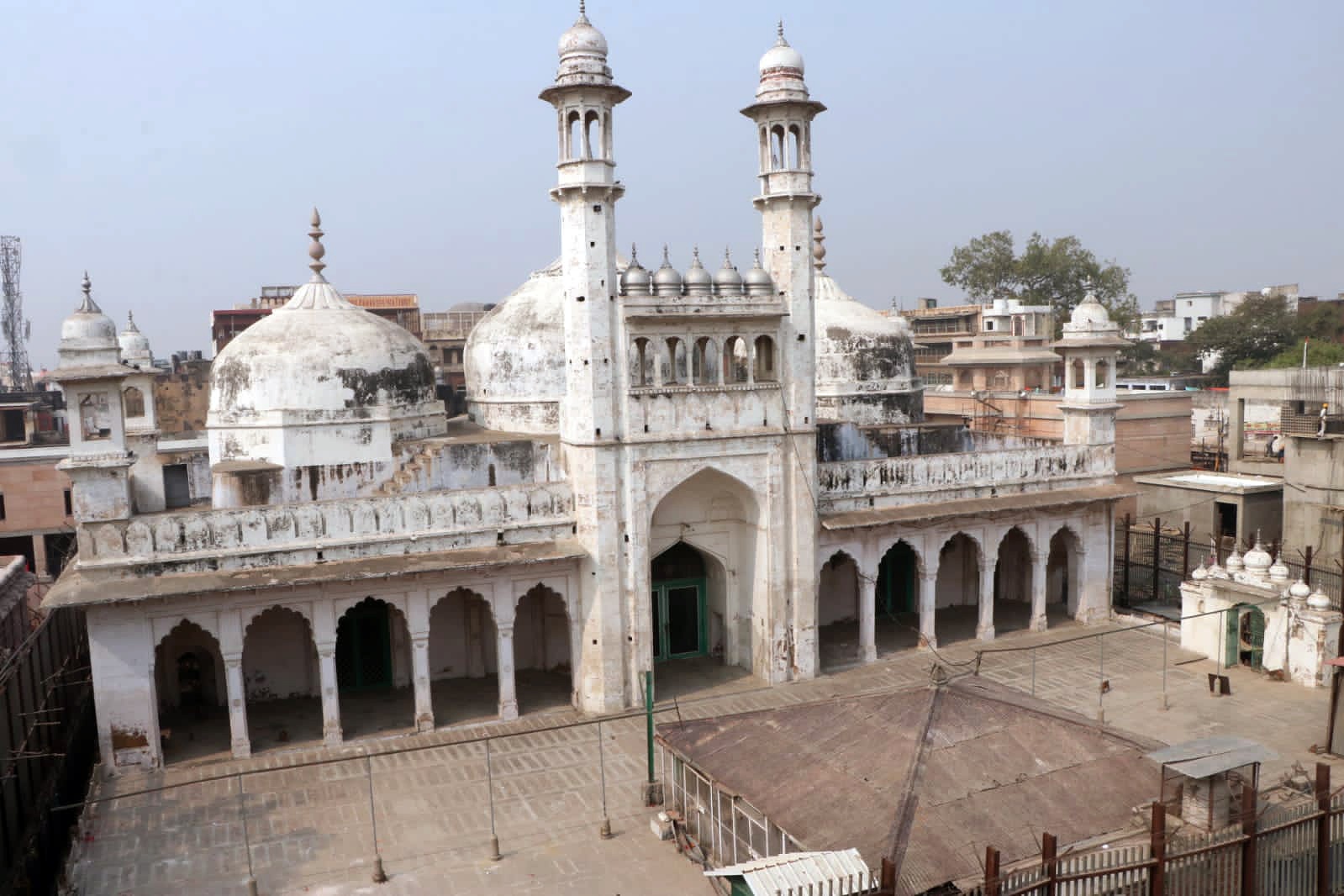
This is the Varanasi district and sessions court and the hearing is about to begin.
Also Read| Gyanvapi outcome will set a precedent
There are a few in the complex who are oblivious of the commotion, or the reason behind the special “bandobast”. “What is all this? Is some gangster or big leader coming today?” they ask. The answer comes in a slightly irritated drawl. “Don’t you know? The Gyanvapi case is being heard today.”
Less than two years after the Supreme Court delivered the landmark Ayodhya verdict, permitting the Hindu side to build a Ram temple at the site where the Babri masjid stood before it was demolished by a mob in 1992, five Hindu women filed a civil suit in Varanasi, asserting their right to worship inside the Gyanvapi mosque complex. They claim that since the mosque was built after the demolition of a temple in its place in the 16th century, Hindu deities — some visible, some not so — are present inside the mosque’s precinct.
In many ways, after the Ayodhya verdict in the Supreme Court in November 2019, it is the Gyanvapi hearing that is a key marker in India’s balancing act between religion, polity, and law.
Also Read| Registering the mosque as Waqf property fraud: Hindu side in Gyanvapi case
Even at this early stage, the Varanasi court is a microcosm of what is to follow. On the day of a hearing, all else seems to stop at the complex, except the hearing, whispers of the consequences of a case, and a tingling sense of doubt watching a syncretism possibly being chipped away.
An array of legal battles, however, appears to have been parallelly set in motion. The Supreme Court will on July 21 take up the Gyanvapi case as well. It will hear a petition from the Muslim side against the institution of the suit and the mosque’s survey. On the other hand, the Hindu side will press for an order to worship the deities inside the mosque and carbon-dating of the ‘Shivling’ reportedly discovered during the survey.
But it is in Varanasi that the drama began — and it is in a Varanasi court that it is playing out, following the Supreme Court order in May.
A day in court
Minutes before the hearing commences, an official list emerges from court hall number 1, the designated court for the hearing, presided over by district judge AK Vishvesha. The list is handed over to the clerk, who instructs the policemen at the door, reminding them about sensitivity of the matter.
The area of the courtroom is around 30 feet by 25 feet, and the door is made of solid wood. Inside, there are about 30 chairs meant for the lawyers, and some more at the back for litigants. At least six policemen, including two inspector-level officers, ensure that courtroom decorum is maintained. Outside, about two dozen policemen guard the periphery with a makeshift barricade put in place around an hour before the hearing begins.
As people connected to the case try and enter, their identities are verified, and a full body search is conducted. A district and sessions court is a world of its own, and most who have been plying their trade here for decades are used to breezing in. Not during this case. Some are told their names are not on the “list”. They protest, but to no avail.
On designated days, the hearing begins at 2pm, and usually finishes by 4pm. The arguments have been so far confined to the legal arguments on the issue of the maintainability of the suit filed by five Hindu women.
There may not be too much in terms of newsworthiness, but there is a horde of cameras waiting for bytes. As lawyers exit the closed courtroom, they inform reporters about the arguments that day, and next date of hearing. In minutes, their key inputs flash on television as breaking news.
The lawyers
On one day earlier this month, Akhlaque Ahmed was seen briefing some people — the luckless lot that was not allowed inside the courtroom. Later, he drove to his home a little over 5km away. A narrow, winding lane leads to an old house standing in a corner. Every foot of the lane is occupied by shops and carts — some sell vegetables, others flowers and dolls, and there is a cluster of customers around each of them. Ahmed’s house has a main door that opens into a room with dusty brown-and-red law books everywhere. Some are old and used, and the titles on them are on the cusp of fading.
Ahmad is nearing 60, a first-generation lawyer who trained under his uncle. He has been practising law for the past 31 years, most spent in the corridors of the same Varanasi sessions court. He is known in Varanasi for his expertise in civil cases, yet this is inescapably the highlight of his career and, as he is acutely aware, perhaps a seminal moment in Indian legal history.
Also Read| KV temple-Gyanvapi mosque case: HC adjourns hearing till July 22
“We want a decision as early as possible. This matter should not go on for long. It won’t be good either for the parties or for the country. Let’s not forget this is a case that involves religious sentiments and people from different faiths, who may be neighbours, co-workers, friends or even part of the same family,” Ahmed says. He points out that the team also includes advocates Abhay Nath Yadav and Rais Ahmed Ansari.
Associated with Anzuman Intezamia Masajid Committee for three decades, Ahmed has always taken pride in the fact that more than five mosques in Varanasi are looked after by non-Muslims. “Of the 7-8 mosques that the committee has to manage, amenities in a majority of them are ensured by Hindus and other non-Muslims. We never had to worry about these things,” says the lawyer.
Ahmed acknowledges that the fight to hold onto the mosque will be complex and long.
“Whoever loses before the district court will go to the Allahabad high court and then to the Supreme Court. I have no qualms about the judicial process which, by its very nature, is supposed to be lengthy. But what amuses me at times is the quick pace at which this case was initially heard and orders were passed that led to sealing of a portion of the mosque complex where the other sides claim a Shivling was visible. We know it is a fountain,” emphasises the lawyer.
He points to a 1991 case on the same issue which is pending before the Allahabad high court. “But if a case filed in 2021 has gathered so much steam, so be it. Let it be decided quickly,” Ahmad says.
They might argue bitterly in court, but on this one limited point, advocate Sudhir Tripathi concurs.
Tripathi, 47, represents four out of the five Hindu women who approached the court last year, asserting their right to worship inside the mosque complex.
Practising law for 22 years, Tripathi’s office in the district and sessions court is a temporary roof made of tin. He has a small table that clients and visitors must sit across on wobbly wooden chairs. Next to him are rows of lawyers that have set up similar arrangements.
“We also want the Gyanvapi case to be decided at the earliest. It is a matter of faith and belief for the Hindus. Although it is a civil case, it cannot be treated like one. We have to prove this is not a mosque but a temple, which it is and has always been,” says Tripathi, a tilak adorning on his forehead. He does not forget to mention that seasoned lawyer Hari Shankar Jain, who was also associated with the Ayodhya case, has been one of the counsel for the Hindu side in the Gyanvapi case too.
Tripathi is thrilled that the Supreme Court fast-tracked the proceedings before the district court through a May order that said the “complexities and sensitivities involved in the matter” would require a “more senior and experienced hand” to deal with the matter.
“Thus, the case was transferred to a civil judge from the district judge. We get that the battle is long but we are happy that proceedings have been faster than ordinary civil cases. Some interim orders were also passed by the civil judge and we hope that the district judge will keep up the pace so that we get a decision quickly,” says Tripathi, as his juniors nod in approval.
Alighting from a motorbike, Subhash Nandan Chaturvedi, who also represents the Hindu women plaintiffs, sits on a sofa as he keeps disconnecting calls on his mobile. The lawyer looks to sidestep the question of the tension the case may be creating. “There is some pain in every surgery... inconvenience, disturbance and pain will be there but that should not deter a court from deciding what’s right. It has already been 31 years since the old case on Gyanvapi was filed and it has only moved at a snail’s pace,” he says.
Legal adversaries
For generations, Ahmad, Tripathi and Chaturvedi have met each other in the court halls as they walk past each other. Their work within the courtroom has rarely spilled over into their personal relationships.
Publicly, all three deny that their relationships with members of the other community — socially or professionally — have taken a hit because of the case. Privately, they believe it is inevitable. “It is not that simple. Nobody knows what is inside someone’s heart. Someone may behave okay with you but you never know... one is never be sure in times like these,” one of them says.
Their families have been worried since the case began. “I follow a fixed itinerary. There is a certain time I must return home or my family gets hassled. They will keep calling me. But what can one do but take every precaution when emotions are running high and people can be misled,” Ahmed says.
Tripathi carries two mobile phones to ensure he is never out of reach. Like Ahmed, Tripathi and other lawyers connected with the case have been given police security. They have one gunner each all the time. Besides, there is more security on days the court is to hear the case.
“You know how these smartphones can run dry on battery very quickly. So I carry a basic mobile with me so that I can always be reached by my family who are on the edge about my safety,” says Tripathi.
Chaturvedi, too, constantly fields calls and messages from his family. But his eyes shine brightly with excitement when he discusses the case that could redefine his career, or the country. “If Kaaba is for them,” he says, “Kashi is for us!”


