E-Paper



Gujarat govt approves allotment of disputed Vadodara plot to Yusuf Pathan
Under the government’s decision, 500 square metres will be allotted to him free of cost for residential use, while the remaining 478 square metres will be allotted at 55% of its assessed market value

 Prefer HTon Google


The Gujarat government has approved the allotment of a disputed 978-square-metre plot in Vadodara to former cricketer and Lok Sabha MP Yusuf Pathan under its policy for international sportspersons, according to Vadodara Municipal Corporation (VMC) officials.
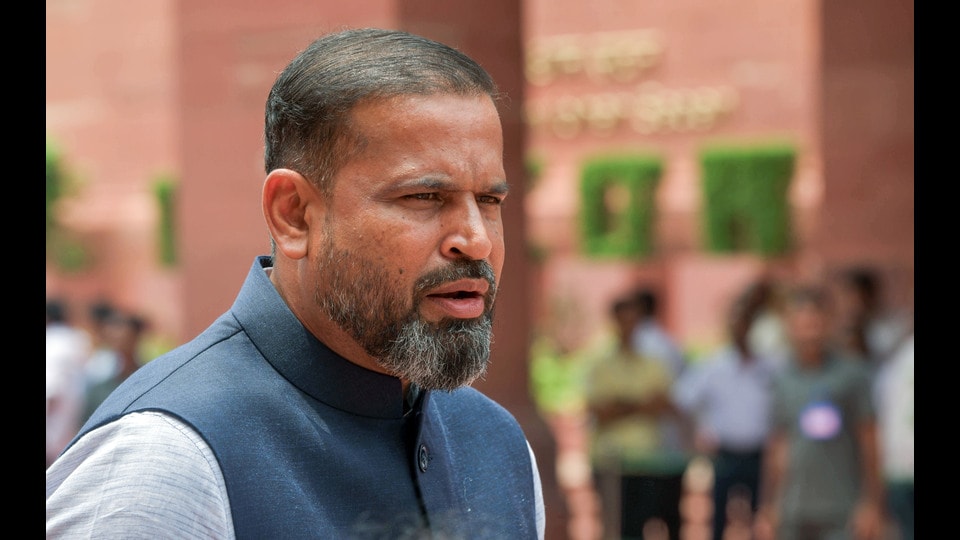
A senior VMC official said the civic body had received the state government’s approval and the proposal would be placed before the standing committee and the general board for their approval. He added that the details of the allotment are yet to be finalised.
Yusuf Pathan won the 2024 Lok Sabha elections from West Bengal’s Behrampore on a Trinamool Congress (TMC) ticket. He was among the 20 TMC MPs who rebelled against Trinamool Congress founder Mamata Banerjee and went to Lok Sabha speaker in June this year to claim that they had merged with the and declared that they had merged with a little known Nationalist Citizens Party of India (NCPI).
Under the government’s decision, 500 square metres will be allotted to him free of cost for residential use, while the remaining 478 square metres will be allotted at 55% of its assessed market value. The plot has an estimated market value of around ₹20.50 crore.
Officials said the government resolution, dated August 13, reached VMC on August 29. Two days later, Pathan withdrew his appeal against the Gujarat high court order that rejected his claim to the land.
To be sure, Yusuf Pathan had been trying to get the land parcel adjacent to his house in Tandalja since 2012 and the state government’s decision follows a long legal dispute over Pathan’s occupation of the plot.
Pathan had applied for a 99-year lease of the land in 2012, citing security concerns. The VMC approved a proposal to allot the plot at ₹57,270 per square metre, but the state government rejected it in June 2014 because the land had not been offered through a public auction.
Pathan continued to occupy the land and built a boundary wall. In June 2024, the VMC ordered him to remove the encroachment, prompting him to approach the high court.
In August 2025, the high court observed dismissed his petition challenging the VMC’s order to remove the encroachment, holding that he had no legal right over the plot because no final allotment order had been issued and no payment had been made.
Pathan appealed against the order in 2026. In June, a division bench gave him four weeks to pursue his claim under the state government’s policy for allotment of land to international sportspersons. The court also warned that delays could increase the damages payable for his continued occupation of the plot.
On August 31, Pathan withdrew his appeal after his lawyer told the court that the VMC had not responded to efforts to pursue the claim under the policy. The division bench dismissed the appeal as withdrawn.
The government order asks the revenue department to allot VMC land of equivalent value to compensate for the transfer and that the decision would not be cited as precedent for similar cases.