E-Paper



Gujarat govt notice requires Hindus to seek permission for converting to Buddhism
The directive released by the state home department on April 8 aims to address concerns regarding the handling of conversion applications

 Prefer HTon Google


Ahmedabad: The Gujarat government, which issued a circular earlier this week designating Buddhism as a distinct religion has ruled, under the Gujarat Freedom of Religion Act, 2003, that conversions from Hinduism to Buddhism, Jainism, and Sikhism will now necessitate prior approval from respective district magistrates.
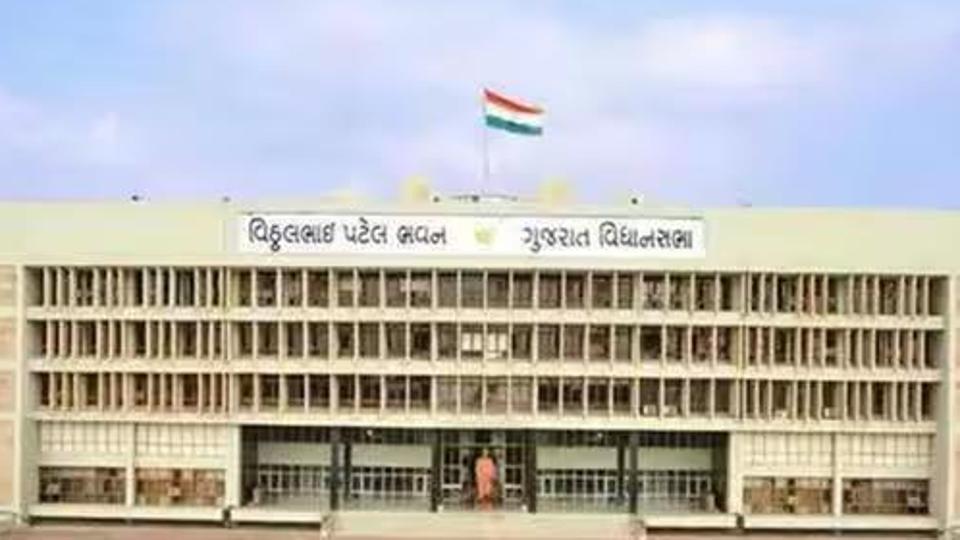
This directive, released by the state home department on April 8, aims to address concerns regarding the handling of conversion applications.
Highlighting discrepancies in the interpretation of the Gujarat Freedom of Religion Act by district magistrate offices, the circular underscored the necessity of adhering to prescribed procedures for conversion applications. It acknowledged instances where applicants and autonomous bodies contesting the need for prior permission for conversions from Hinduism to Buddhism.
The circular warned against potential legal challenges stemming from inadequate understanding of legal provisions surrounding religious conversions. It underscored the need for a thorough examination of the legal framework by district magistrates when evaluating conversion applications.
“”We’ve observed a lapse in adhering to the prescribed procedure for applications seeking permission for Hinduism to Buddhism conversions. Furthermore, we’ve received feedback from applicants and autonomous bodies suggesting that prior permission is unnecessary for such religious conversions,” the notification said.
Emphasising the separate status of Buddhism under the Act, the circular mandated that those facilitating conversions must obtain prior permission from the district magistrate. Additionally, individuals undergoing conversion are required to inform the district magistrate accordingly.
District magistrates are instructed to meticulously review conversion applications in accordance with legal provisions and state government directives. This move seeks to streamline the process and ensure consistency in the handling of religious conversion applications across Gujarat.
Also Read: Chhattisgarh’s previous brush with anti-conversion bill
The relevant Act was introduced by the government with the aim of curbing religious conversions achieved through methods such as allurement, coercion, misrepresentation, or any other fraudulent means. In an amendment introduced in 2021, the Act was revised to explicitly prohibit forced religious conversions through marriage.
The Act includes stringent penalties, with offenders facing a maximum sentence of up to 10 years in prison and fines reaching up to ₹5 lakh. Notably, the burden of proof rests on the accused, and investigations into such matters are to be conducted by officers holding the rank of deputy superintendent of police or higher. However, the amended Act has faced legal challenges, with its validity currently being contested before the Gujarat High Court.