The family of 31-year-old Yuvraj Singh Manchanda, a real estate sales professional allegedly killed by his former colleague and her partner in Gurugram on September 6, has accused Gurugram Police of mishandling the investigation, alleging that the force “destroyed all evidence”, cremated him as an unidentified person and failed to preserve his belongings.
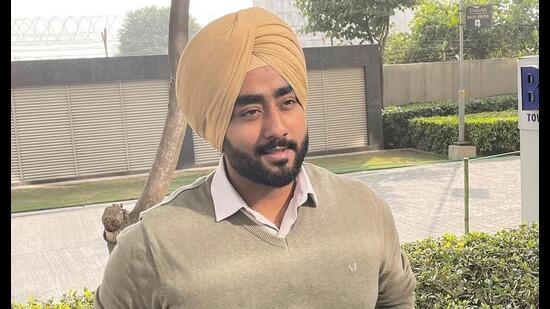
The allegations come days after Delhi Police arrested the two accused, Anya Vats, 35, and her partner Sanyam Sachdeva, 36, from Uttarakhand on Monday, 10 days after the murder.
“At that point, we were told that the Gurugram Police had the body since September 10 but didn’t upload anything on Zipnet or anywhere. They had just cremated the body. We still don’t have the ashes or his belongings,” alleged Manchanda’s sister Karishma.
Zonal Integrated Police Network (Zipnet) is an online platform used by police to share information on missing persons, unidentified and recovered bodies, stolen vehicles and other cases.
Also read: Highly decomposed body, attacked by dogs: How Delhi teen's gangrape and murder came to light
What is the SOP?
According to the standard operating procedure (SOP) issued under the Delhi Police’s “Duties of Police Regarding Missing Persons and Unidentified Dead-Bodies,” accessed by HT, police are required to photograph an unidentified body and the crime scene, collect evidence and upload details on Zipnet. “Hue-and-cry” notices and advertisements in local newspapers are also required. If a body remains unclaimed at a mortuary for 72 hours, police can proceed with the last rites, while belongings are required to be preserved.
{{/usCountry}}According to the standard operating procedure (SOP) issued under the Delhi Police’s “Duties of Police Regarding Missing Persons and Unidentified Dead-Bodies,” accessed by HT, police are required to photograph an unidentified body and the crime scene, collect evidence and upload details on Zipnet. “Hue-and-cry” notices and advertisements in local newspapers are also required. If a body remains unclaimed at a mortuary for 72 hours, police can proceed with the last rites, while belongings are required to be preserved.
{{/usCountry}}Delhi Police officials alleged that Gurugram Police uploaded Manchanda’s details on Zipnet six days after his body was recovered and did not preserve his clothes.
Also read: Manchanda murder case: Family alleges body cremated, belonging given away, ashes discarded
Gurugram Police rejects family’s allegations
Gurugram Police, however, denied the allegations. Inspector Rajesh Bagri, SHO of Badshahpur police station, said details of the body were uploaded on Zipnet on September 16. He said the police control room was alerted about the recovery on September 10 and the information, including details of the body, was relayed to neighbouring control rooms.
To be sure, Karishma disputed this account. “They cremated the body on September 14… The investigators caught the accused on September 16 and they learnt that my brother was murdered on September 6 and that the body was in Gurugram. When I learnt of this, I rushed to Gurugram to collect my brother’s ashes. But after waiting at the Badshahpur police station for three hours, the police told me that the ashes had been discarded,” she said.
“In front of me, they uploaded details on Zipnet. Why did they put details on September 16? The body was found six days before! How is that possible? I am shocked,” she added.
Former Delhi cop calls alleged lapses a major violation
LN Rao, former DCP of the Delhi Police Special Cell and currently a practising lawyer, added, “This is a major violation on the part of the Gurugram Police. They cannot discard a victim’s clothing after a post-mortem in any circumstances, regardless of whether the clothes are torn or decomposing. Discarding evidence within three days is a violation. While not preserving ashes may be acceptable, failing to upload the information to Zipnet is another major lapse. We always broadcasted details of all UIDBs to all police stations in India to print media and Zipnet.”
DCP (south Gurugram) Hitesh Yadav said that as soon as body was recovered on September 10, alert was sent to every police station in Gurugram.
“Zipnet, which is an obsolete platform hardly used by three states, was checked on September 10 but no relevant information was found about any missing person till then. Gurugram police filled the UIDP performa for the body and uploaded all the information on the pan-India CCTNS network for identification on September 14, which is within mandatory time period,” he said.
Yadav added that advertisement and hue and cry notice were also issued from the police station within hours of the body recovery on September 10, along with alerts to all police stations in the district.
Also read: Delhi man’s Gurugram ‘meeting’, sewer death and ‘unidentified’ cremation
Manchanda was preparing for wedding before disappearance
According to the family, Manchanda was due to get married on October 25. He had gone to Lajpat Nagar with his sisters Karishma and Harsimran to buy a sherwani — the last time they saw him. He later left for Gurugram for what he told them was a work-related meeting.
When he did not return that night, his family called him repeatedly. The next day, they received a text from his phone saying he was finalising an important deal and would call soon. This continued until September 8, after which his phone was switched off.
His body was recovered from a sewer in Gurugram on September 10 and was cremated four days later, according to the family.
Gurugram police said Manchanda’s ashes are preserved as no other cremation had taken place over the spot where his body was cremated on September 14. Police said clothes were also burned with the body since no foul play was suspected and the victim’s kada and watch could not be removed from body as it had badly decomposed and removal would have caused damage to it.
Also read: Realtor murder: Wedding plans, unanswered calls and cremation that left family seeking answers
Autopsy points to likely drowning
Gurugram Police said an autopsy conducted by Dr Manav Chauhan of the forensic department from Haryana government’s health department found that the cause of death was “likely drowning”. A swab for DNA sampling was preserved, while viscera was not preserved as the autopsy did not reveal anything suspicious, Chauhan told HT. He said there was no bullet or pellet injury.
A Delhi Police officer, who asked not to be identified, said the force had not yet received the post-mortem report. “We suspect they treated the body as an accidental drowning case without doing proper proceedings. We will issue notice to doctor and IO from Gurugram police,” the officer said.
DCP Yadav added that the forensic experts had examined the body, which was highly decomposed, and no bullet holes were found in the clothes. “Besides, doctor who carried out the autopsy gave the likely cause of death as drowning. No bullet wound were found during autopsy in the body as her the autopsy report,” he said, adding that forensic experts with the Badshahpur station house officer had reached the spot soon after body was recovered.
DCP (southeast, Delhi) Vineet Kumar said the accused were being interrogated and Delhi Police was working with Gurugram Police to gather evidence.
Also read: Ex-colleague, her associate arrested for killing Delhi man
Police say body was kept for 72 hours before cremation
Gurugram Police said a kada and a watch were recovered from the body and had been preserved for handing over to the family. Bagri said the body was recovered from the sewer in an “extremely decomposed condition” and was preserved for 72 hours after the autopsy, as required under protocol.
Since it remained unidentified, it was subsequently sent for cremation, he said.
“What should I tell my elderly parents? Gurugram Police said it was a drowning case. How can a 6-foot-5-inch-tall man drown in some waterlogged farm? My mother is still waiting for ashes,” Karishma said. “We don’t have his body, his ashes, his post-mortem report, his clothes… How is this fair?” she said.